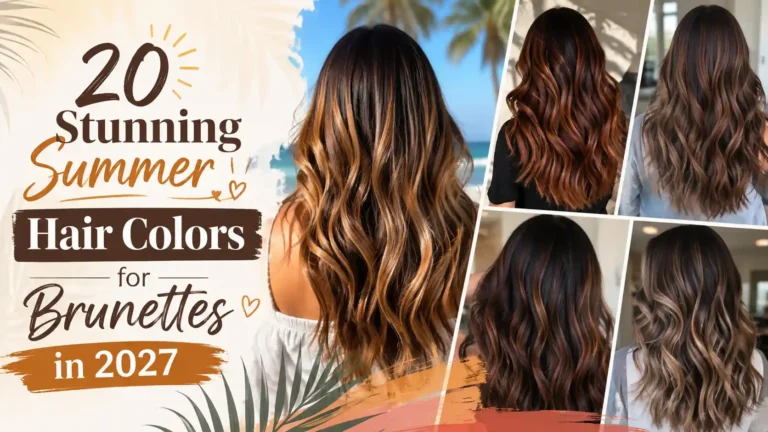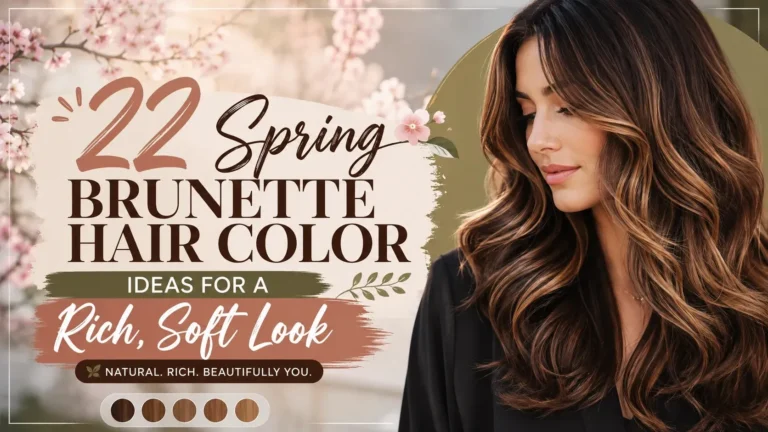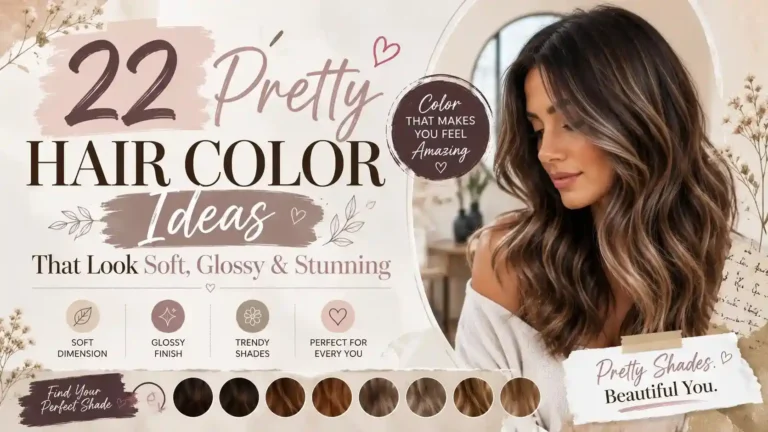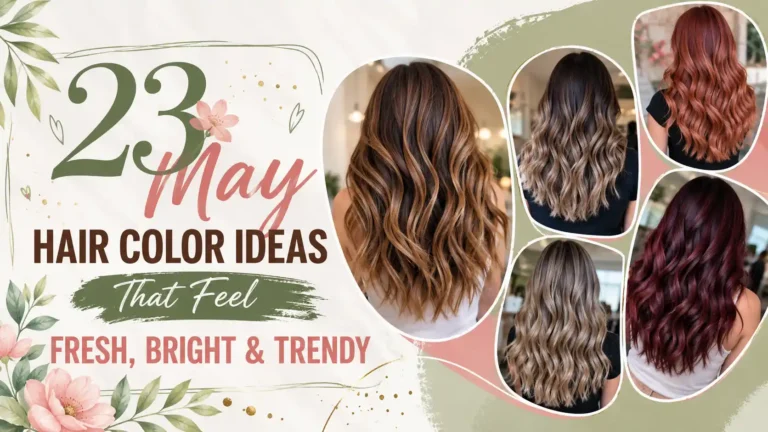
20 Spring Brown Hair Color Ideas That Look Soft & Natural
Ready for a brown hair refresh that feels soft, glossy, and perfectly in tune with spring? Spring Brown Hair Color Ideas by Styled Aura can make choosing your next shade feel much easier and more inspiring. From warm honey and caramel browns to cooler mocha and chocolate tones, these ideas offer plenty of ways to refresh your look without choosing a color that feels too dramatic.
This guide brings together 20 wearable brown shades and coloring ideas, including subtle highlights, balayage, dimensional brunette tones, and richer all-over colors. The right choice depends on your natural hair color, previous treatments, complexion, undertone, hair condition, and how much maintenance you want. I’ve noticed that small changes, such as softly placed highlights around the face, can create beautiful dimension without requiring a complete transformation.
1. Caramel Balayage
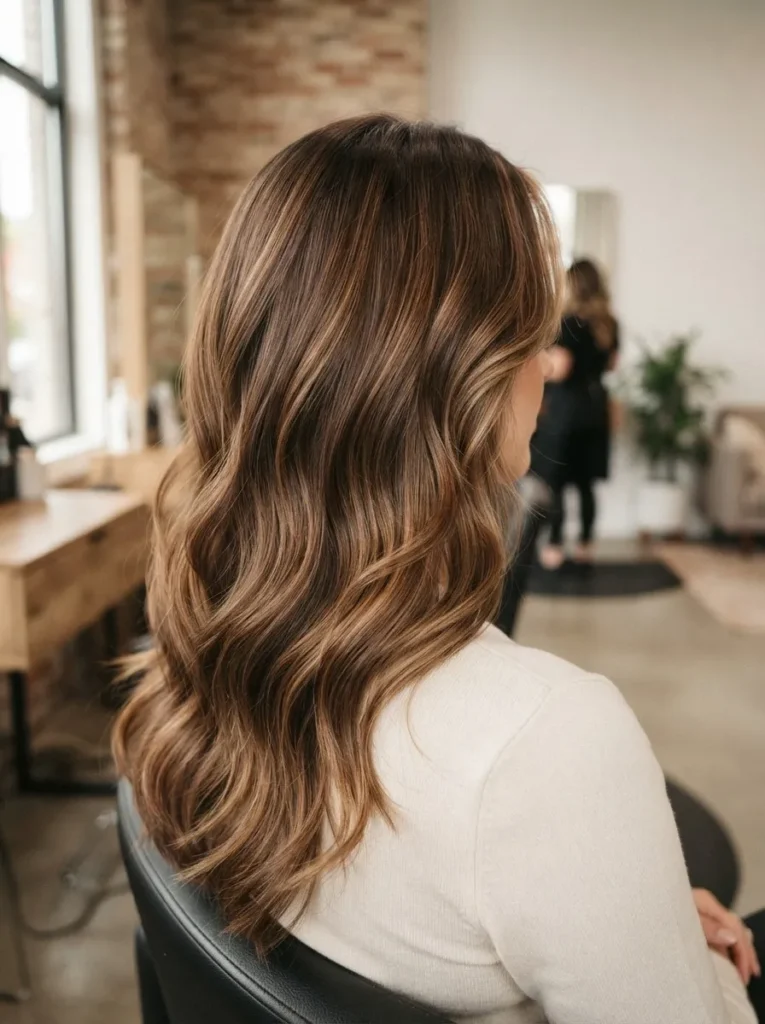
- Warm caramel ribbons add brightness while keeping the brown base rich and natural.
- Face-framing pieces can gently illuminate the complexion without creating a dramatic blonde effect.
- Hand-painted placement helps soften visible root growth as the color grows out.
- Wavy and layered hair reveals the dimensional contrast especially well.
- Usually moderate maintenance, with occasional glossing to restore shine and warmth.
Soft caramel ribbons catch the light beautifully, giving medium brown hair a warm spring refresh without making the base look dramatically different. This balayage works especially well when you want brightness around the face while keeping plenty of natural depth through the lengths. The hand-painted placement can flatter warm and neutral undertones, while a colorist can soften the caramel for cooler complexions. Wavy and lightly textured hair shows the dimension particularly well because movement reveals each tonal shift. The result feels polished enough for work yet relaxed enough for everyday styling, especially on shoulder-length or longer hair.
A caramel balayage usually needs less frequent root maintenance than traditional highlights because the color is blended away from the scalp. The starting shade matters, though: dark brown hair may need pre-lightening before caramel tones become visible, while lighter brown bases can often reach the look more easily. In my experience, a gloss every several weeks can keep the ribbons looking fresh and shiny as they fade. Use color-safe shampoo, heat protection, and regular conditioning to reduce dryness. If your hair is previously colored, a strand test helps your colorist predict how evenly the lighter pieces will develop.
2. Mocha Color Melt
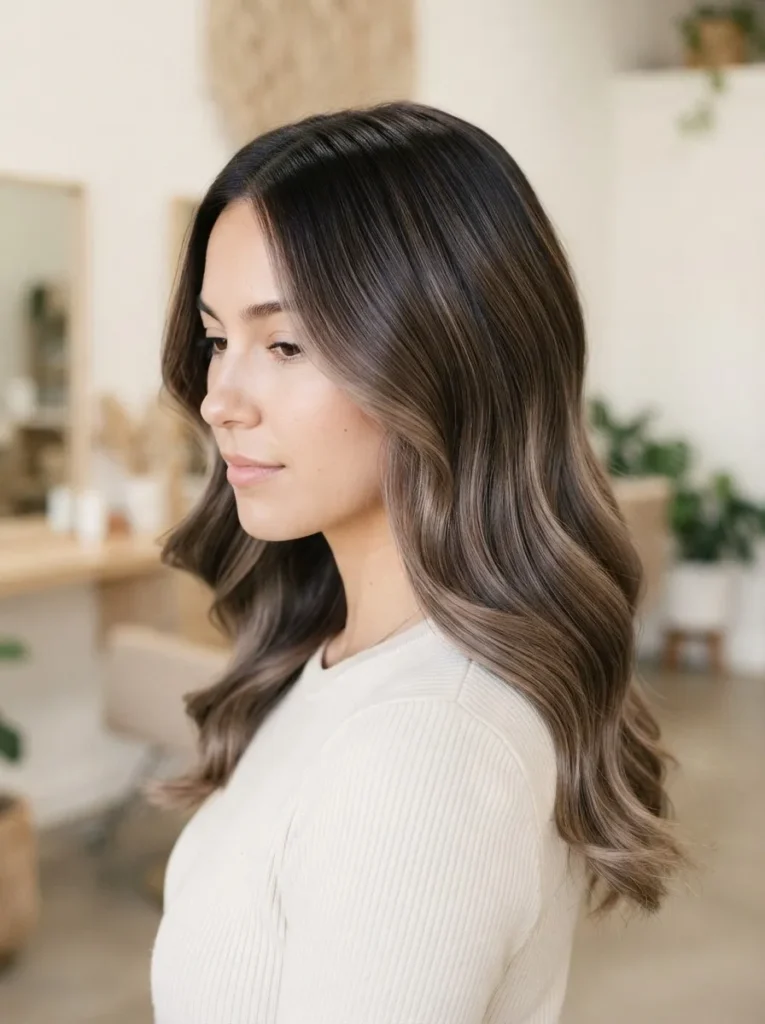
- A deeper brown root flows gradually into soft neutral mocha through the lengths.
- The blended transition creates depth without obvious highlight lines.
- Neutral mocha can be adjusted warmer or cooler to suit different undertones.
- Straight, wavy, and softly curled textures can all display the tonal movement.
- Root-friendly placement makes this a relatively manageable option between salon visits.
A cool mocha melt creates the kind of quiet dimension that looks sophisticated without appearing overly styled. The deeper brown root gradually shifts into neutral mocha through the mid-lengths, giving straight, wavy, or softly curled hair a smooth tonal flow. This approach may complement neutral or cool undertones particularly well, while warmer complexions can still wear it when the mocha is adjusted slightly. Longer bobs, medium-length cuts, and layered hair all show the transition clearly. Under indoor lighting, the color reads rich and polished; in daylight, subtle beige-brown ribbons become easier to notice.
Because the root remains close to the natural shade, a mocha color melt can be relatively manageable as it grows out. That makes it useful for anyone who wants dimension without booking frequent root appointments. Very dark bases may need controlled lifting to reveal the mocha middle tones, followed by toner to prevent unwanted orange or red warmth. A colorist can fine-tune the finish according to your undertone and starting level. To preserve the neutral effect, wash with color-safe products, limit excessive heat, and consider an occasional salon gloss when the lengths begin looking dull or faded.
3. Honey Beige Highlights
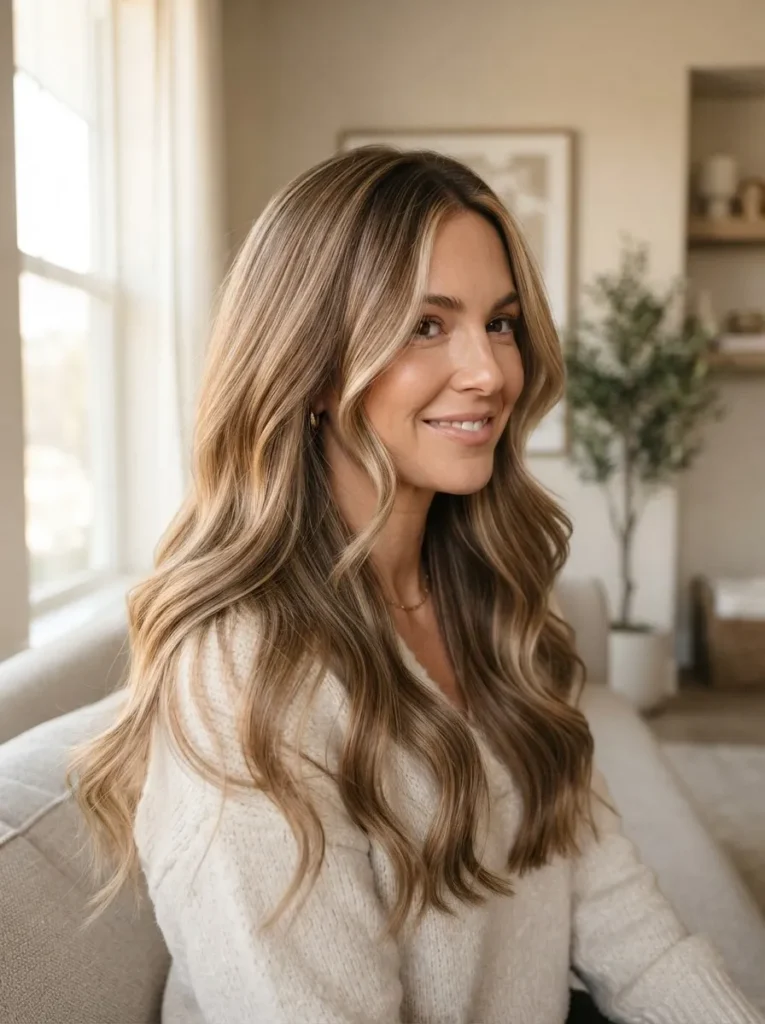
- Honey beige ribbons add a soft glow without making the whole hairstyle look blonde.
- Fine face-framing pieces can brighten the appearance around the eyes and cheekbones.
- The balanced mix of warmth and beige keeps the result softer than strongly golden highlights.
- Loose waves reveal the dimension, while straight hair shows the precise placement.
- Maintenance is moderate and may include occasional toning as lighter pieces fade..
Honey beige highlights bring a soft glow to brown hair, especially when fine ribbons are placed around the face and scattered through the upper layers. The blend combines warm honey with a balanced beige tone, creating brightness without turning the entire hairstyle blonde. This can work especially well on light to medium brown bases and may complement warm, neutral, or olive undertones when the color is customized. Loose waves make the highlights look especially dimensional, while straight hair shows the clean placement clearly. The finish feels fresh for spring and can brighten everyday hairstyles without requiring a dramatic color change.
The maintenance level depends on how light you want those honey pieces to become, but a blended placement usually grows out more softly than full-head highlights. Medium brown hair may require moderate lightening, while lighter bases can reach beige-honey tones with less processing. If brassiness appears, a colorist may use a gentle toner rather than repeatedly lifting the hair. I’ve noticed that deep conditioning and heat protection make a noticeable difference when highlighted lengths start feeling dry. Keep shampooing gentle, protect the hair from prolonged heat, and schedule a gloss or highlight refresh when the ribbons lose their brightness.
4. Chestnut Brown Gloss
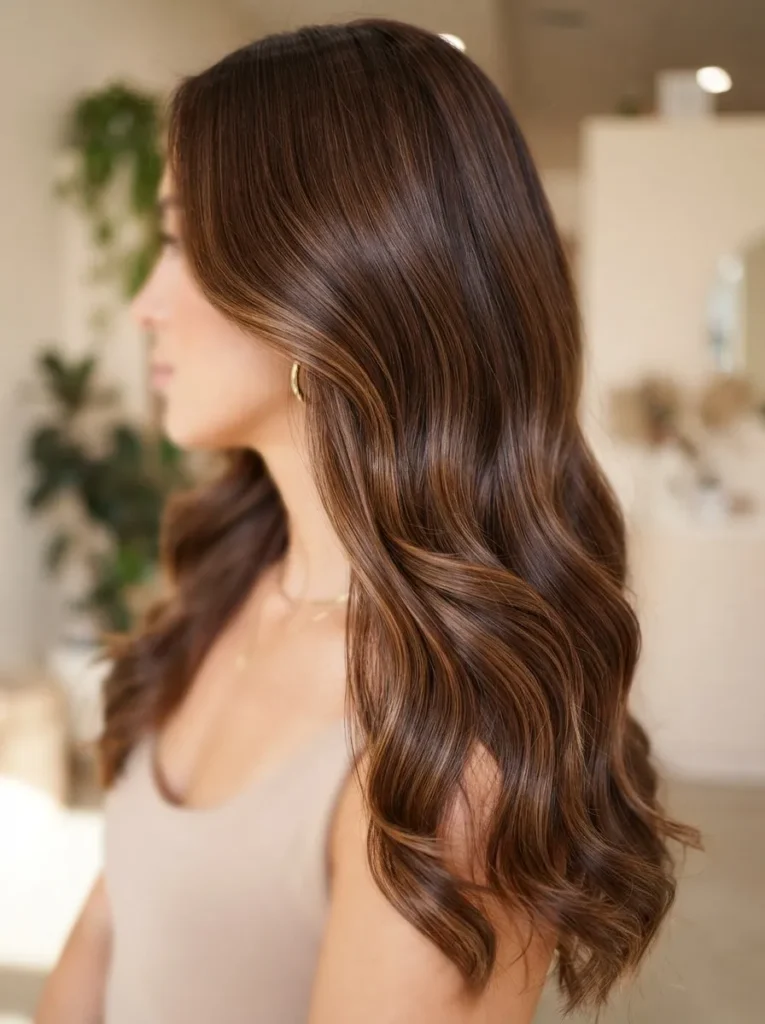
- Rich chestnut tones add warm depth while keeping the overall look distinctly brown.
- Subtle red-gold reflections become more visible when sunlight hits the lengths.
- A glossy finish can make the hair appear smoother and more polished.
- It may complement warm and neutral undertones, with the tone adjustable for cooler complexions.
- Maintenance is moderate because warm pigments can gradually fade and lose vibrancy.
Rich chestnut brown brings polished warmth that feels especially natural in spring light. The shade sits between medium brown and deeper auburn, creating subtle red-gold reflections without becoming obviously red. It may complement warm and neutral undertones, while cooler complexions can often wear it when the red warmth is softened. Straight hair shows the glossy color clearly, while waves reveal its tonal movement. Shoulder-length cuts, long layers, and blunt bobs can all showcase the richness. In daylight, chestnut looks lively and dimensional; indoors, it usually appears deeper, making it versatile for everyday and professional settings.
A chestnut transformation can be relatively simple when the starting hair is already brown, although previously dyed hair may require professional color correction. Darker bases might need gentle lifting for brighter copper reflections, while lighter brown hair can take the tone more directly. That’s why many professional colorists recommend assessing the existing color before choosing a formula. Red and warm pigments can fade faster than expected, so use color-safe shampoo, cooler water, heat protection, and regular conditioning. A salon gloss can restore shine between larger appointments, while a strand test helps reveal how your particular hair will absorb the warm pigments.
5. Espresso Face Frame
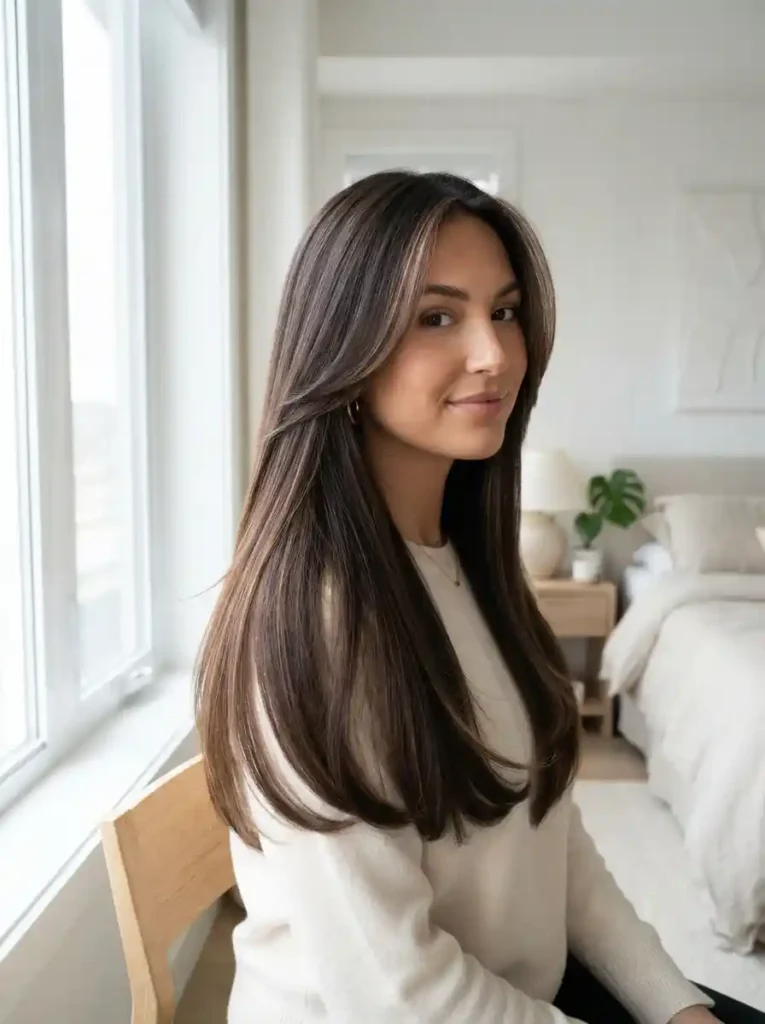
- Deep espresso brown keeps the overall color rich while adding subtle contrast around the face.
- Slightly lighter framing pieces prevent very dark hair from looking visually flat.
- The placement can emphasize cheekbones and brighten the appearance around the eyes.
- Straight and wavy textures both show the controlled contrast clearly.
- This is generally lower maintenance than a full head of lightened highlights.
Deep espresso hair gets a subtle spring update when lighter brown pieces are concentrated around the face. The contrast is intentionally restrained, so the hairstyle remains rich rather than becoming heavily highlighted. This placement may work especially well on medium to deep brown bases, and the framing tone can be adjusted toward chocolate, neutral brown, or gentle warmth depending on the complexion. Long layers help the lighter pieces blend into the rest of the hair, while straight styles make the placement easy to see. In daylight, the face-framing sections catch soft reflections; indoors, the overall look remains sophisticated and understated.
Because only selected sections are lightened, this technique can be easier to maintain than traditional full-head highlights. However, very dark natural or previously colored hair may require pre-lightening before a noticeable lighter frame appears. If the pieces become brassy, professional toning can restore a more balanced brown finish. I’ve noticed that face-framing color can show dryness sooner because those sections are often exposed to heat styling, so apply heat protectant consistently and condition the lighter pieces well. A color-safe shampoo and occasional gloss can help maintain shine, while regular trims keep the highlighted ends looking polished.
6. Cinnamon Brown Blend
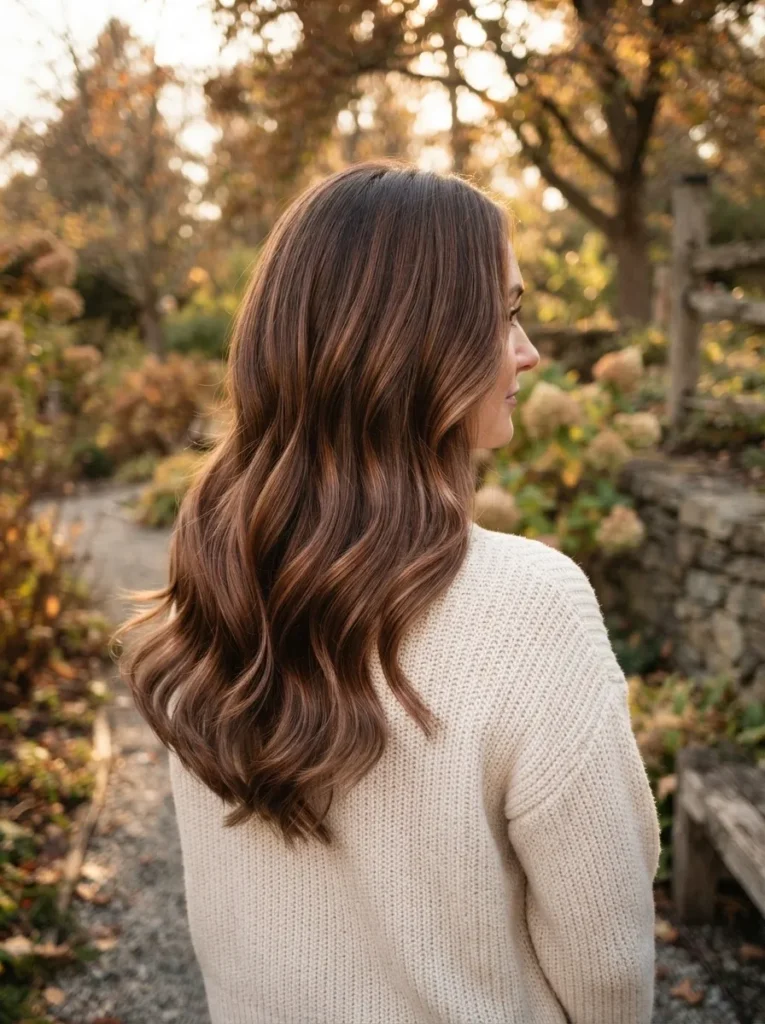
- Cinnamon-brown ribbons add gentle copper warmth to a naturally rich brown base.
- The blended placement creates movement without a sharply contrasted highlight effect.
- Warm undertones can make the color look especially luminous in direct sunlight.
- Loose waves and curls reveal the cinnamon ribbons through natural movement.
- Moderate maintenance may include occasional glossing to refresh warmth and shine.
Cinnamon brown adds a gentle spark of copper to a rich brunette base, creating dimension without overwhelming the natural depth. The warm ribbons can complement golden, warm, and some neutral undertones, while a colorist can mute the copper slightly for a softer result on cooler complexions. Wavy and curly textures are particularly effective at revealing the variation because each bend catches a different tone. Medium-length layers and long hair give the blended color enough space to transition naturally. In sunlight, cinnamon reflections look brighter and warmer; under indoor lighting, the brown base becomes more prominent and keeps the finish sophisticated.
The final result depends heavily on the starting shade and whether the hair has previous artificial color. Dark brown hair may need selective lightening before cinnamon tones become visible, while naturally lighter brown hair can require less processing. Warm shades can gradually lose their glow through repeated washing, so cooler water and color-safe shampoo help preserve the finish. A gloss can revive faded warmth without necessarily repeating the entire coloring process. In my experience, regular deep conditioning is especially helpful when warm ribbons have been lightened, and heat protection should remain part of the routine to limit additional dryness and breakage.
7. Toffee Brunette Blend
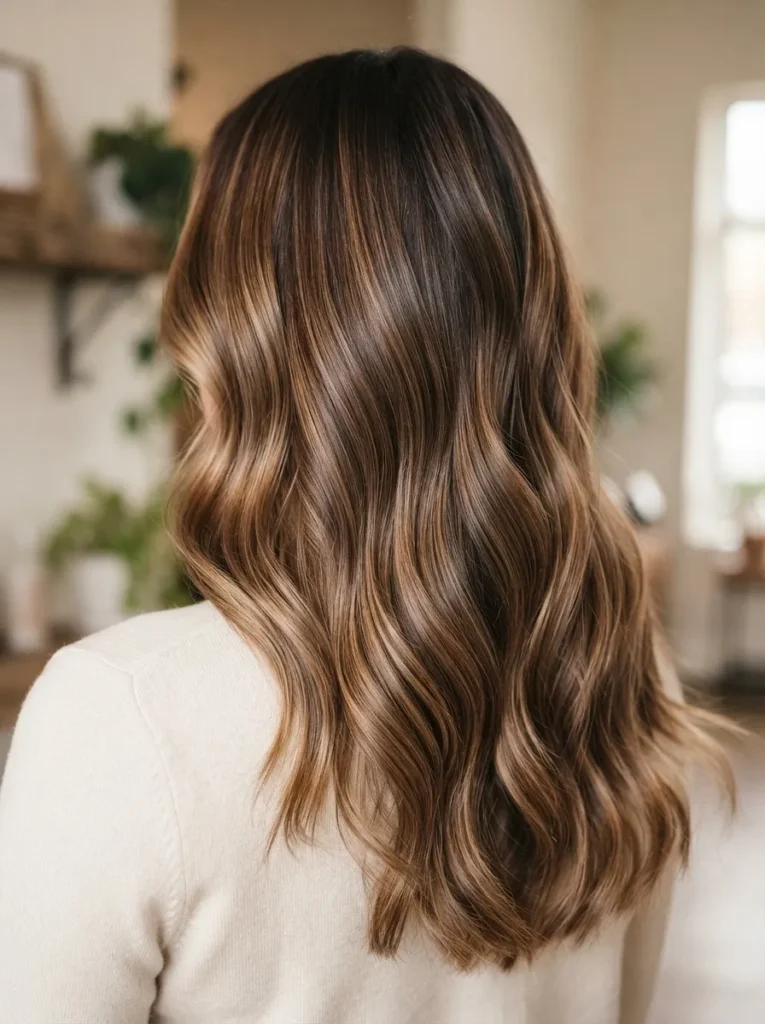
- Warm toffee ribbons add brightness while preserving a rich brown foundation.
- The soft contrast creates visible dimension without looking heavily highlighted.
- Face-framing pieces can bring gentle warmth around the eyes and cheekbones.
- Loose waves reveal the tonal movement particularly well.
- Maintenance is moderate, with occasional glossing or toning as warmth fades.
A soft toffee brunette blend catches the light like warm silk, adding dimension without losing the richness of brown hair. The shade combines medium brown with muted caramel and creamy toffee ribbons, making it especially appealing for warm and neutral undertones. It may also suit cooler complexions when the caramel is toned beige rather than strongly golden. Long layers and loose waves reveal the color movement beautifully, while a sleek blowout gives it a polished finish. In natural daylight, the lighter pieces look luminous; indoors, the deeper brown base keeps the overall appearance balanced and refined.
Toffee tones usually require some lightening when starting from medium or dark brown hair, although naturally lighter bases may need less processing. A colorist can place brighter pieces through the mids and ends while leaving the roots natural for softer regrowth. Because warm highlights can become brassy or dull, occasional toner or a salon gloss may help restore the intended balance. I’ve noticed that this type of blend stays attractive between appointments when the hair is washed gently and conditioned regularly. Use heat protection before styling, and consider a strand test if your hair has previous color or feels fragile.
8. Walnut Brown Balayage
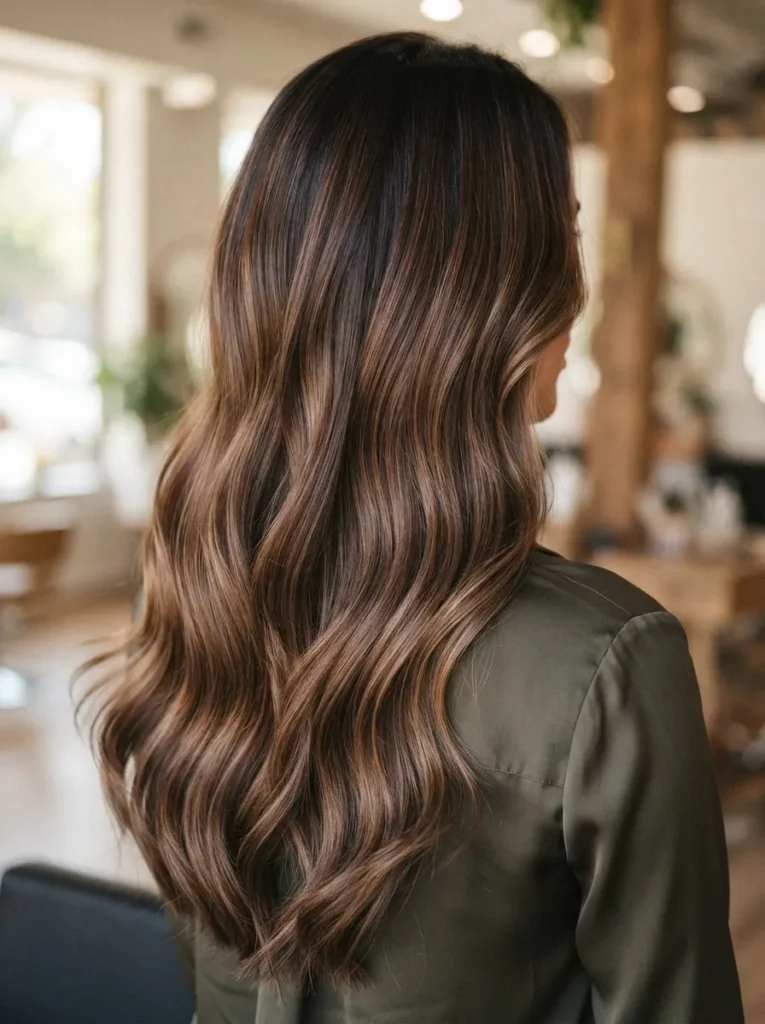
- Walnut brown creates a balanced mix of deep brunette and soft neutral warmth.
- Hand-painted lighter pieces add movement without creating harsh highlight lines.
- The shade can look especially polished on medium and long layered hair.
- Neutral brown tones may work well for people who dislike overly golden results.
- Blended roots make regrowth less noticeable than traditional scalp-to-end color.
A walnut brown balayage gives brunette hair a naturally dimensional finish, with soft lighter pieces flowing through a deeper brown foundation. The shade sits between warm and neutral brown, so it can be adjusted to avoid excessive red, gold, or ash depending on the complexion. Medium and long layered cuts show the hand-painted transitions particularly well, while loose waves make the tonal variation appear more noticeable. It may work especially well for someone who wants brighter hair without committing to blonde. Daylight reveals subtle brown variation, whereas indoor lighting tends to make the walnut base look deeper and more luxurious.
Walnut balayage is generally easier to grow out than traditional highlights because the lighter sections are blended rather than placed in solid bands from the roots. Darker starting colors may still require controlled pre-lightening, particularly if you want clearly visible contrast. A toner can help maintain the desired neutral balance if unwanted warmth develops after washing. For maintenance, use color-safe shampoo, avoid excessive hot water, and condition the mid-lengths and ends regularly. That’s why many professional colorists recommend evaluating previous dye history before lightening. A gloss every few weeks can refresh shine, especially when the lighter pieces begin looking dry or faded.
9. Maple Brown Highlights
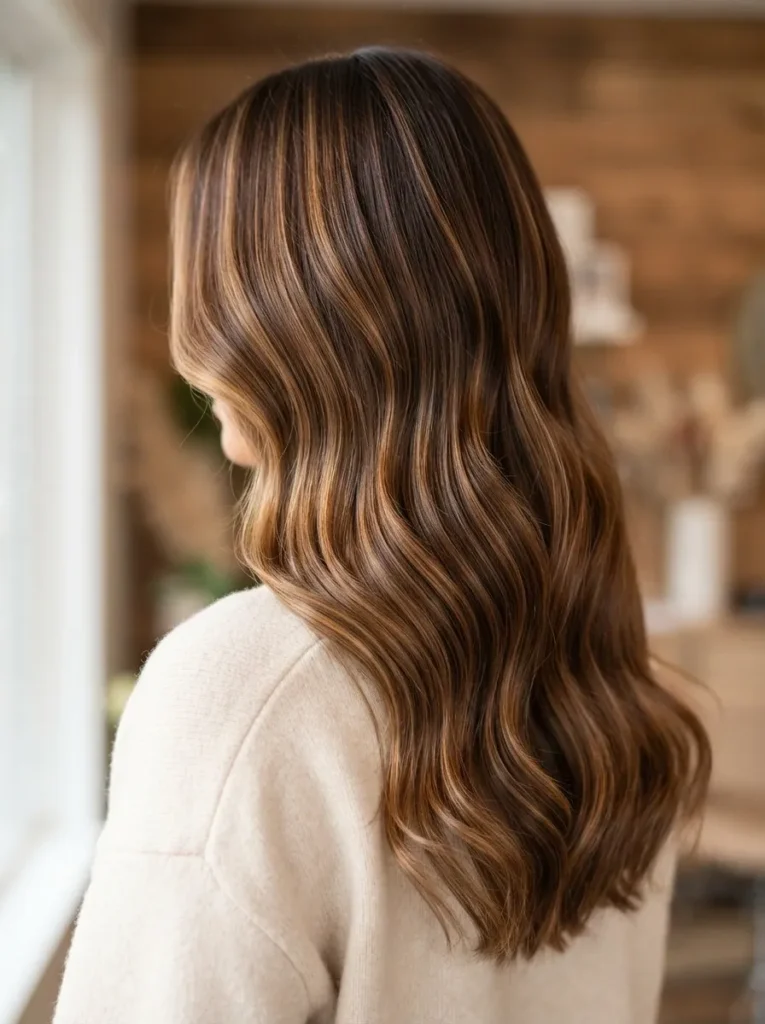
- Maple brown highlights add gentle amber warmth to a medium or deep brunette base.
- Fine ribbons create brightness while keeping the overall color grounded in brown.
- The warm dimension can make layered cuts appear fuller and more textured.
- Face-framing placement gives the complexion a subtle illuminated effect.
- Moderate upkeep may involve toner, gloss treatments, and conditioning as the color fades.
Maple brown highlights bring a cozy amber glow to brunette hair while keeping the overall result grounded and wearable. Fine ribbons can be scattered through the layers or concentrated around the face for controlled brightness. This shade often complements warm and neutral undertones, while the formula can be softened if your complexion tends to react strongly to orange or golden tones. Layered hair shows the highlights through natural movement, but straight hair can make the precise placement look sleek and intentional. Under sunlight, maple tones appear warmer and brighter; in softer indoor light, the deeper brown base becomes more noticeable.
The amount of maintenance depends on how light and warm you want the highlights to remain. Dark brown hair may need selective bleaching before maple tones can show clearly, while lighter brown bases may reach the desired level with less processing. Warm pigments can shift toward brassiness as toner fades, so a colorist may recommend periodic glossing rather than repeated lightening. In my experience, highlighted ends benefit from deep conditioning because dryness can make warm colors look less reflective. Use gentle, color-safe cleansing, apply heat protectant before styling, and arrange occasional salon refreshes when the ribbons lose their shine or balance.
10. Hazelnut Beige Blend
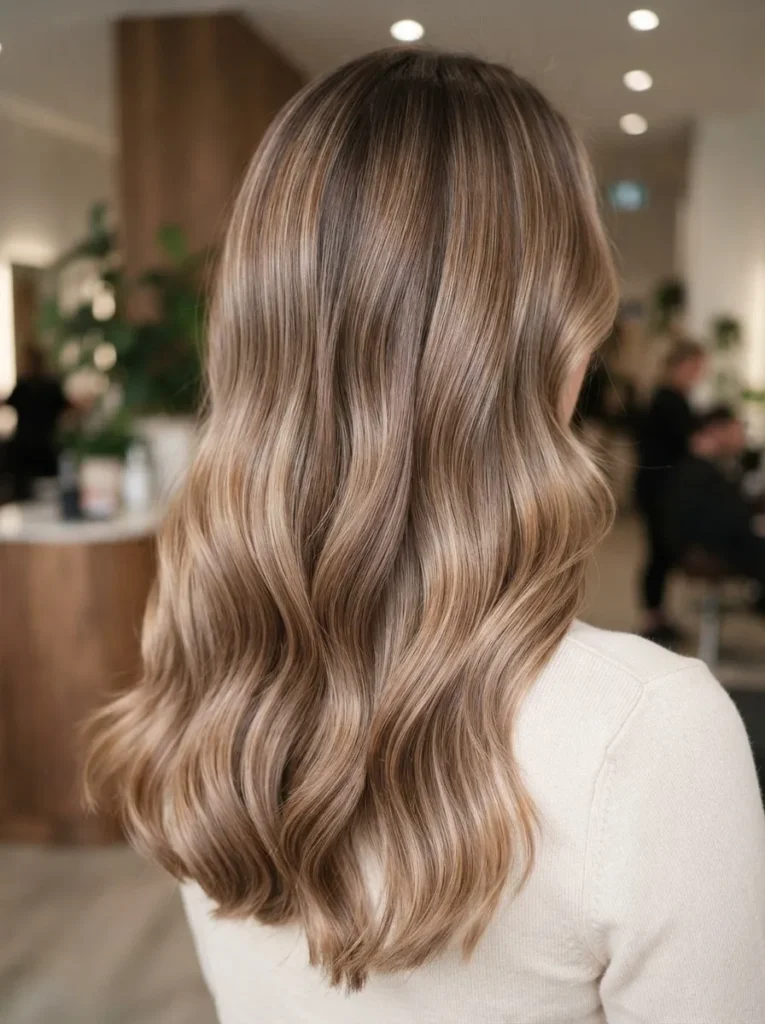
- Creamy beige and soft golden ribbons brighten a brunette base without creating an obviously blonde result.
- The blended tones can add gentle radiance around the face.
- Long layers and waves reveal the dimensional color particularly well.
- The natural-looking root makes regrowth easier to disguise.
- Moderate maintenance may include glossing and occasional toning as lighter pieces fade.
A soft hazelnut brown catches the light with creamy golden reflections, giving brunette hair a fresh spring dimension without pushing it into obvious blonde territory. The shade combines medium brown with subtle beige and honey tones, which can complement warm and neutral undertones particularly well. A colorist can reduce the golden warmth for cooler complexions or deepen the base for stronger contrast. Long layers, loose waves, and softly curled ends help reveal the tonal variation. In bright daylight, hazelnut pieces look luminous and airy, while indoor lighting brings out the richer brown foundation and keeps the result sophisticated.
Hazelnut highlights usually need some controlled lightening when the starting hair is medium or dark brown, especially if you want the golden-beige pieces to remain visible. A blended technique keeps the roots close to the natural shade, making regrowth easier to manage than solid all-over color. If the lighter sections develop unwanted brassiness, professional toner or a gloss can rebalance the tone. Use color-safe shampoo, cooler water, and heat protection to help preserve shine. I’ve seen this shade work beautifully on layered hair because the movement separates the tones naturally, but regular conditioning remains important after any lightening service.
11. Cocoa Brown
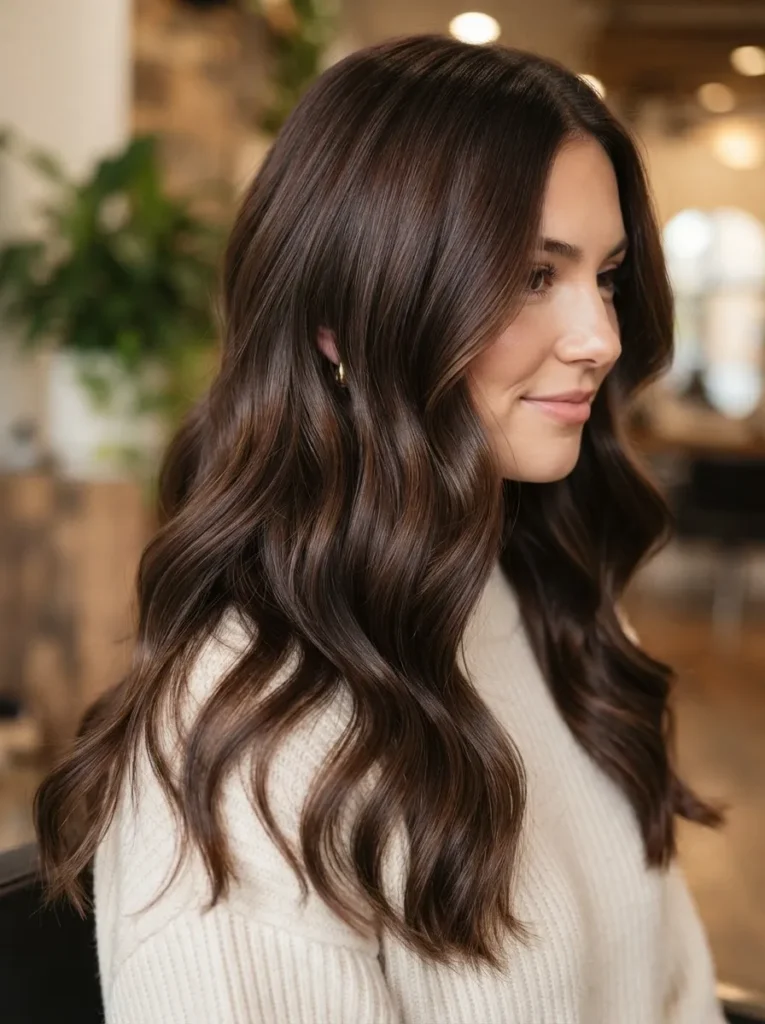
- Deep cocoa tones create a rich brunette finish with subtle chocolate depth.
- The neutral-brown character avoids an overly red or golden appearance.
- Glossy straight hair emphasizes the smooth surface and polished finish.
- Waves can reveal understated tonal variation through the lengths.
- This is generally lower maintenance when kept close to the natural base level.
Deep cocoa brown creates a rich, velvety effect that looks polished while still feeling natural for everyday wear. The shade works particularly well when you want to deepen medium or dark brunette hair without adding obvious red or gold reflections. Neutral and slightly cool undertones can pair nicely with cocoa, while a colorist can introduce warmth for golden complexions. Sleek straight hair emphasizes the glossy surface, whereas waves reveal subtle tonal variation. In daylight, cocoa brown can show soft chocolate dimension; under indoor lighting, it often appears deeper, making it suitable for professional settings and evening events.
A cocoa transformation is often relatively low maintenance when your chosen shade stays close to your natural brunette level. That makes it practical for someone who wants noticeable richness without frequent bleaching or highlight appointments. Previously colored hair can behave differently, so a professional consultation is useful before attempting deepening or correction. To keep the finish reflective, wash gently with color-safe products and avoid excessive heat. A tinted gloss can revive dull lengths when the color starts losing its polished appearance. If you are coloring at home, patch and strand testing are sensible precautions before applying the formula widely.
12. Butterscotch Ribbons
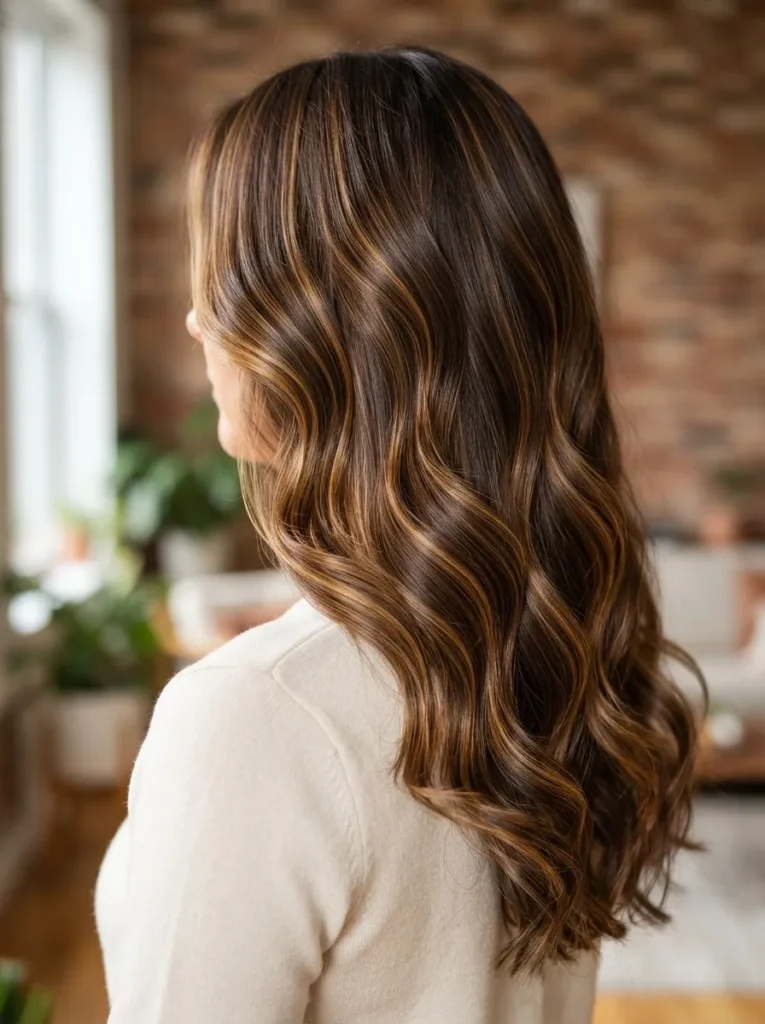
- Warm butterscotch pieces add golden brightness to a deeper brown foundation.
- Fine ribbons create softer dimension than heavy, uniform highlights.
- Face-framing placement can bring extra warmth around the eyes and cheekbones.
- Long waves make the lighter strands especially visible through movement.
- Moderate upkeep is expected when maintaining brighter, lighter pieces.
Butterscotch brown adds warm caramel-gold dimension to brunette hair, creating a bright finish that still feels grounded in a natural brown base. The shade can suit warm and neutral undertones, while a colorist can soften the gold with beige or neutral tones for a more balanced effect. Fine ribbons through the mids and ends create a softer result than heavy highlights, and face-framing pieces can add extra brightness. Long waves show the color beautifully because movement catches the lighter strands. Sunlight makes the butterscotch tones appear glowing and golden, while indoor lighting reveals more of the deeper brown underneath.
Because butterscotch tones are lighter and warmer than many brunette shades, dark hair may require bleaching or controlled pre-lightening before the color becomes visible. The final result also depends on previous dye, porosity, and the natural level of the hair. A toner may be needed if the lifted sections become too orange or yellow. I’ve noticed that warm dimensional colors look freshest when the hair remains well conditioned, because dry ends can make highlights appear rough rather than luminous. Use a color-safe shampoo, heat protection, and occasional glossing, and expect moderate maintenance if you want the brighter pieces consistently fresh.
13. Chocolate Cherry Brown
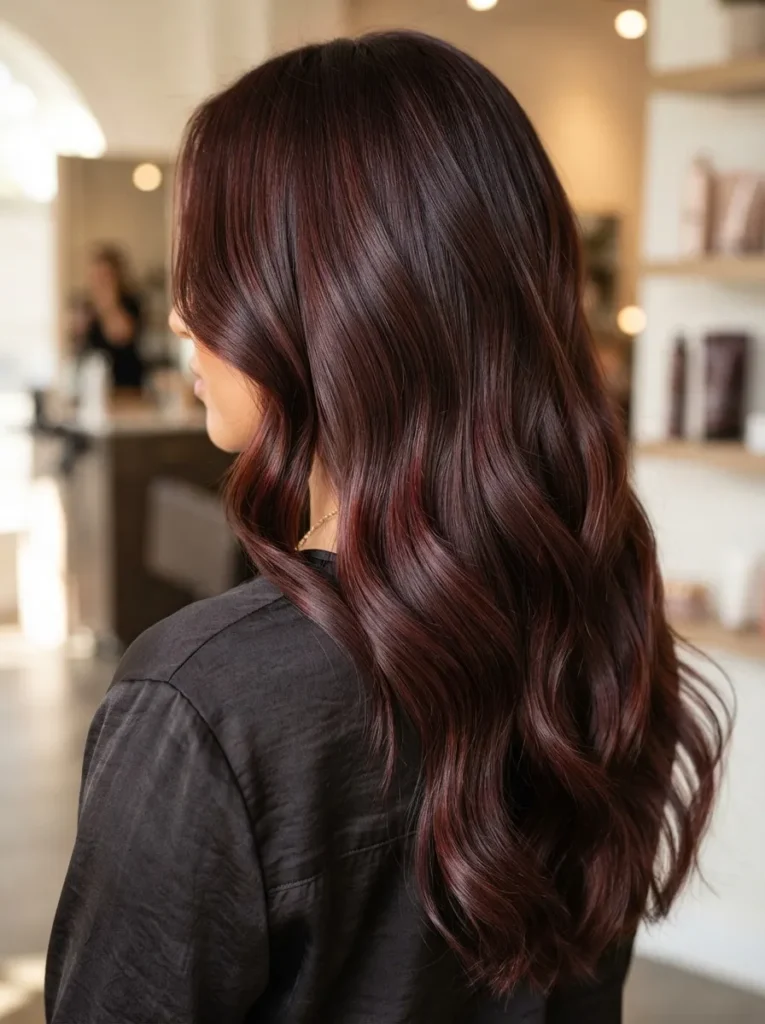
- Deep chocolate brown gains subtle cherry-red reflections without becoming bright red.
- The reddish dimension becomes more noticeable in direct sunlight.
- A glossy finish helps the color look rich and polished.
- It can complement neutral and warm undertones, with the red adjusted for personal preference.
- Moderate upkeep may include glossing as the red pigments gradually soften.
Chocolate cherry brown adds a subtle berry-red glow to a deep brunette base, creating dimension that appears understated indoors and more vibrant in sunlight. The combination of chocolate brown and muted cherry tones can complement warm and neutral undertones, while cooler complexions may benefit from a more restrained red formula. Straight hair highlights the glossy depth, whereas waves reveal the cherry ribbons through movement. This shade works particularly well on medium to long cuts where the different tones have room to blend. Under salon lighting, the red may look stronger; natural daylight usually reveals the softer brown balance.
The final intensity depends on your starting color and whether the hair already contains artificial pigment. Dark brown hair can often take a deep cherry gloss with limited lightening, but brighter red ribbons may require pre-lightening. Red pigments can fade noticeably with frequent washing, so cooler water and color-safe shampoo are helpful. A tinted gloss can refresh the warmth when the color starts looking muted. In my experience, keeping the hair well conditioned makes a major difference because glossy surfaces reflect red-brown tones more beautifully. If coloring at home, patch and strand testing are important before applying a permanent formula.
14. Almond Brown Balayage
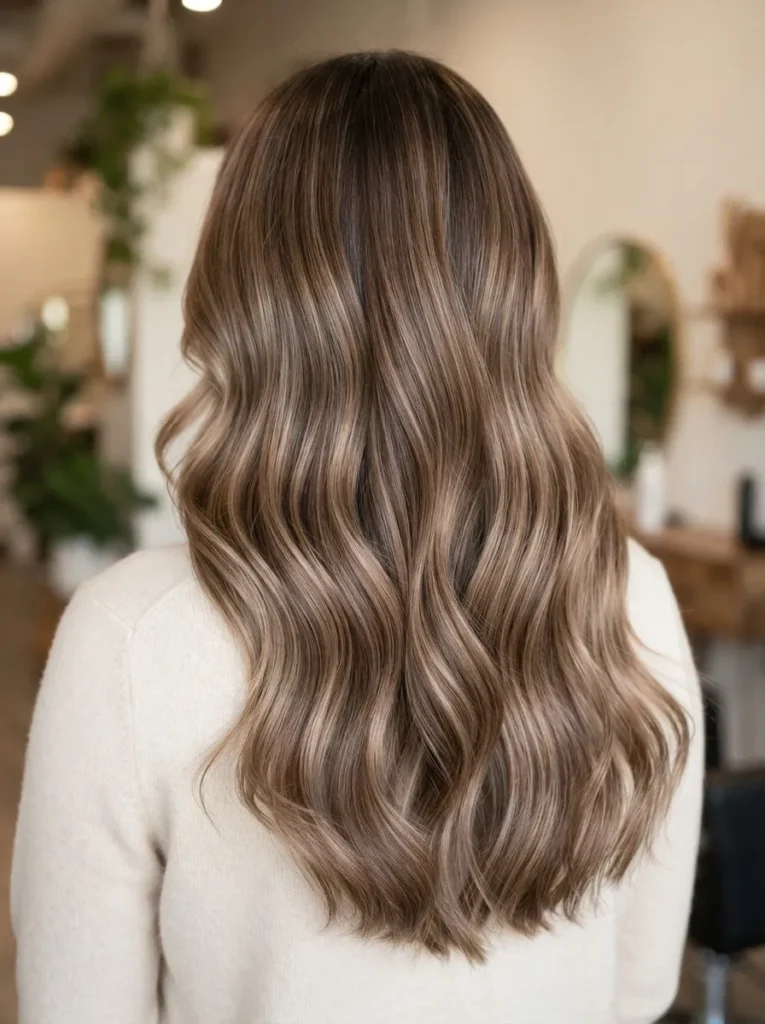
- Soft almond tones add brightness without overpowering a natural brunette base.
- Beige-brown ribbons create subtle contrast through the mid-lengths and ends.
- The neutral finish can look polished without appearing overly warm or ashy.
- Layered waves reveal the blended placement especially well.
- Root-friendly application keeps maintenance more manageable between appointments.
Almond brown balayage creates delicate beige-brown dimension that looks soft rather than heavily highlighted. The shade blends a medium brunette foundation with muted almond ribbons, giving the lengths gentle brightness while preserving natural depth near the roots. It may work especially well for neutral and slightly warm undertones, although a colorist can adjust the beige balance for cooler skin. Long layers, soft waves, and textured ends reveal the hand-painted transitions beautifully. In daylight, the lighter ribbons look creamy and subtle; indoor lighting makes the brunette base appear richer, giving the hairstyle an elegant finish suitable for everyday wear.
Maintaining almond brown is usually easier when the balayage begins below the root, because regrowth does not create an obvious line. Medium and dark brown hair may need controlled pre-lightening to reveal the beige tones, while lighter brunette bases can require less processing. If warmth develops after several washes, toner or a salon gloss can restore a balanced finish without recoloring every section. Use gentle color-safe shampoo, conditioner, and heat protection to help preserve shine and softness. I’ve noticed that porous highlighted ends can absorb toner differently, so a strand test is useful when making significant changes or correcting uneven previous color.
15. Golden Pecan Brown
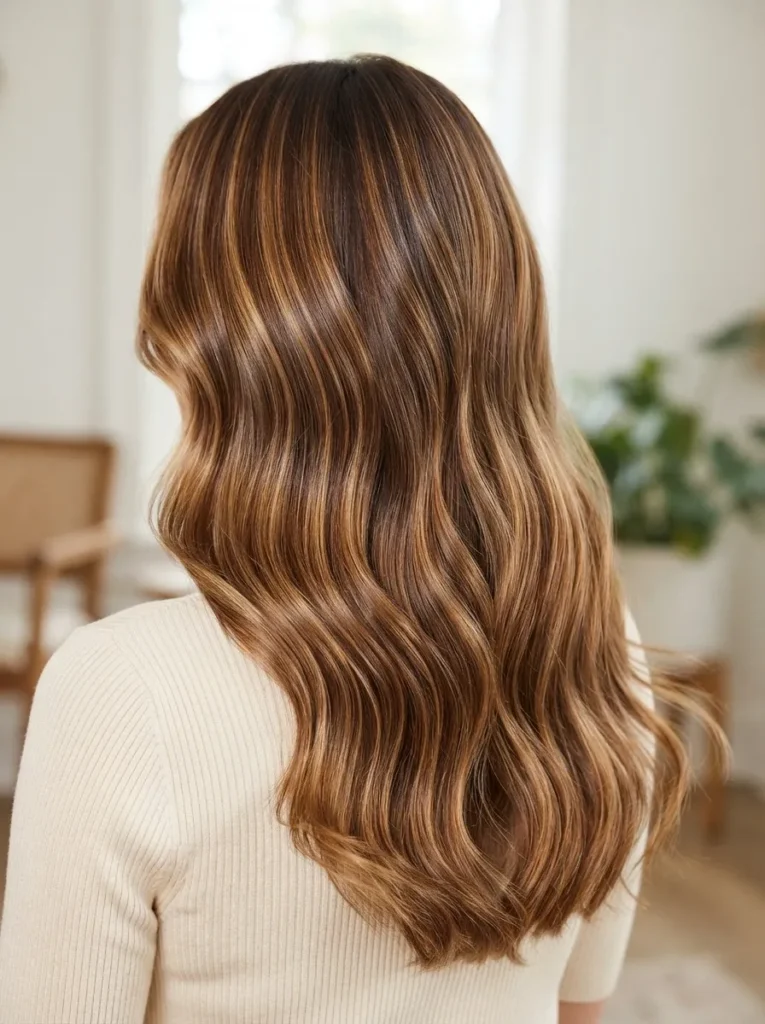
- Golden pecan tones bring warm, nutty brightness to medium and deep brunette hair.
- Fine highlights create dimension while keeping the base visibly brown.
- Face-framing ribbons can gently brighten the complexion without overwhelming the hairstyle.
- Waves and curls help separate the golden pieces through natural movement.
- Moderate maintenance may include glossing and occasional toning to control excess warmth.
Golden pecan brown gives brunette hair a warm, nutty glow that feels bright without looking dramatically lighter. Fine golden-brown ribbons can be woven through a medium or deep base, creating soft contrast around the face and throughout the lengths. The shade often complements warm and neutral undertones, while cooler complexions may suit a more beige version of the same idea. Waves and curls display the dimension particularly well because movement separates the lighter strands. In natural sunlight, pecan tones can look noticeably golden; indoors, the deeper brown foundation becomes stronger and keeps the overall effect refined.
If your starting hair is dark brown, achieving visible golden pecan ribbons may require bleaching or another controlled lightening service. Naturally lighter brown hair may need less processing, but previous artificial color can change how evenly the highlights develop. Because golden pigments can become brassy, a colorist may recommend toner or a gloss after the initial service. Protect the lighter lengths with color-safe shampoo, regular conditioning, and heat protection. That’s why many professional colorists recommend avoiding repeated lightening when a gloss can refresh faded warmth. A strand test is especially useful if your hair has been colored before or feels dry.
16. Maple Brown Glow
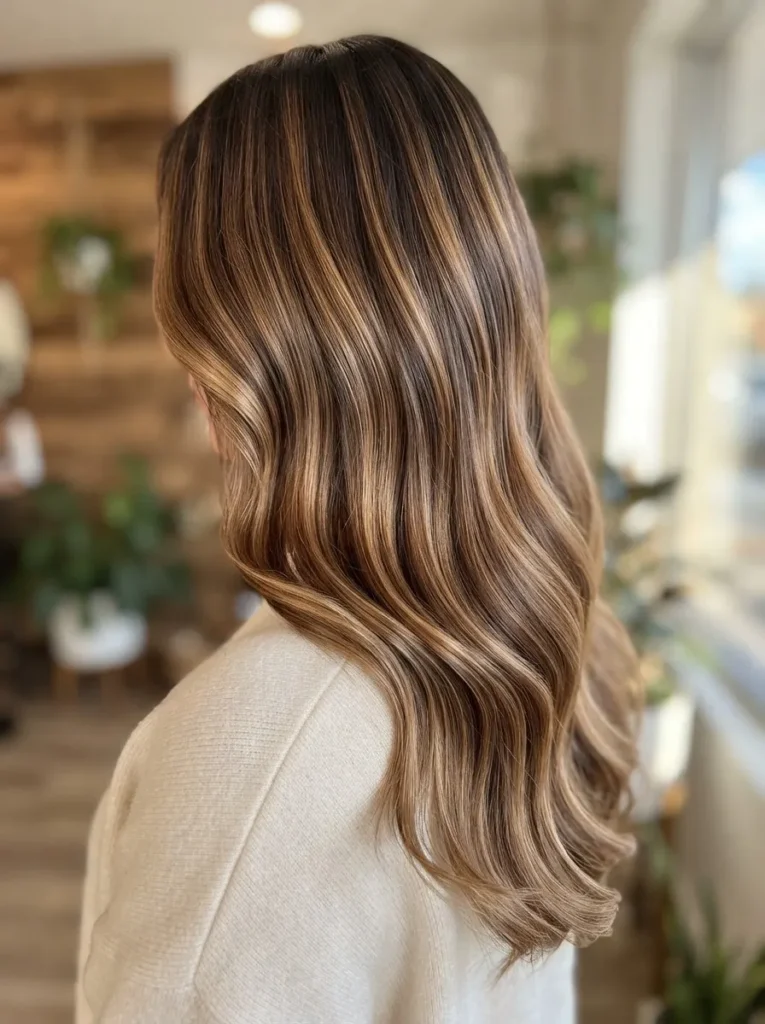
- Warm maple tones bring soft amber brightness to a rich brunette base.
- Fine ribbons add dimension without creating a heavily highlighted appearance.
- Face-framing placement can gently illuminate the complexion.
- Waves, curls, and layered cuts reveal the tonal movement beautifully.
- Moderate maintenance may include glossing when warmth begins to fade.
Glossy maple brown gives brunette hair a warm spring glow, with subtle amber reflections that appear brighter whenever light moves across the lengths. The shade works especially well on medium brown bases because it adds dimension without completely changing the natural depth. Warm and neutral undertones may pair naturally with this finish, while cooler complexions can suit a softer, less golden version. Long layers, loose waves, and rounded bobs all show the tonal movement beautifully. In sunlight, the amber notes look lively; indoors, the deeper brown remains dominant and keeps the color polished.
Maple tones can be created through balayage, fine highlights, or a dimensional all-over color, depending on your starting shade and desired brightness. Darker hair may need selective pre-lightening before the amber notes become visible, while lighter brown hair may require less processing. Warm pigments can fade or turn brassy, so color-safe shampoo, cooler water, and periodic glossing can help maintain balance. In my experience, hydrated hair reflects warm brown tones more evenly, so deep conditioning matters after lightening. A strand test is helpful when previous color, dryness, or uneven porosity could affect the final result.
17. Latte Brown Blend
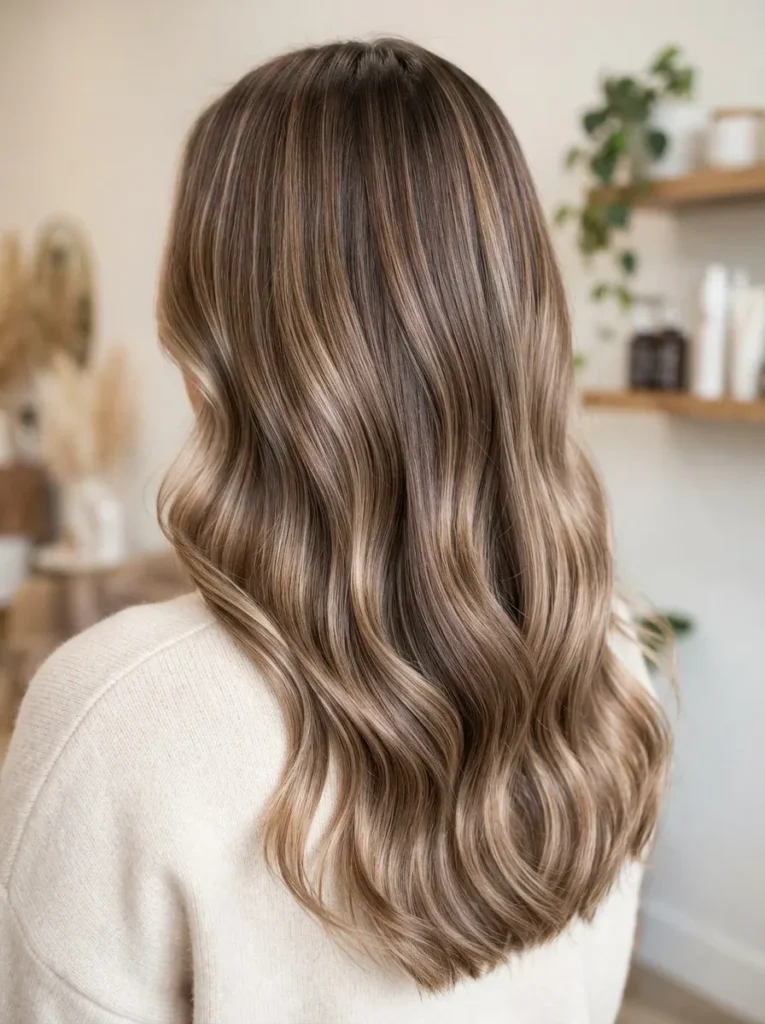
- Creamy beige ribbons create a soft contrast against a natural brown foundation.
- The lighter pieces can brighten the face without looking dramatically blonde.
- Neutral beige tones offer a balanced alternative to strongly golden highlights.
- Loose waves emphasize the airy dimension through the mid-lengths and ends.
- Moderate upkeep may include toner or glossing as the lighter pieces fade.
Soft latte brown creates an airy brunette finish by mixing neutral brown with creamy beige tones that catch light without looking stark. The result can brighten medium brown hair while preserving enough depth to feel natural and wearable. It may complement neutral and warm undertones, and a colorist can shift the beige slightly cooler or warmer according to the complexion. Straight hair shows the smooth tonal blend, while loose waves make the lighter pieces appear more dimensional. Natural daylight reveals the creamy ribbons most clearly, whereas indoor lighting emphasizes the richer brown foundation and glossy finish.
A latte-inspired blend usually works best when lighter tones are placed through the mid-lengths and ends rather than applied heavily at the roots. Medium or dark brown hair may require controlled lightening, and previously colored hair should be assessed before processing. Beige tones can become warmer as toner fades, so occasional salon glossing may help maintain the balanced finish. Use color-safe shampoo, conditioner, and heat protection to reduce dryness and preserve shine. I’ve noticed that softly blended beige highlights can remain attractive as they grow out, making this option practical for someone who wants visible brightness without constant root appointments.
18. Coffee Brown
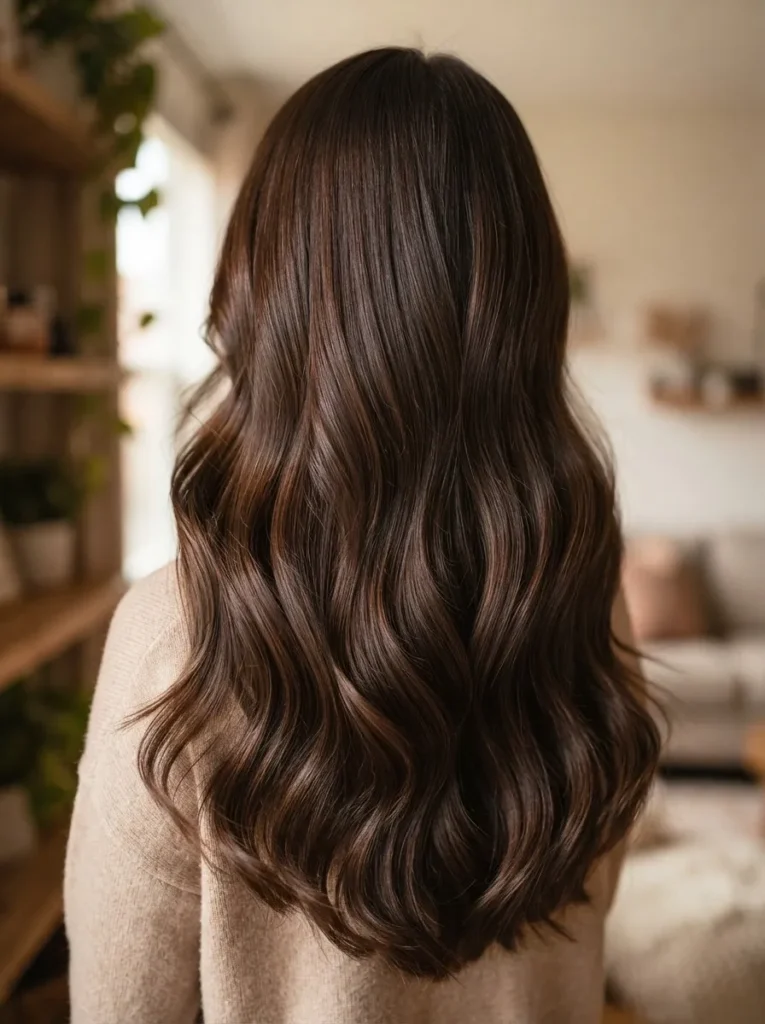
- Deep coffee tones enhance brunette richness while maintaining a natural-looking finish.
- Subtle chocolate variation keeps the color dimensional rather than completely flat.
- Glossy styling makes the darker shade look especially polished.
- The tone can be adjusted warmer or cooler for different undertones.
- Maintenance is generally lower when the shade stays close to the natural base.
A rich coffee brown creates depth with a smooth, understated finish that feels polished without looking flat. The shade combines deep brunette pigment with subtle neutral chocolate notes, making it especially appealing when you want to enhance your natural base rather than create strong contrast. It may complement neutral, warm, or olive undertones, depending on how much warmth the formula contains. Sleek bobs emphasize the glossy surface, while long waves reveal quieter variations through the lengths. In daylight, coffee brown shows soft chocolate reflections; under indoor lighting, it becomes deeper and more dramatic without appearing harsh.
Coffee brown is often a manageable choice because it can stay close to the natural level, reducing the need for frequent bleaching or highlight appointments. If you are moving from a much lighter shade, however, filling or recoloring may be necessary to create an even brunette result. Previously lightened hair can absorb dark pigment unevenly, so professional assessment and a strand test are worthwhile. To keep the finish glossy, use gentle color-safe cleansing, regular conditioning, and heat protection. A clear or tinted gloss can refresh faded shine between color services, while limiting frequent washing helps the brunette tone last longer.
19. Caramel Mocha Melt
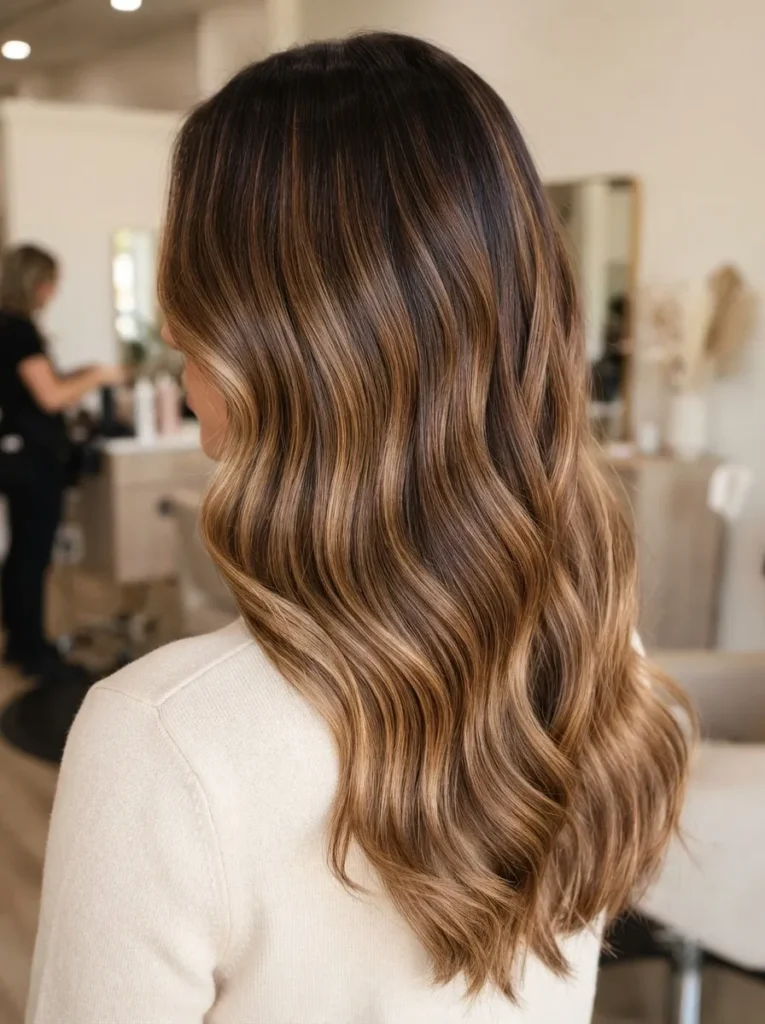
- Rich mocha roots transition into soft caramel through the mid-lengths and ends.
- The gradual blend creates brightness without a harsh line between shades.
- Face-framing pieces can add warmth and gentle definition around the features.
- Loose waves reveal the contrast especially well.
- Moderate maintenance makes it easier to grow out than traditional highlights.
A caramel mocha melt creates a smooth transition from deep brunette roots into warm caramel lengths, giving the hair brightness without sacrificing richness. The contrast can be adjusted to suit the natural base, with softer caramel for subtle dimension or brighter pieces for a more noticeable spring refresh. Warm and neutral undertones often pair nicely with this combination, while cooler complexions may benefit from beige-toned caramel. Long layers and loose waves reveal the gradual color movement beautifully. In natural light, the caramel appears luminous; indoors, the mocha foundation keeps the overall finish grounded and sophisticated.
The technique can be relatively low maintenance because the darker root remains close to the natural shade, allowing regrowth to blend gradually. Dark brown hair may need pre-lightening before caramel becomes visible, particularly through the lower lengths. Toner can help control unwanted orange or yellow warmth after lifting, while a gloss can restore shine when the color begins looking dull. Use color-safe shampoo, regular hair conditioner, and heat protection to support the lighter ends. I’ve noticed that a soft melt is especially practical for people who want noticeable dimension but cannot visit the salon frequently for precise root touch-ups.
20. Soft Auburn Brown
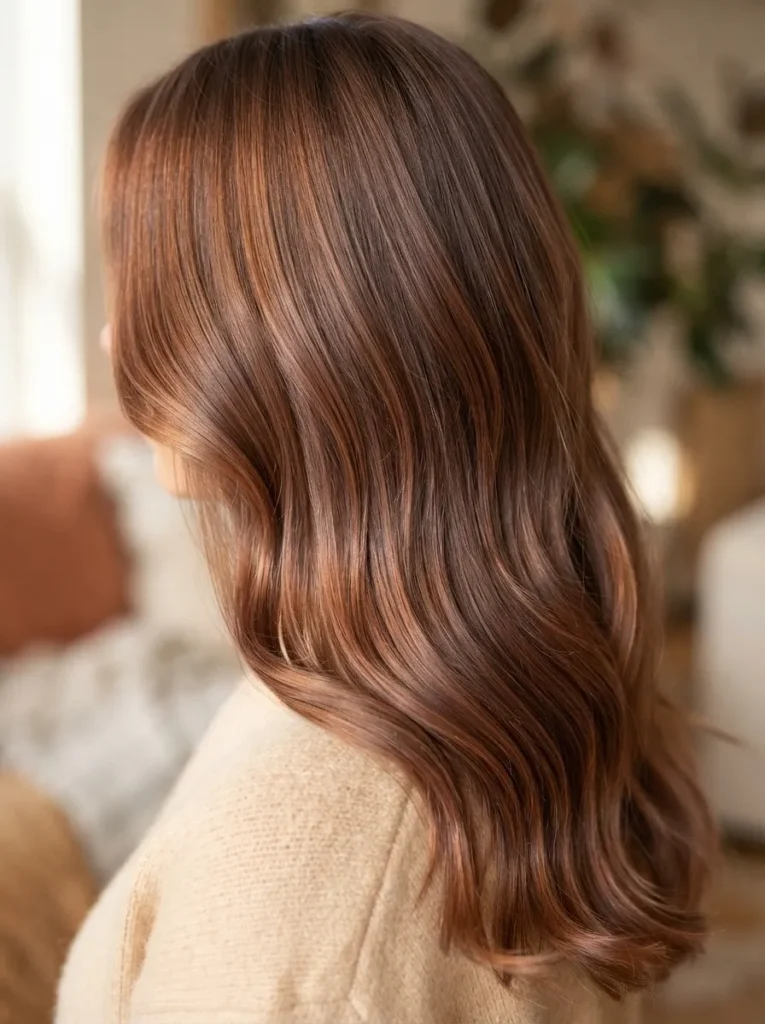
- Muted auburn warmth adds subtle red dimension without creating a vivid red hairstyle.
- Brown remains the dominant shade, keeping the result natural and wearable.
- Warm reflections become more noticeable in direct sunlight.
- Waves and curls reveal the red-brown variation through movement.
- Moderate maintenance may include gloss treatments as red pigments gradually fade.
Soft auburn brown blends understated red and copper warmth into a natural brunette foundation, creating a color that changes noticeably with the lighting. The brown base keeps the result grounded, while muted auburn reflections add richness and movement. This shade often complements warm and neutral undertones, though cooler complexions may suit a more balanced brown with reduced copper intensity. Medium-length layers, loose waves, and curls can make the tonal variation especially visible. In daylight, the auburn notes become brighter and warmer; indoors, the color generally appears deeper and more brown, making it suitable for both casual and professional settings.
The final auburn intensity depends on your starting level, previous color, and hair porosity. Dark brown hair may need controlled lightening for noticeable copper-red dimension, while lighter brunette hair can often develop warmth with less processing. Red pigments may fade faster with frequent washing, so cooler water and color-safe products can help preserve vibrancy. A salon gloss is useful when the shade loses its reflective finish without requiring a complete recoloring service. If you are coloring at home, follow the product instructions carefully and perform a patch and strand test first. Regular conditioning also helps prevent dry lengths from looking dull.
Conclusion : Spring Brown Hair Color Ideas
These Spring Brown Hair Color Ideas make it easier to explore everything from subtle, low-maintenance changes to richer brunette transformations. Whether you prefer warm caramel, golden brown, cool mocha, or deep chocolate tones, consider how each shade works with your natural base, complexion, undertone, hair condition, and maintenance routine.
Save your favorite looks on Pinterest before your next salon visit, then show them to a professional colorist to discuss what is realistic for your hair. I’ve seen how thoughtful shade selection can refresh an entire look while keeping it natural. Choose a color that feels fresh, personal, and exciting, and let your next hair transformation begin.