25 Trendy Blunt Haircut Ideas for a Chic & Modern Look
These Trendy Blunt Haircut Ideas by Styled Aura are designed for anyone who wants modern haircut inspiration without sacrificing practicality. Whether your hair is fine, thick, straight, wavy, short, or long, the right blunt shape can create a stronger silhouette and make styling feel easier.
You’ll find options for different lengths, textures, face shapes, and everyday routines, so choosing a cut feels less overwhelming. In my experience, the best haircut is not simply the prettiest photo; it is one that fits your natural texture, styling habits, and maintenance comfort. Use these ideas to find a shape that feels genuinely you.
1. Blunt Cut With Soft Waves

- Soft waves add movement while keeping the blunt perimeter visible.
- The collarbone length offers plenty of styling flexibility.
- Works especially well for naturally wavy and medium-density hair.
- Loose texture makes the haircut feel relaxed rather than overly structured.
- A lightweight wave cream can enhance definition without weighing down the ends.
Soft texture can make a precise haircut feel effortlessly beautiful. This collarbone-length blunt cut keeps the ends strong and even while loose waves add movement through the lower sections. Naturally wavy hair can showcase the shape with minimal styling, while straight hair can create similar bends using braids, rollers, or a large curling tool. The length works well for oval, round, and square faces because it extends below the jaw without adding excessive width. I’ve noticed that keeping the waves loose preserves the modern blunt character while giving the haircut enough softness for everyday wear.
The styling routine can remain simple when you focus on enhancing texture rather than creating perfect curls. Apply a lightweight mousse or wave cream to damp hair, scrunch gently, and allow it to air-dry whenever possible. For straighter hair, create large bends and leave the ends slightly relaxed so the result feels natural. Fine hair should avoid heavy creams that flatten the shape, while thicker hair may benefit from a lightweight smoothing product to control frizz. Trim the perimeter around every eight weeks to maintain its density. This versatile finish works beautifully for casual days, work, travel, dinners, and special occasions.
2. Blunt Cut With Choppy Texture

- Choppy texture adds personality without completely removing the blunt outline.
- Works especially well for naturally wavy or medium-to-thick hair.
- Separated ends create visible movement and dimension.
- A matte styling product can emphasize the textured finish.
- Keeping the lower perimeter strong prevents the cut from looking overly shaggy.
A little controlled irregularity can make a blunt haircut feel much more modern. This shoulder-length shape keeps a recognizable dense perimeter while adding selective choppy texture through the upper and middle sections. The result is movement without the disconnected appearance of heavily layered hair. Naturally wavy and medium-to-thick textures can showcase the separation especially well, while straight hair can create a sharper, more editorial interpretation. The style works particularly nicely on oval, square, and heart-shaped faces because the texture adds visual softness around the upper face. I’ve noticed that restraint is important here; too much texturing can quickly weaken the blunt effect.
Styling should focus on definition rather than perfection. Apply a lightweight mousse or matte texture cream to damp hair, then scrunch or twist selected sections while drying. Straight hair can be given loose bends before adding a small amount of texturizer to separate the ends. Fine hair should be textured sparingly because excessive removal can reduce the appearance of density. Thick hair can usually handle more selective shaping, particularly underneath. Keep the bottom edge regularly trimmed every eight weeks so the haircut maintains its intentional structure. This style is particularly suitable for casual outfits, creative workplaces, concerts, weekend plans, and relaxed evening looks.
3. Blunt Lob With Middle Part
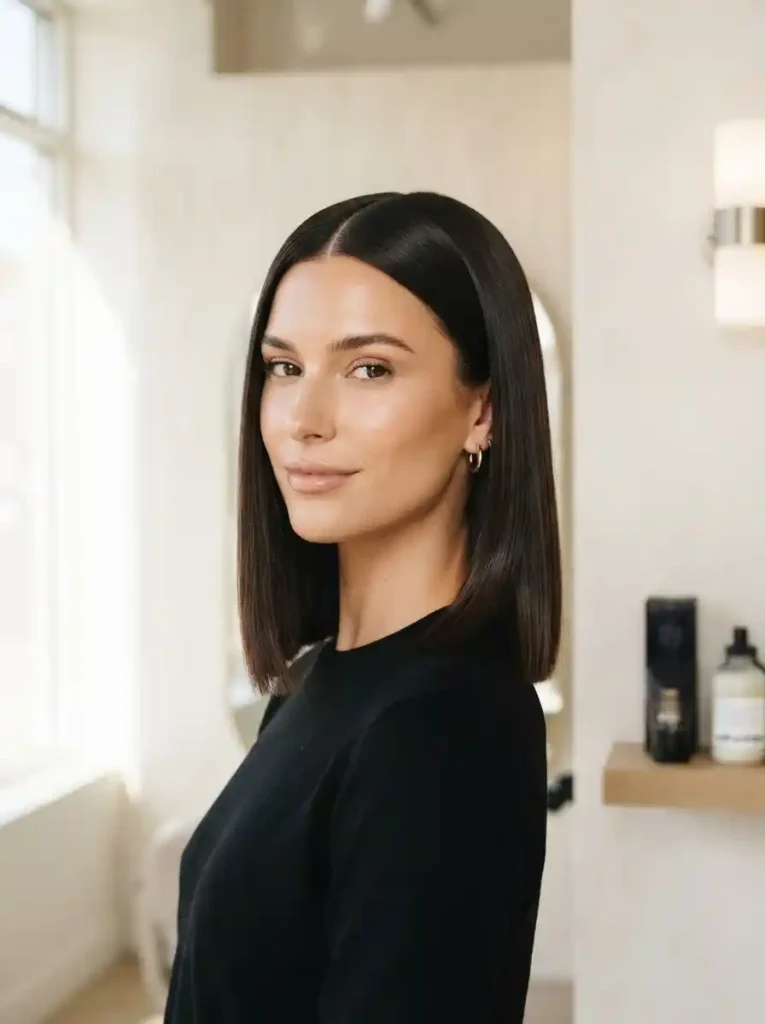
- A middle part emphasizes the symmetry of a clean blunt perimeter.
- The longer lob length provides more styling flexibility than a bob.
- Straight hair makes the precise shape especially striking.
- The strong ends can make fine-to-medium hair appear fuller.
- The style transitions easily between polished and casual looks.
Symmetry gives a blunt lob an especially clean and sophisticated presence. This version falls just below the shoulders, keeping enough length for ponytails and low buns while maintaining a crisp, uninterrupted perimeter. A center part divides the shape evenly and draws attention toward the face, making the haircut particularly effective on oval and heart-shaped faces. Straight hair showcases the precision best, while softly wavy hair can create a gentler interpretation. In my experience, this is one of the easiest blunt shapes to customize because small changes in length, parting, or styling can dramatically alter the overall appearance without changing the basic haircut.
The simplicity of the silhouette also makes everyday styling manageable. Blow-dry with a paddle brush for a smooth finish, or use a large barrel to create loose waves when you want additional movement. Fine hair usually benefits from keeping the perimeter untouched and dense, while thick hair may need discreet internal weight removal to help the lob sit closer to the body. A lightweight heat protectant is useful if you regularly straighten or curl the ends. Schedule trims approximately every eight weeks to keep the center-parted silhouette balanced. It works equally well for professional meetings, casual weekends, travel days, and dressier evening styling.
4. Blunt Cut With Face-Framing Bangs
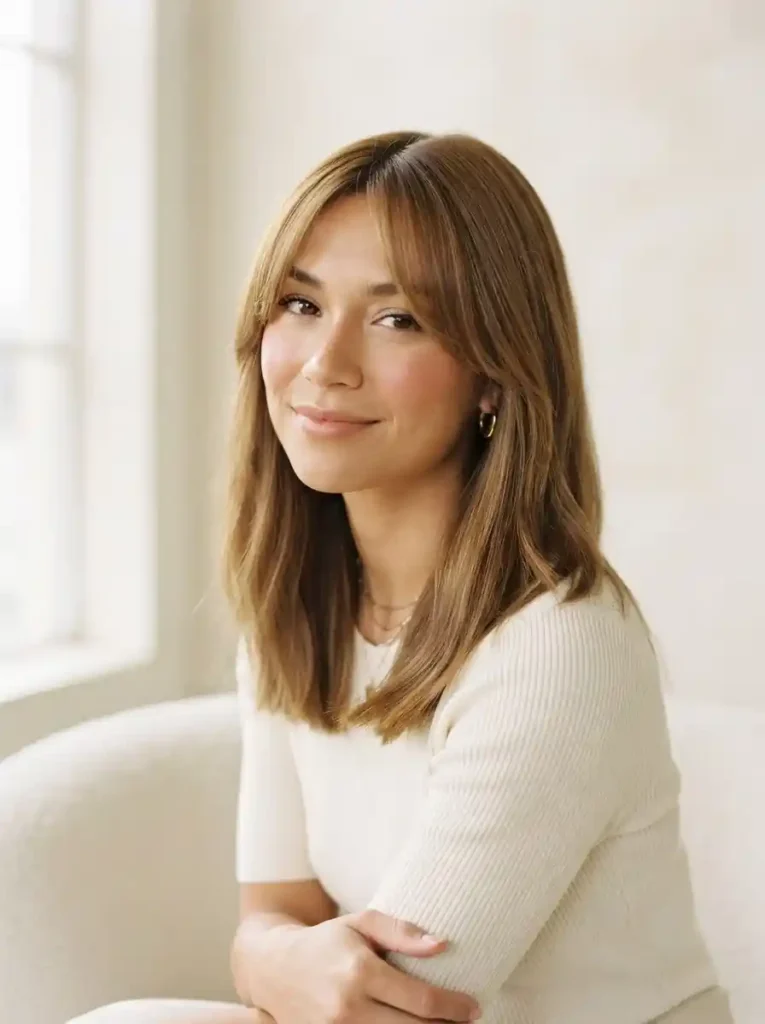
- Longer face-framing bangs soften the forehead and cheek area.
- The blunt perimeter preserves a fuller-looking bottom edge.
- The graduated fringe provides movement without creating many layers.
- Straight and lightly wavy hair can both support the style.
- Longer bangs offer more flexibility as they grow out.
Face-framing bangs can add softness while allowing the main haircut to remain beautifully structured. This medium-length style keeps a strong blunt perimeter through the bottom while longer fringe pieces begin near the forehead and gradually extend toward the cheekbones. The gradual transition creates movement without introducing a heavily layered appearance. Straight hair gives the haircut a sleek finish, while soft waves make the framing feel more natural and relaxed. The placement can be adjusted for different face shapes, with longer outer pieces often creating a more elongating effect. I’ve seen this approach work especially well for people who want framing without committing to short, dense bangs.
The longer fringe also makes maintenance less demanding than a traditional full bang. Blow-dry the front sections away from the face using a round brush, or let them settle naturally when you prefer a softer finish. Fine hair should keep the framing conservative so the main perimeter remains dense, while thicker hair can accommodate slightly more shaping around the cheekbones. A lightweight styling cream can control flyaways without making the fringe greasy. The blunt length usually needs trimming every eight weeks, while the face-framing pieces can be adjusted during regular appointments. This haircut works comfortably for everyday wear, office styling, dinners, photographs, and special occasions.
5. Blunt Bob With Subtle Waves

- Soft waves make the precise perimeter feel relaxed and approachable.
- The dense ends help maintain a fuller-looking silhouette.
- Naturally wavy hair can often style this shape with minimal effort.
- Straight hair can recreate the texture using loose bends or heatless methods.
- A center part keeps the overall finish clean and balanced.
A few gentle waves can completely change the mood of a precise bob. This chin-length shape keeps its dense, one-length perimeter while soft bends through the hair add movement and dimension. Naturally wavy hair can showcase the style with very little manipulation, while straight hair can achieve similar texture through loose braids, rollers, or a large curling iron. The compact length emphasizes the jaw and cheek area, making it especially striking on oval and heart-shaped faces. In my experience, keeping the waves loose rather than tightly curled preserves the modern character of the blunt silhouette.
The styling routine can stay simple when the texture remains relaxed. Apply a lightweight mousse or wave cream to damp hair, scrunch gently, and let it air-dry when possible. If using heat, curl larger sections and leave the last inch of each strand slightly straighter so the finish looks modern rather than overly formal. Fine hair should avoid heavy creams that can flatten the roots, while thick hair may benefit from a lighter smoothing product to control bulk. The haircut itself generally needs trimming every six to eight weeks. This versatile style works beautifully for everyday errands, workdays, brunches, and evening plans.
6. Blunt Cut With Rounded Ends
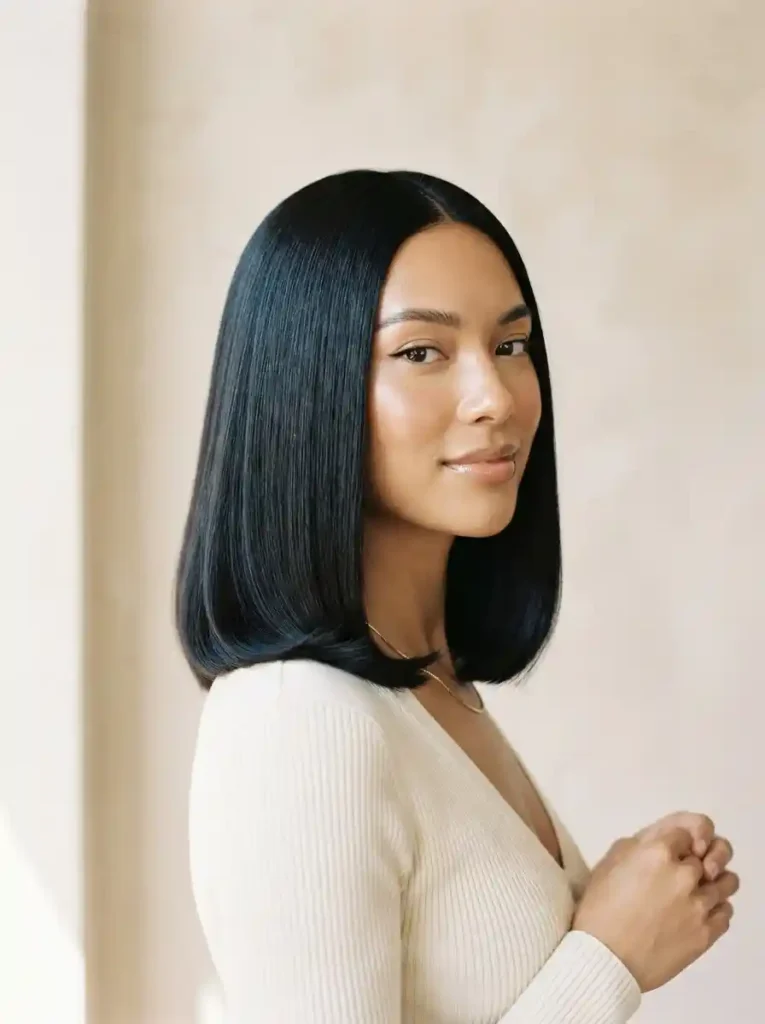
- A rounded finish softens the visual sharpness of a blunt perimeter.
- The inward curve can make the haircut appear more polished and intentional.
- Straight hair displays the rounded shape most clearly.
- Medium-density hair can maintain fullness without excessive layering.
- A simple blow-dry can recreate the curved ends at home.
A subtle inward curve can make a blunt haircut look polished without sacrificing its strong shape. This shoulder-length version keeps the ends dense and even, then curves them gently toward the body rather than leaving the perimeter completely flat. Straight hair is ideal for showing this rounded finish, while slightly wavy hair can create a softer interpretation. The shape works across many face types because the length sits below the jaw and does not concentrate width in one small area. I’ve noticed that this tiny styling adjustment can make an otherwise simple haircut look more finished, especially for professional or dressier settings.
Creating the rounded ends usually takes only a few extra minutes. Use a medium round brush while blow-drying, directing the final sections inward as they dry. A flat iron can create the same effect, but avoid repeatedly pressing the ends to protect them from unnecessary heat. Fine hair should retain a strong perimeter to preserve density, while thicker hair may need subtle internal shaping so the curve does not become too bulky. A lightweight shine serum can enhance the smooth finish. Trimming approximately every eight weeks keeps the bottom edge even and prevents uneven growth from disrupting the rounded silhouette.
7. Blunt Bob With Peekaboo Color
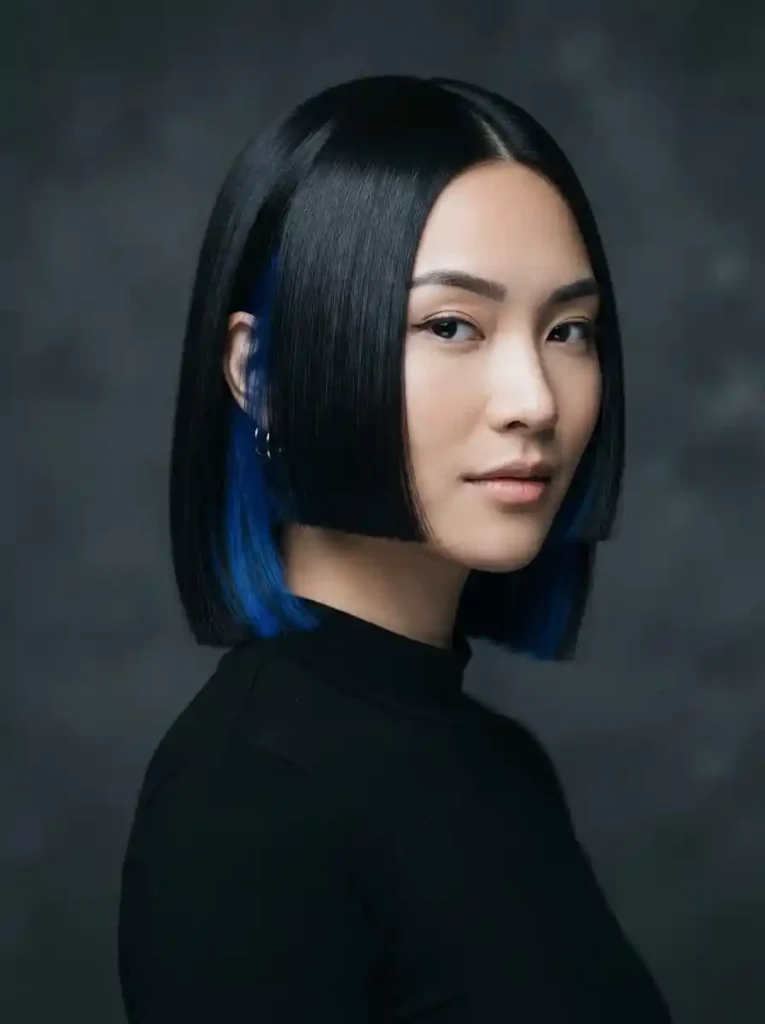
- Hidden color adds personality without changing the haircut structure.
- The blunt perimeter keeps the bold color placement looking controlled.
- Dark bases can create striking contrast with jewel-toned accent shades.
- Straight hair makes the peekaboo effect especially easy to notice.
- The color remains subtle when the hair is worn naturally closed.
A hidden flash of color can turn a classic blunt bob into something unexpectedly expressive. This jaw-length version keeps the perimeter precise and dense while placing vivid color underneath the darker top sections, allowing the shade to appear subtly as the hair moves. Straight hair shows the contrast clearly, while waves can reveal more of the colored panels. The compact bob creates a clean canvas for experimenting with jewel tones, copper, or brighter fashion shades. These trendy blunt haircut ideas work particularly well when you want a creative detail without changing the recognizable structure or committing to an all-over color transformation.
The styling possibilities make peekaboo color especially fun. Wear the hair smooth and tucked behind the ears for a restrained look, or add waves when you want the hidden sections to become more visible. Color-treated areas usually need extra conditioning and protection from frequent high heat, especially when lightening was required before applying the vivid shade. The haircut itself remains relatively low-maintenance, although the jawline should be trimmed every six to eight weeks. Fine hair can keep the perimeter completely solid, while thicker hair may need slight internal shaping. This combination suits creative workplaces, weekends, concerts, and statement-making occasions.
8. Blunt Bob With Wispy Ends

- Keeps the recognizable blunt shape while adding a lighter finish.
- Wispy tips can prevent thick hair from looking overly heavy.
- The jaw length creates a clean frame around the lower face.
- Straight hair makes the subtle contrast between density and softness visible.
- Light styling products help preserve movement without weighing down the ends.
A little softness at the tips can make a structured bob feel much more effortless. This jaw-length cut maintains a strong overall perimeter but uses delicate texturizing at the ends to prevent the shape from appearing too rigid. It works particularly well for medium-to-thick hair, where removing a small amount of weight can create natural movement without sacrificing the appearance of fullness. Straight hair shows the contrast most clearly, while slight waves make the wispy finish even more relaxed. Oval, heart, and longer face shapes can all suit the length, with small adjustments around the jaw providing personalized balance.
The styling approach should stay lightweight so the ends can move naturally. After blow-drying, use a tiny amount of smoothing cream or serum only through the final few centimeters of hair. Fine hair needs careful handling because excessive texturizing can make the perimeter appear thinner than intended. Thick hair offers more room for subtle point-cutting or internal weight removal while preserving the outer shape. A side part can create softness and movement, while a middle part gives the bob a cleaner, more symmetrical appearance. Regular trims every six to eight weeks help maintain the silhouette while keeping the delicate ends fresh.
9. Blunt Lob With Curtain Fringe

- Combines a dense collarbone shape with soft face-framing movement.
- Curtain fringe creates a gentle transition around the forehead and cheekbones.
- The longer length remains practical for ponytails and low buns.
- Works especially well with straight, wavy, and medium-density hair.
- Fringe styling adds a few extra minutes to the daily routine.
A curtain fringe can make a clean lob feel softer without taking away its modern structure. This version keeps the ends at the collarbone in a strong one-length line while the longer fringe opens from the center and sweeps toward the cheekbones. Straight hair creates a polished contrast between the fringe and perimeter, while loose waves add natural movement. The longer fringe can help soften prominent cheekbones or stronger facial angles, depending on where it begins and finishes. I’ve noticed this combination is especially useful for people who want face framing but still prefer a substantial, uncomplicated haircut.
The main styling requirement comes from the fringe rather than the lob itself. Use a round brush to direct each side away from the face, then allow the hair to cool before lightly separating the pieces with your fingers. The blunt length can be air-dried, blow-dried smooth, or styled into loose waves. Fine hair should retain plenty of density through the ends, while thick hair may need modest internal shaping to prevent heaviness. A lightweight heat protectant is useful when styling the fringe regularly. Trim the main haircut every eight weeks, with fringe maintenance scheduled more often if you prefer a precise curtain shape.
10. Blunt Cut With Side Bangs
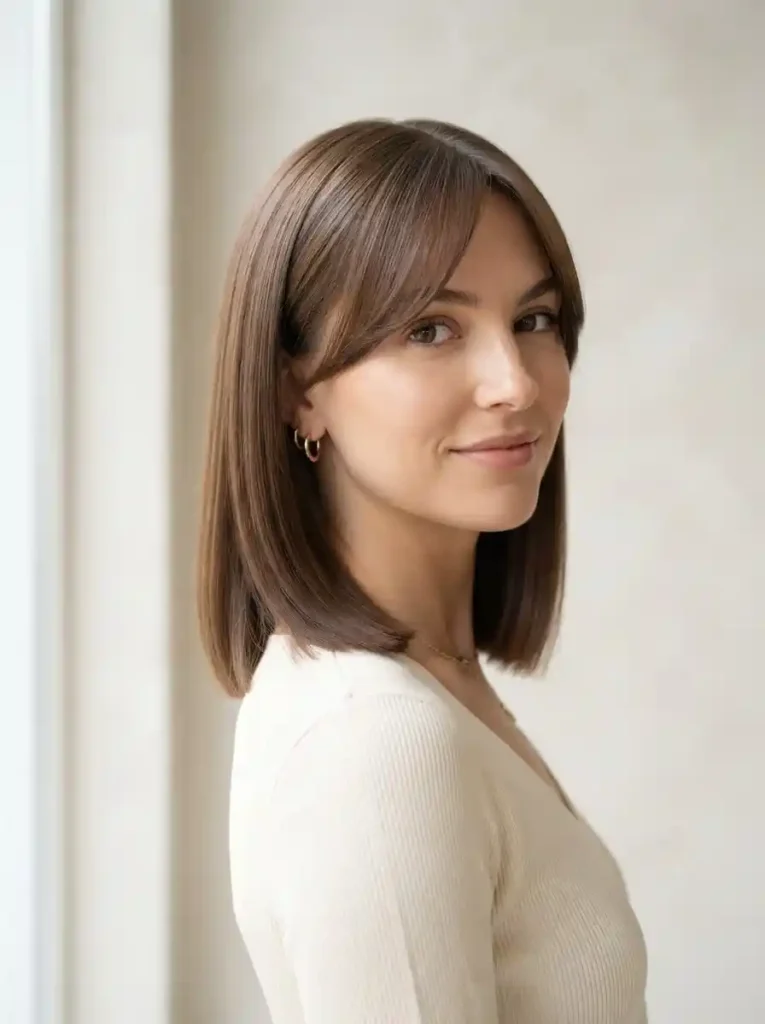
- Side bangs soften the forehead while preserving a strong haircut outline.
- The shoulder length provides flexibility for everyday styling.
- Long fringe pieces can be adjusted around individual face proportions.
- Straight and softly wavy textures both support the overall shape.
- The side-swept fringe offers an easy alternative to full bangs.
A side-swept fringe can introduce softness without changing the clean character of a blunt haircut. This shoulder-length version keeps the bottom perimeter dense and straight while the longer bang sweeps diagonally across the forehead toward the cheekbone. The angled movement can create useful balance for round, square, or heart-shaped faces, depending on its exact starting and ending points. Straight hair gives the style a sleek finish, while light waves make it feel more casual. For anyone hesitant about full bangs, this option provides face framing with more flexibility because the fringe can blend into the surrounding length.
Daily styling is relatively easy once the side direction has been established. Blow-dry the fringe across the forehead first, then redirect it toward the preferred side as it cools. This technique can help prevent a stubborn part from separating the hair too sharply. Fine hair often benefits from keeping the fringe slightly longer and avoiding excessive thinning, while thicker hair may need subtle weight removal for smoother movement. The blunt perimeter requires little styling beyond brushing or smoothing. In my experience, this haircut is especially practical for people who want a polished weekday look that can quickly become softer and more relaxed for evenings or weekends.
11. Blunt Bob With Soft Ends
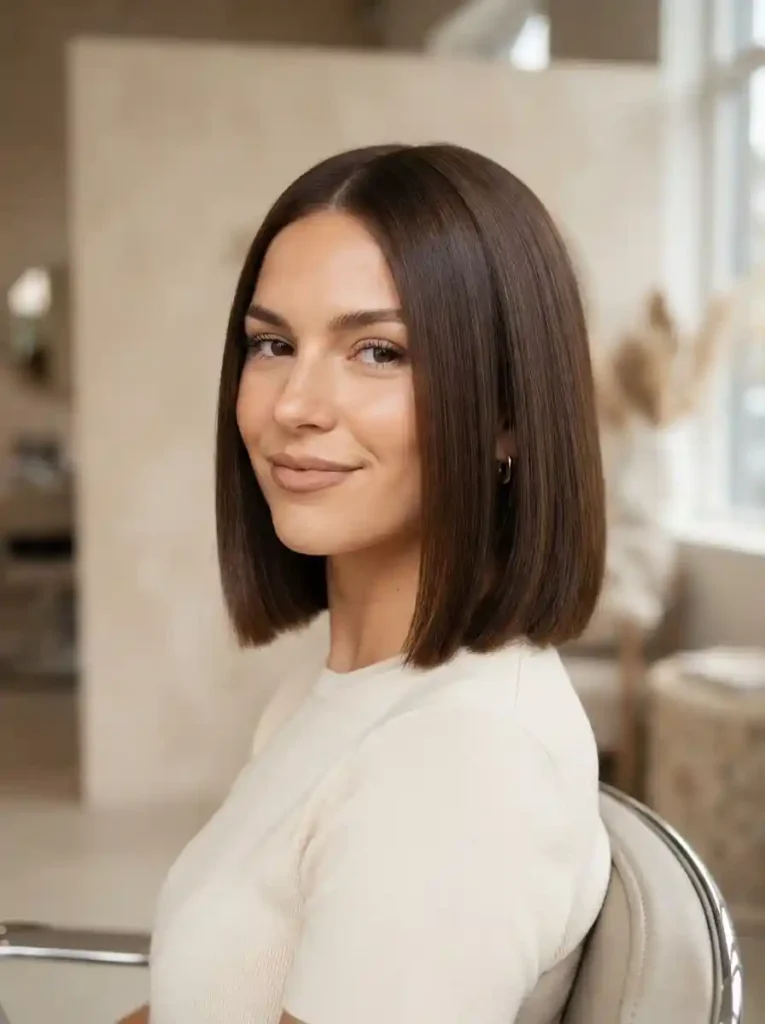
- Keeps the fullness of a blunt bob while avoiding an overly rigid finish.
- Softened tips can make thick hair feel lighter and more natural.
- Straight and slightly wavy textures can both suit this shape.
- The chin length creates a defined frame around the lower face.
- A small amount of smoothing cream can enhance the polished finish.
A blunt bob does not always need razor-sharp ends to look beautifully defined. This version keeps the dense one-length perimeter but gently softens the tips, creating a smoother transition around the jaw. The subtle adjustment works especially well for medium and thick hair because it reduces stiffness without sacrificing the visual fullness of the shape. Straight strands showcase the polished outline, while slight waves create an effortless finish. Oval and heart-shaped faces often pair nicely with this length, although the exact position can be adjusted around the jaw. In my experience, softened ends make a structured bob easier to wear every day.
The styling routine stays simple because the haircut still relies on its strong outer shape. Blow-dry the hair with a paddle brush for a smooth finish, or let natural texture appear for a softer look. A tiny amount of lightweight serum through the ends can enhance shine and reduce flyaways without making the bob look flat. Thick hair may benefit from discreet internal weight removal, while fine hair usually looks fuller when the perimeter remains largely untouched. Trimming every six to eight weeks keeps the shape balanced as it grows. This polished style works equally well for office days, casual outings, and evenings.
12. Blunt Cut With Baby Bangs
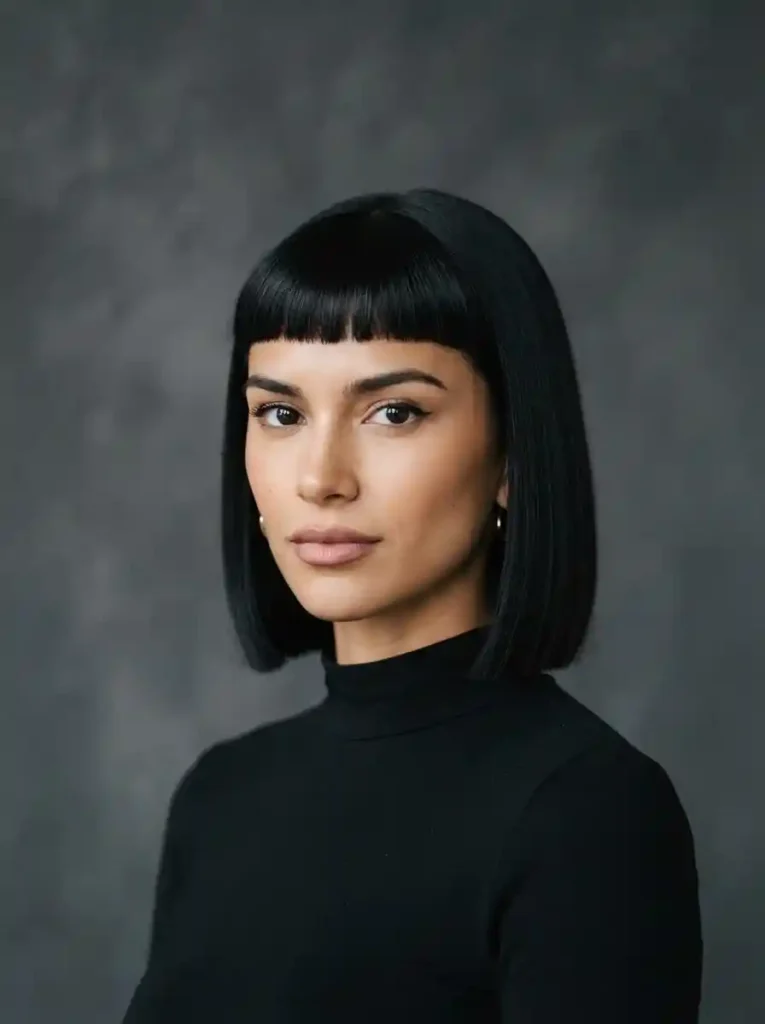
- Baby bangs create a bold focal point around the eyes and brows.
- The blunt bob provides a strong, balanced shape underneath.
- Straight hair makes the geometric lines especially crisp.
- The short fringe suits people comfortable with distinctive styling.
- Fringe maintenance is more frequent than maintaining the main bob.
A tiny fringe can completely transform the personality of a familiar blunt bob. Baby bangs sit noticeably above the eyebrows, exposing more of the forehead while the jaw-length perimeter keeps the haircut structured and dense. Straight hair is ideal for displaying the crisp geometry, although naturally textured hair can be styled smooth when desired. The short fringe draws attention toward the eyes and brows, while the compact bob emphasizes the lower face. For oval faces, the combination can feel especially balanced, while longer faces may benefit from slightly less dramatic fringe positioning. These trendy blunt haircut ideas offer a distinctly fashion-forward direction.
The striking fringe comes with a practical commitment that is worth considering before cutting. Baby bangs grow out quickly, so regular trims may be needed every two to four weeks to preserve their intended height. The bob itself requires less frequent maintenance, usually around six to eight weeks. A small flat iron or fine brush can keep the fringe smooth, while a lightweight styling cream controls stray hairs without creating stiffness. Very thick hair may need internal shaping so the bob stays close to the head. I’ve noticed that this haircut looks strongest when the finish remains clean and uncomplicated rather than heavily styled.
13. Blunt Cut With Long Layers
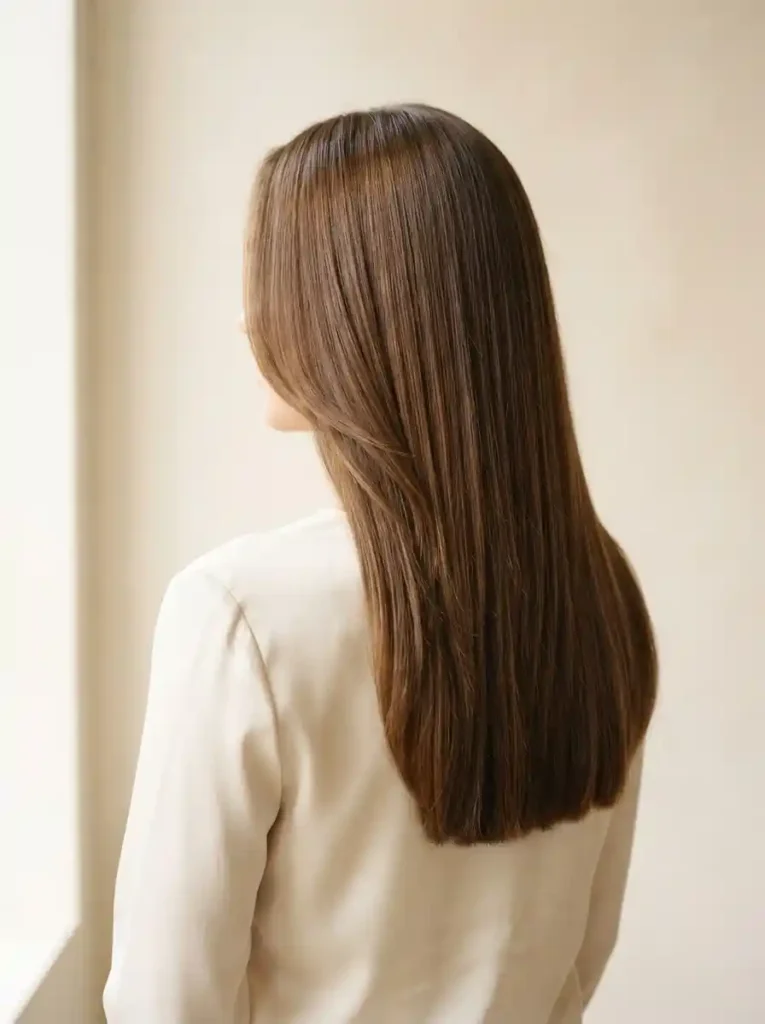
- Combines a substantial bottom edge with gentle movement through the lengths.
- Long layers help prevent thick hair from feeling overly heavy.
- The strong perimeter keeps the haircut looking polished and full.
- Works well for medium, thick, straight, and wavy textures.
- The length remains versatile for braids, ponytails, waves, and buns.
Long hair can have movement without losing its impressive fullness. This cut maintains a strong blunt perimeter while adding long, subtle layers through the mid-lengths, creating space for natural movement without making the ends look thin. Medium and thick hair can benefit from this structure because excess weight is distributed more comfortably through the shape. Straight hair gives the perimeter a sleek appearance, while waves reveal the longer layers beautifully. For people with longer or oval faces, keeping the layers beginning lower can preserve a balanced silhouette. In my experience, restrained layering is often the best compromise for clients who want volume and fullness together.
The styling possibilities are broad because the layers remain long enough to blend naturally. Blow-dry the hair straight when you want a polished appearance, or use a large barrel to create loose waves that highlight the different lengths. Fine hair should be layered conservatively because excessive removal can make the perimeter appear sparse. Thick hair generally has more flexibility and may benefit from additional internal weight management. A nourishing conditioner can help the longer ends stay smooth, particularly when heat styling is frequent. Schedule trims around eight to twelve weeks to maintain the blunt edge while allowing the long layers to grow gracefully.
14. Blunt Bob With Deep Side Part
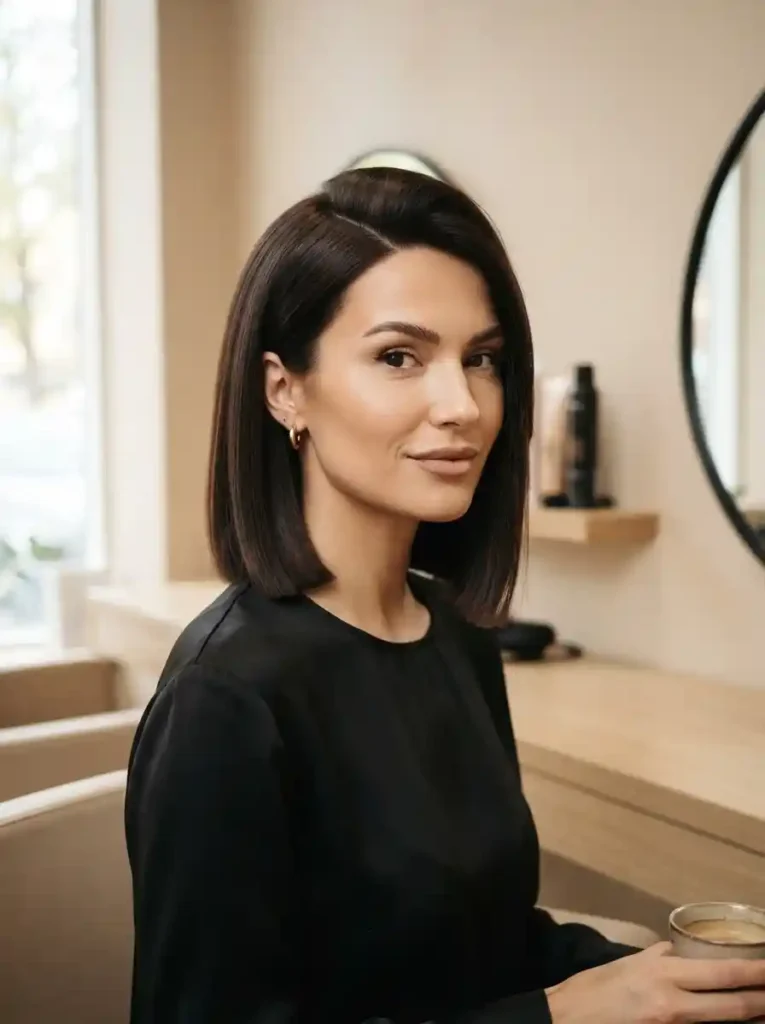
- A deep side part adds volume without changing the haircut length.
- The blunt ends keep fine-to-medium hair looking dense and polished.
- Tucking one side behind the ear creates an easy asymmetrical finish.
- Straight hair makes the clean perimeter especially noticeable.
- The shape can soften stronger facial angles through strategic parting.
A deep side part can make a familiar bob feel completely new. This version keeps the jaw-length perimeter crisp and dense while shifting the part dramatically to one side, creating lift through the crown and a flattering asymmetrical effect. Straight or lightly textured hair can carry the shape well, while fine strands often benefit from the visual fullness created by the concentrated volume. For square faces, the side-swept arrangement can soften strong angles, while oval faces can wear the look with little adjustment. In my experience, changing the part is one of the easiest ways to refresh a blunt cut between salon visits.
Styling does not need to become complicated just because the part is dramatic. Blow-dry the roots in the opposite direction first, then sweep the hair into place once it cools for longer-lasting lift. A lightweight volumizing spray can help fine hair maintain height without making the blunt ends feel stiff. Thicker hair may require some internal shaping so the side does not become excessively heavy. Tucking the smaller section behind the ear gives the haircut a cleaner finish for work, while leaving it loose creates more volume for evenings. A six-to-eight-week trimming schedule keeps the perimeter sharp and balanced.
15. Blunt Midi Cut
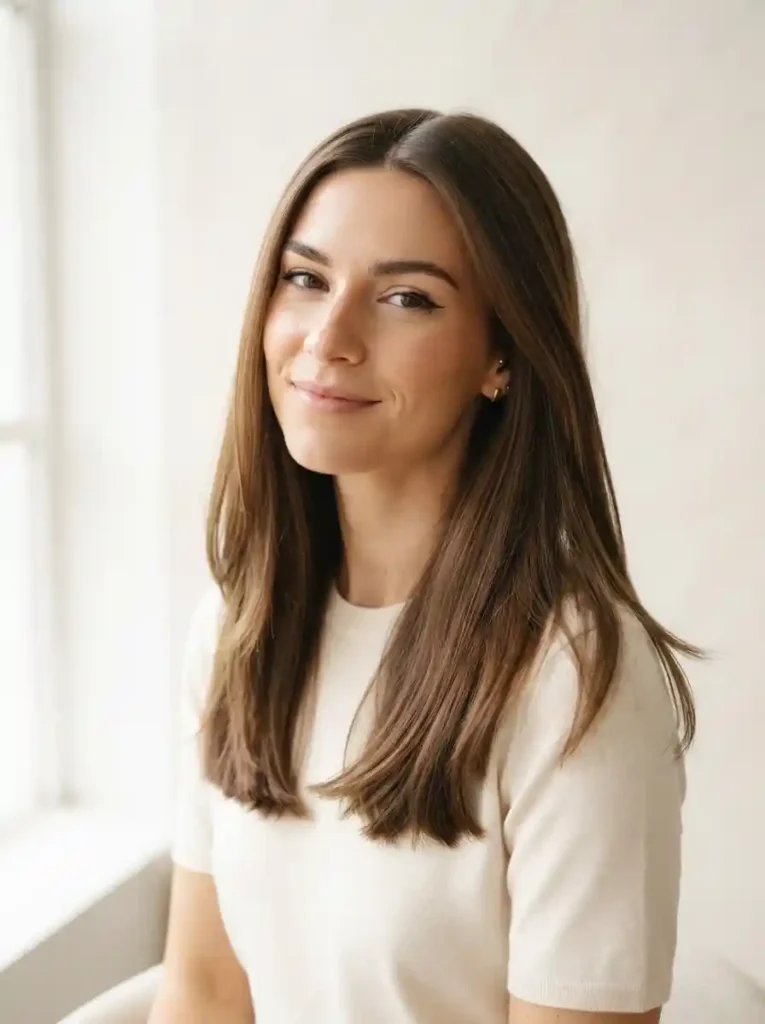
- The midi length offers more versatility than a short bob.
- A strong perimeter gives medium-length hair a fuller appearance.
- It works across straight, wavy, and lightly textured hair.
- The length remains practical for ponytails, clips, and low buns.
- This cut suits people wanting noticeable polish without dramatic shortening.
Sometimes the best haircut is the one that gives you options. A blunt midi cut lands between the shoulders and chest, creating a substantial shape without the commitment of a short bob. Its strong perimeter keeps the ends looking full, making it especially useful for fine or medium-density hair. Straight strands highlight the clean line, while loose waves introduce natural softness and movement. The length can complement many face shapes because it does not concentrate volume directly at the jaw. I’ve noticed this style works particularly well for people who want a polished change while keeping enough hair for familiar everyday hairstyles.
The midi cut also makes styling adaptable across different routines and occasions. Wear it sleek and straight for a refined office look, add loose bends for weekends, or gather it into a low ponytail when you need your hair out of the way. Thick hair may benefit from subtle internal weight reduction, while fine hair should generally avoid aggressive thinning near the ends. A lightweight conditioner can keep the perimeter smooth without making the roots limp. Because the haircut relies on its clean outline, regular trims around every eight to ten weeks help prevent split ends and uneven growth from weakening the silhouette.
16. Blunt Cut With Face-Framing Pieces

- Keeps the fullness of a blunt perimeter while adding movement near the face.
- Face-framing pieces can soften or emphasize facial proportions strategically.
- Works well for straight, wavy, and moderately thick textures.
- The overall length remains easy to style into ponytails or buns.
- Subtle framing offers movement without creating a heavily layered appearance.
A few carefully placed pieces around the face can change the entire feel of a blunt haircut. This medium-length version keeps the ends strong and dense, while subtle face-framing sections begin around the cheekbones and blend gently into the main shape. Straight hair shows the contrast clearly, while wavy hair creates softer transitions. The framing can be adjusted to suit different proportions, with longer pieces often providing a more elongating effect. For people who love the fullness of one-length hair but find a completely uniform shape too rigid, this approach offers a practical middle ground without turning the haircut into a heavily layered style.
The secret is keeping those front pieces subtle enough that the blunt perimeter remains the star. Ask your stylist to start conservatively, since removing too much hair around the face can make the ends appear thinner. Fine hair generally benefits from longer, minimal framing, while thicker hair can accommodate slightly more movement. Styling is flexible: blow-dry the front pieces away from the face for volume, or let them fall naturally for a softer everyday appearance. I’ve seen this haircut work beautifully when someone wants more shape around their features without giving up the dense, modern finish of a blunt cut.
17. Blunt Cut With Wispy Bangs
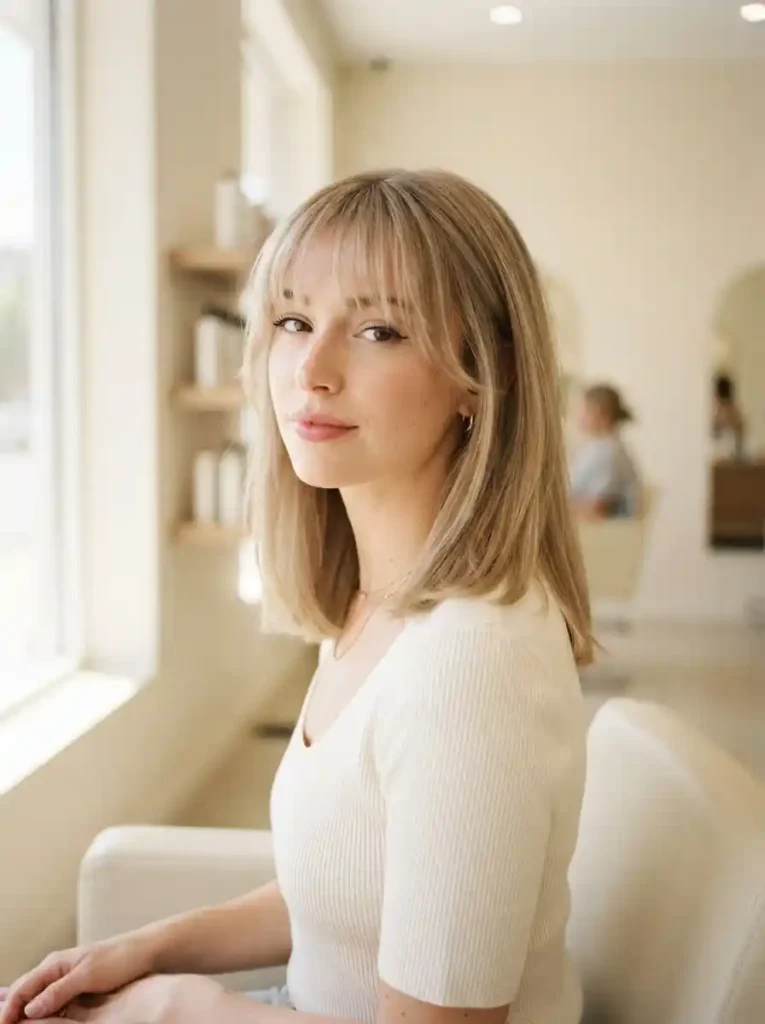
- Softens a strong blunt shape without losing its clean outline.
- Wispy bangs add light movement around the forehead and eyes.
- Works well for fine, straight, and lightly wavy textures.
- The shoulder length keeps ponytails and simple updos practical.
- Lighter fringe requires less visual commitment than a dense full bang.
A crisp haircut feels softer when the fringe stays light and airy. This blunt shoulder-length style uses a strong perimeter for fullness, then adds wispy bangs that gently break up the forehead area without overwhelming the face. Fine and medium-density hair can benefit from this balance because the ends remain visually substantial while the fringe provides movement. Straight strands create a polished effect, while light waves make the look more relaxed. For longer or oval faces, the bangs can add useful horizontal balance. I’ve noticed that wispy fringe is especially appealing for people trying bangs for the first time.
The styling routine is straightforward, but the fringe deserves a little daily attention. A small round brush can guide the bangs into a soft curve, while a quick blast of cool air helps set their shape. Avoid heavy oils near the forehead because they can make delicate strands separate and look stringy. The blunt length itself can be air-dried or smoothed with a brush, depending on your preferred finish. If your hair is very thick, your stylist may lightly remove interior weight while preserving the outer line. Fringe trims every few weeks can keep the overall look fresh and balanced.
18. Jawline Blunt Bob
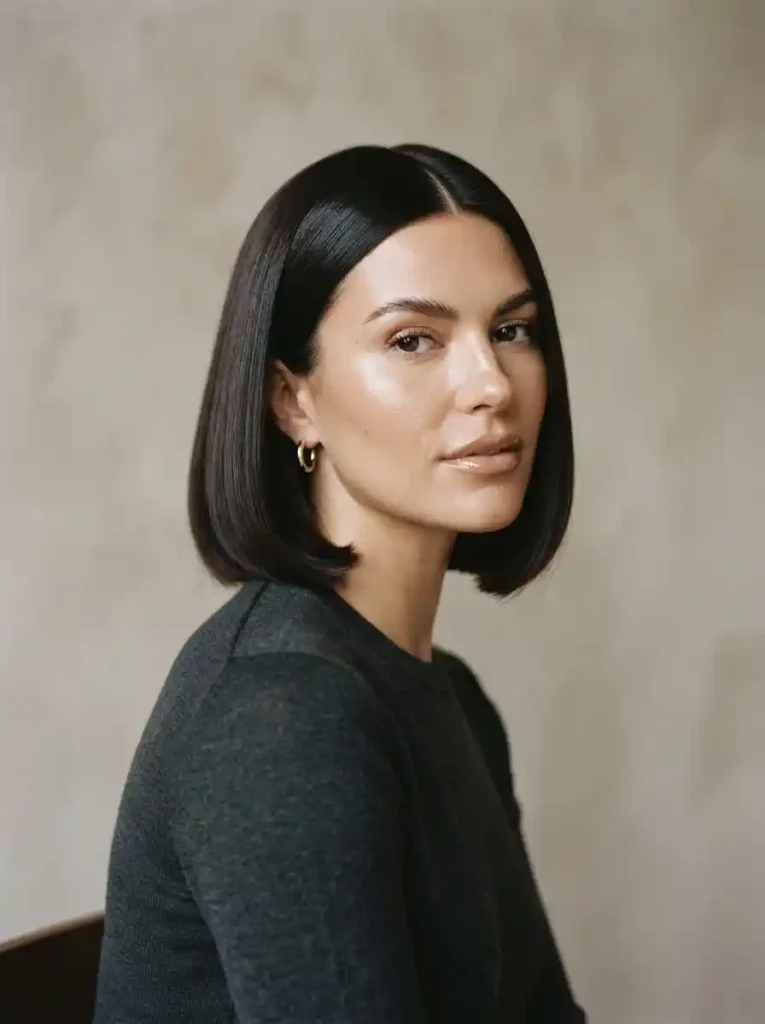
- Places strong visual emphasis directly around the jawline.
- Creates a dense appearance through the ends without added layers.
- Straight hair showcases the precision of the perimeter especially well.
- A slight inward bend can make the silhouette look more polished.
- This length may need careful adjustment around the jaw for individual face shapes.
A sharp line at the jaw can transform the entire presence of a bob. This cut ends precisely around the jawline, creating a compact silhouette that makes the perimeter look dense and deliberate. Straight hair highlights its precision, while softly textured hair can be smoothed for a more defined finish. Oval and heart-shaped faces often pair well with this length, while people with wider jawlines may prefer a slightly longer version to create more vertical balance. In my experience, small adjustments of even a centimeter or two can dramatically change how this particular bob frames the face.
The haircut looks best when its weight is carefully controlled rather than aggressively thinned. Thick hair may need discreet internal debulking so the ends do not push outward at the jaw, while fine hair usually benefits from preserving as much density as possible. Styling can remain minimal: smooth the strands with a blow-dryer and brush, then gently curve the ends inward if desired. A side part introduces softness, while a middle part emphasizes the geometric shape. Because the jawline reveals growth quickly, trimming every six to eight weeks helps maintain the precise silhouette and keeps the haircut looking intentional.
19. Blunt Lob With Waves

- Loose waves add softness to an otherwise structured haircut.
- The collarbone length keeps the style versatile and easy to tie back.
- A blunt perimeter helps the ends appear thicker through the waves.
- Works especially well for naturally wavy or lightly textured hair.
- Heatless waves can make this a practical everyday option.
Soft waves can make a precise haircut feel effortlessly relaxed. This collarbone blunt lob keeps its strong one-length perimeter while loose bends add movement through the mid-lengths and ends. Naturally wavy hair can showcase the shape with minimal effort, while straight hair can recreate the texture using braids, rollers, or a curling tool. The longer length provides enough room for ponytails and low buns, making it more practical than a shorter bob. For round or square faces, the vertical movement of the waves can create a softer, elongated impression without relying on traditional face-framing layers.
The key is creating movement without destroying the density that makes a blunt lob distinctive. Use a lightweight mousse or wave cream on damp hair, then scrunch gently and let the hair air-dry when your natural texture cooperates. For straighter strands, loose bends should begin slightly below the cheekbones rather than forming tight curls. A small amount of finishing serum can reduce frizz while keeping the ends defined. That’s why many hairstylists recommend avoiding heavy styling products on this shape, especially when the hair is fine. Regular trims every eight weeks help preserve the strong perimeter despite repeated heat or styling.
20. Blunt Pixie Crop
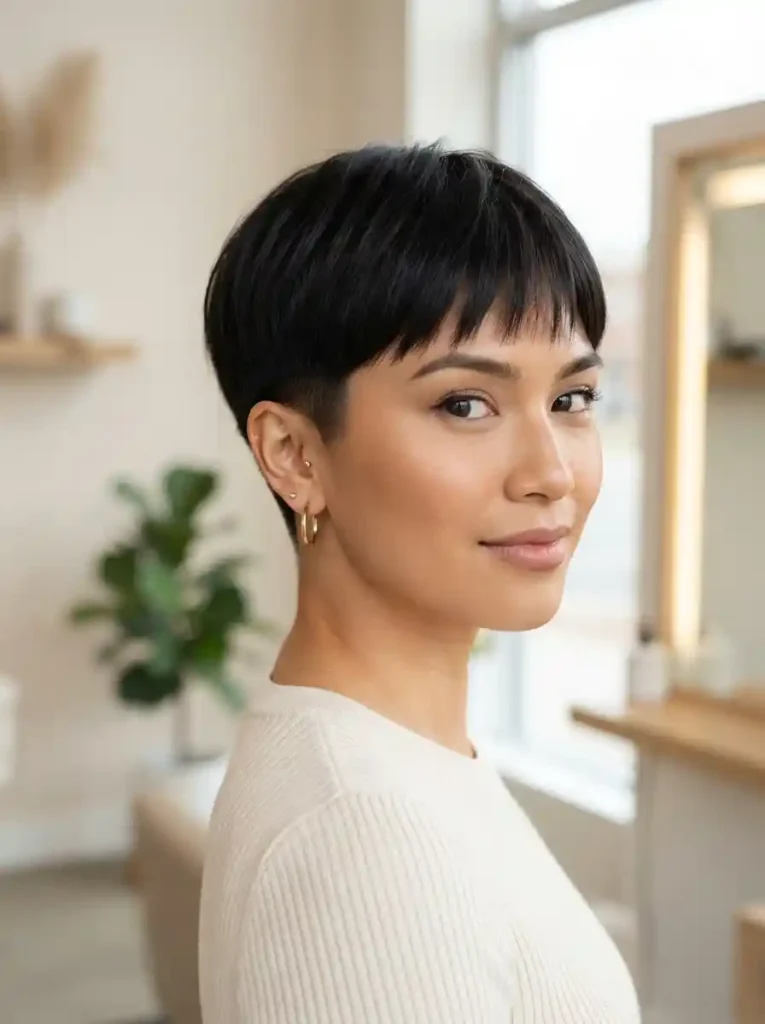
- Creates a bold silhouette while keeping the haircut lightweight.
- Works particularly well for straight and fine-to-medium hair.
- The short length puts attention on the eyes, cheekbones, and jawline.
- A slightly longer top allows simple styling changes.
- Frequent trims are essential for maintaining the precise shape.
Short hair can still have a beautifully defined edge. This blunt pixie crop combines compact proportions with a slightly longer top, creating a shape that feels sharp without looking overly severe. Straight or softly textured hair usually makes the clean perimeter easiest to maintain, while fine hair can benefit from the added structure. Oval and heart-shaped faces often pair naturally with this silhouette because the cropped sides reveal facial proportions clearly. In my experience, this type of cut suits people who want a noticeable change and prefer spending minutes rather than lengthy sessions styling their hair.
The main consideration is maintenance, because short hair reveals growth quickly. A trim every four to six weeks can keep the sides, nape, and top balanced instead of allowing the silhouette to lose definition. Styling can be as simple as smoothing the top with a small amount of lightweight cream or creating piecey texture with styling paste. Those with thicker hair may need careful removal of internal bulk so the crop does not expand outward. For professional settings, a sleek finish looks refined, while tousled texture gives the same haircut a more relaxed weekend personality.
21. Blunt Bob With Micro Bangs
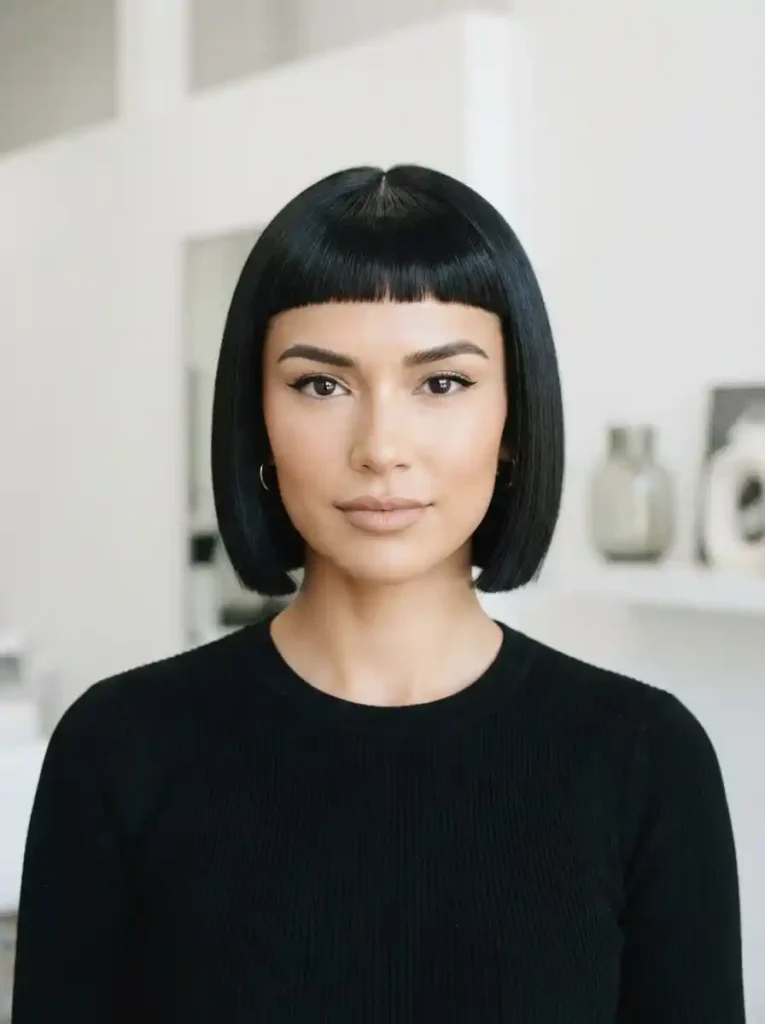
- Micro bangs create a striking focal point above the eyes.
- The blunt bob keeps the overall silhouette dense and graphic.
- Straight hair showcases the precision of both the fringe and perimeter.
- Best suited to people comfortable with a more distinctive look.
- Bang trims may be needed more frequently than the main haircut.
For a haircut that immediately draws attention upward, pair a precise bob with micro bangs. The short fringe creates a strong visual frame around the eyes, while the jaw-length perimeter keeps the lower shape dense and unmistakably modern. Straight hair is the easiest texture for maintaining the crisp geometry, although naturally wavy hair can be styled smooth when desired. Oval and heart-shaped faces often complement the combination, but fringe length should always be adjusted to individual forehead proportions. These trendy blunt haircut ideas can feel especially fresh when you want a fashion-forward change without adding layers.
This style asks for confidence and a little more upkeep around the forehead. Micro bangs grow out quickly, so regular fringe trims help preserve their distinctive length and spacing. The bob itself can remain fairly simple, requiring only smoothing, brushing, or a quick pass with a flat iron. If your hair is thick, ask your stylist to control the internal weight so the sides sit close to the jaw rather than widening outward. I’ve noticed that keeping the finish glossy rather than heavily textured helps this haircut look intentional. It works particularly well for creative environments, evenings out, and polished editorial-inspired styling.
22. Long Blunt Haircut
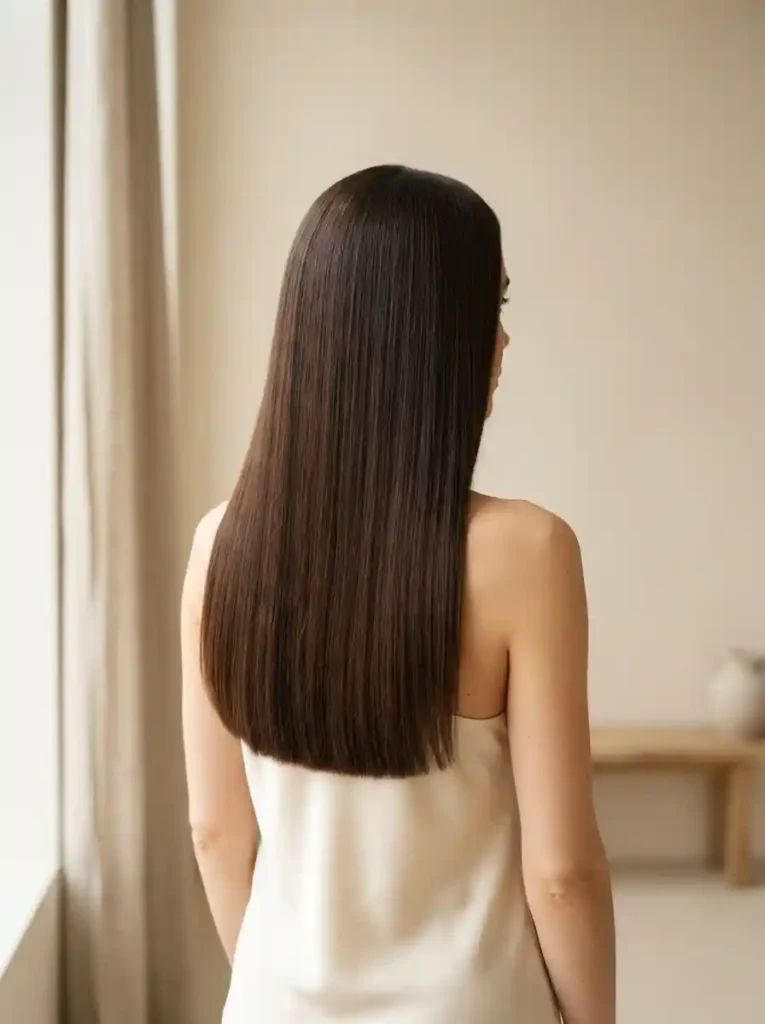
- Keeps long hair looking dense, polished, and intentionally shaped.
- Particularly effective for straight or lightly wavy textures.
- A blunt perimeter can make thin ends appear substantially fuller.
- The length remains versatile for braids, ponytails, buns, and waves.
- Regular trims help preserve the healthy-looking bottom edge.
Long hair can look dramatically fresher without losing its length. A long blunt cut removes the wispy appearance that often develops at the ends while preserving a strong, uninterrupted perimeter. Straight hair shows the clean line most clearly, but softly wavy hair can create an attractive relaxed finish through the lower lengths. This shape is especially useful for fine or medium-density hair because keeping the ends together can create the impression of greater fullness. In my experience, people who love long hair but dislike visible layers often find this approach gives them a cleaner, healthier-looking silhouette.
Despite its length, the haircut remains practical because the shape does not depend on complicated layering. You can wear it straight for a sleek appearance, create loose waves for softness, or pull it into familiar ponytails and buns. Very thick hair may feel heavy when cut completely blunt, so subtle internal weight management can improve movement without changing the visible perimeter. Fine hair usually benefits from avoiding excessive texturizing at the bottom. To maintain the dense edge, schedule trims around every eight to twelve weeks and use conditioner consistently, especially if the ends are exposed to frequent heat styling.
23. Sleek Shoulder-Length Blunt Cut
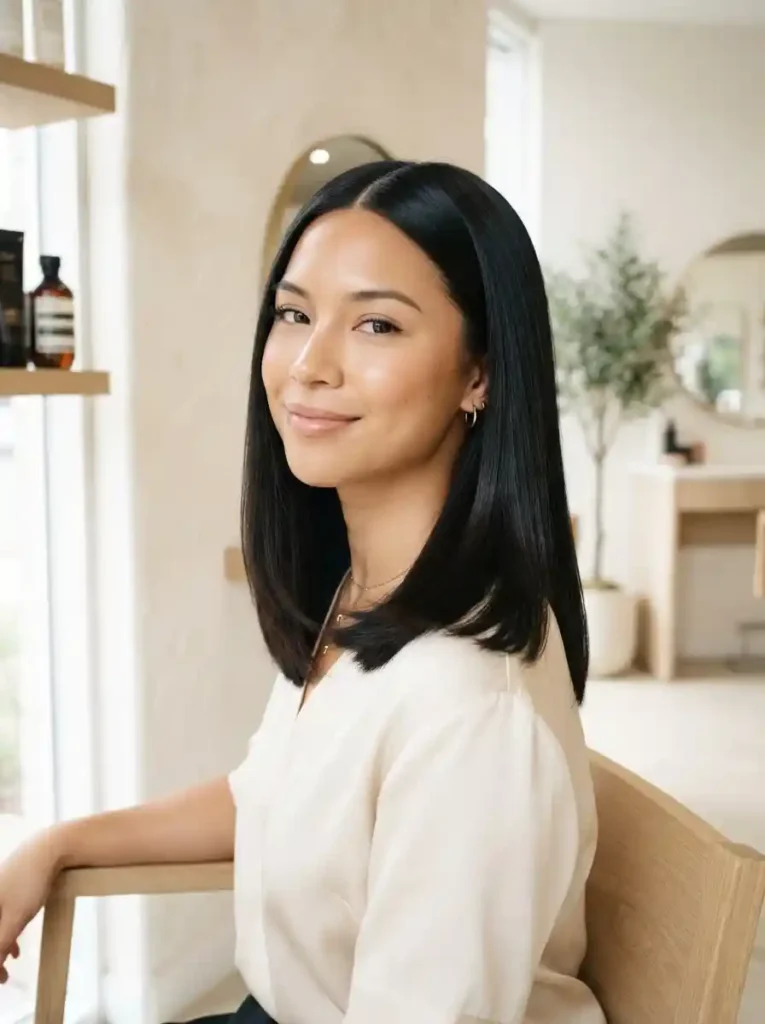
- Creates a clean, elongated silhouette without sacrificing useful length.
- Works especially well for straight and moderately thick hair.
- The sharp ends make the overall style look fuller and healthier.
- A center part gives it a sleek, symmetrical finish.
- Regular trims help prevent the shoulder area from looking uneven or bulky.
One clean line can make shoulder-length hair look remarkably polished. This blunt cut keeps the perimeter strong while sitting close enough to the shoulders for an elegant, elongated shape. Straight and slightly wavy textures display the outline beautifully, while thicker hair may benefit from subtle internal weight removal. The length can complement oval, square, and heart-shaped faces because it frames the lower face without crowding the jaw. In my experience, this style is particularly practical for people who want a sophisticated everyday haircut that still allows ponytails, low buns, and loose waves without complicated styling.
Its biggest advantage is the balance between structure and flexibility. A smooth blow-dry creates a sleek finish for professional settings, while air-drying can reveal gentle natural texture for a more relaxed appearance. Because the ends remain one length, excessive layering is unnecessary, which can make daily styling faster. Very fine hair can keep the perimeter completely blunt to emphasize density, while thick hair may need strategic removal underneath. A lightweight smoothing serum can enhance shine without making the shape flat. Trimming approximately every eight weeks keeps the shoulder line crisp and prevents uneven growth from becoming noticeable.
24. Blunt Lob With Side Part
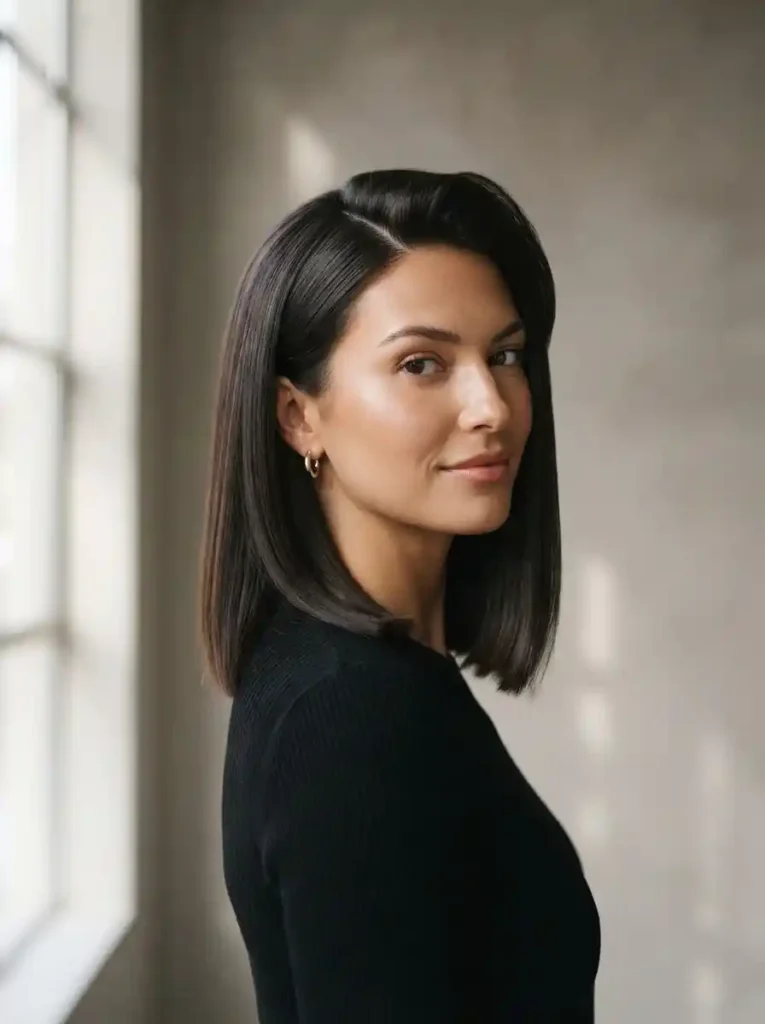
- A side part adds instant lift and asymmetry to a structured lob.
- The slightly longer length provides more styling options than a bob.
- Dense ends can make fine-to-medium hair appear substantially thicker.
- It suits sleek workday styling as easily as loose weekend waves.
- A side part can also soften the appearance of stronger facial angles.
A simple change in parting can completely refresh a structured haircut. This blunt lob falls just below the shoulders, giving the ends enough weight to create a visibly dense, smooth silhouette. The deeper side part adds asymmetry and gentle crown lift, which can be useful when a center part feels too flat or predictable. Straight hair displays the cleanest finish, while softly wavy hair introduces effortless movement through the lower lengths. For square or angular faces, the off-center styling can soften visual symmetry. This is one of those modern cuts that looks deliberate without demanding elaborate daily styling.
The lob also earns points for versatility because it can move easily between polished and casual looks. Use a paddle brush and blow-dryer for smooth, glassy ends, or add loose bends with a curling iron when you want more texture. Fine hair benefits from keeping the perimeter solid rather than heavily layered, while dense hair may need discreet internal shaping. I’ve noticed that this length is particularly convenient for people who like changing their hairstyle throughout the week. Keep the ends trimmed every eight to ten weeks, and use heat protection whenever you regularly straighten or curl the hair.
25. Textured Blunt Bob

- Adds movement while preserving the recognizable blunt outline.
- Especially appealing for naturally wavy or slightly textured hair.
- Internal texturizing can reduce heaviness without destroying the perimeter.
- Soft waves make the style feel relaxed rather than overly polished.
- This shape works well when you want volume without traditional layers.
A blunt bob does not have to look perfectly flat to feel sharp. Adding controlled texture gives the classic shape movement while keeping its strong perimeter visible. Naturally wavy hair is ideal because the bends create dimension around the face and make the ends feel intentionally tousled. Straight hair can also achieve this effect with a texturizing spray and loose bends from a styling tool. For fine hair, minimal internal texturizing helps preserve density, while thicker hair may need more weight removed underneath. I’ve seen this haircut work beautifully when someone wants structure but dislikes the stiffness of an ultra-sleek bob.
The styling routine can stay surprisingly simple when your natural texture already provides movement. Apply lightweight mousse or wave cream to damp hair, scrunch gently, then air-dry or use a diffuser on low heat. Avoid brushing the finished waves aggressively, since that can create unwanted frizz and weaken the defined shape. A stylist can selectively remove bulk from dense areas while leaving the outer line intact. The result is a haircut that feels fuller, softer, and more dimensional without relying on obvious layers. It is especially practical for casual days, creative workplaces, travel, and anyone who prefers low-effort styling with visible texture.
Conclusion: Trendy Blunt Haircut Ideas
A great blunt haircut can bring structure, fullness, movement, and effortless polish to your everyday style. These Trendy Blunt Haircut Ideas offer inspiration for different lengths, textures, face shapes, and styling preferences, making it easier to choose a look that fits your real life.
I’ve seen how the right haircut can completely transform someone’s appearance and confidence, especially when the shape works naturally with their hair. Save your favorite ideas on Pinterest, try one that matches your texture and routine, and share this collection with someone searching for a fresh new look. Your next signature hairstyle could be one save away.