21 Gorgeous Layered Medium Haircuts for Your Next Hair Inspo
Ready for a haircut that feels fresh without losing your favorite length? These layered looks can turn flat, heavy, or shapeless hair into something beautifully dynamic. Layered Medium Haircuts by Styled Aura are perfect for anyone who wants movement, flattering shape, and styling flexibility without committing to very short or very long hair.
This collection brings together versatile cuts designed for different textures, face shapes, hair densities, and everyday routines. Whether your strands are fine and need the appearance of fullness or thick and need lighter movement, there is a shape worth saving here. I’ve noticed that the most successful medium cuts are not simply trendy; they are adjusted to how the hair naturally falls and how much styling time someone realistically has each morning.
1. Feathered Collarbone Cut

- Creates soft movement without sacrificing useful length.
- Face-framing layers can visually soften fuller cheeks.
- Works beautifully with straight, wavy, and lightly textured hair.
- The collarbone length makes ponytails and clips easy.
- I’ve noticed feathered ends look especially lively after a simple round-brush blowout.
A collarbone cut becomes instantly more interesting when soft layers create movement around the face. This shape keeps enough length for ponytails while adding feathered pieces that prevent the hair from appearing flat or heavy. It can complement oval, round, and heart-shaped faces because the layers draw the eye vertically. Straight strands show the feathering clearly, while loose waves make the ends look naturally airy. For fine hair, keeping the layers subtle helps preserve fullness through the perimeter. A lightweight volumizing mousse and round brush can enhance the shape without making everyday styling feel complicated or time-consuming.
The biggest advantage is versatility, especially when you want one haircut to handle several routines. Wear the ends smooth for work, add loose waves for weekends, or tuck one side behind the ear for a cleaner finish. Medium-density hair usually supports this layering easily, while thicker strands may need internal weight removal to keep the shape balanced. In my experience, asking for layers that begin gradually rather than dramatically can make a noticeable difference when maintaining fullness. A trim every eight to ten weeks is usually enough to keep the feathered sections fresh and prevent the ends from looking uneven.
2. Curtain Layered Lob
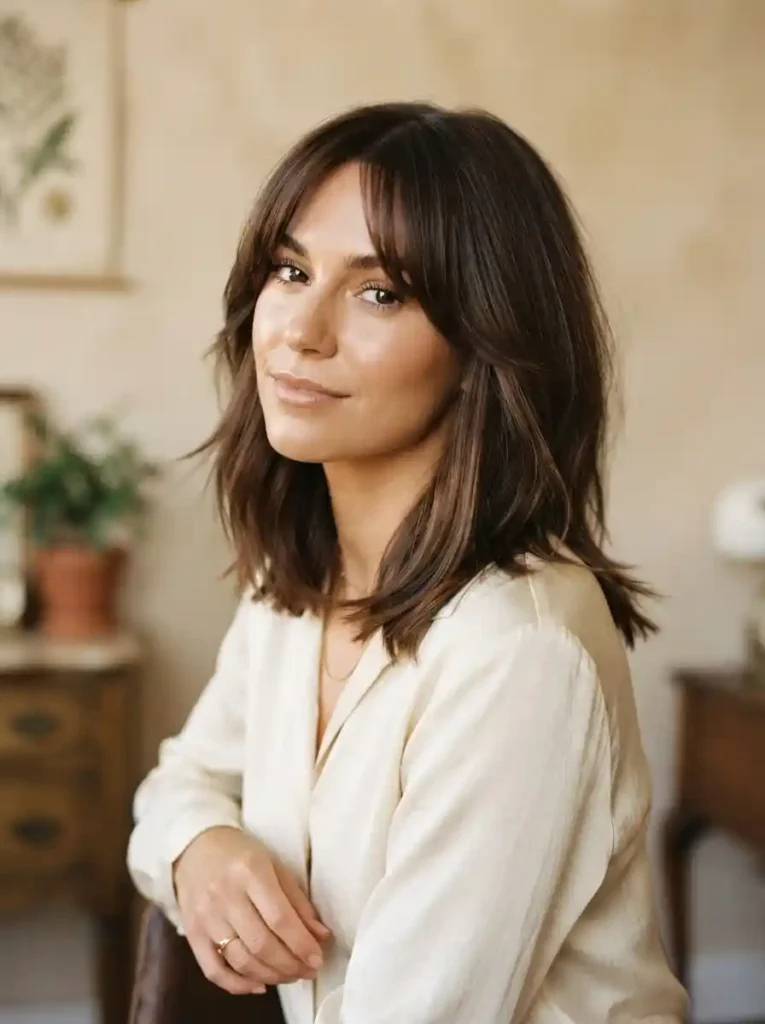
- Blends curtain bangs naturally into the overall haircut.
- Adds movement while keeping the lob easy to manage.
- Great for softening prominent cheekbones or wider foreheads.
- Shoulder length gives plenty of styling flexibility.
- A middle part keeps the face-framing effect balanced and polished.
A shoulder-grazing lob gets a beautiful upgrade when curtain bangs flow directly into soft face-framing layers. The longer front pieces create movement around the cheeks while keeping the overall shape structured and wearable. This style suits oval, round, heart, and square face shapes because the curtain fringe can be adjusted to emphasize different features. Straight hair gives the layers a sleek finish, while wavy strands create more natural volume. The medium length also makes styling flexible, allowing you to wear it loose, tucked behind the ears, clipped back, or gathered into a low ponytail.
This layered shape is particularly practical for anyone transitioning from longer hair but wanting a noticeable refresh. Fine hair can benefit from fewer, strategically placed layers so the ends retain density, while thick hair may need more internal shaping to reduce heaviness around the shoulders. That’s why many hairstylists recommend discussing your natural part before cutting curtain bangs, since placement affects how easily they fall into position. For daily styling, a blow-dry brush or large round brush can encourage a gentle bend through the front. Regular trims keep the bangs and shoulder-length perimeter looking intentional.
3. Soft Wave Layers
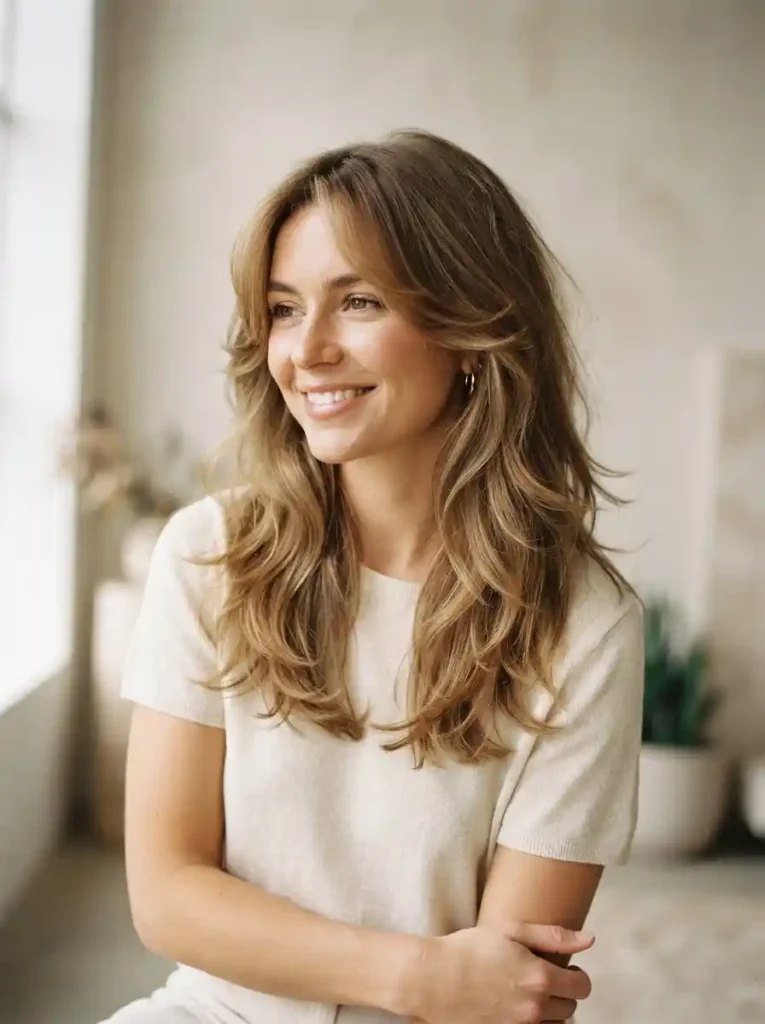
- Enhances natural waves without creating excessive bulk.
- Creates movement through the mid-lengths and ends.
- Face-framing pieces can highlight the eyes and cheekbones.
- Works well for medium to thick hair densities.
- A lightweight curl cream can define waves without making them crunchy.
Soft waves and strategically placed layers are a reliable combination when you want movement that still feels effortless. This medium-length shape uses longer layers through the sides and back, with delicate pieces around the face to create a flowing outline. Wavy hair naturally emphasizes the separation between layers, while straight hair can reveal the shape after a loose curling routine. The cut works especially well for oval and longer face shapes because horizontal movement can add softness and balance. For everyday styling, scrunching in lightweight curl cream and allowing the hair to air-dry can create definition without requiring heat.
The beauty of this approach is that it does not depend on perfectly styled waves every day. When the hair is left natural, the layers create different lengths that help the texture move instead of forming one heavy block. Medium and thick strands often carry this shape particularly well, although fine hair should avoid excessive layering that could make the ends appear thin. I’ve noticed that preserving weight near the bottom is helpful when clients want their hair to look fuller. For special occasions, large-barrel waves can amplify the layers and create a polished finish with relatively little additional effort.
4. Choppy Textured Layers
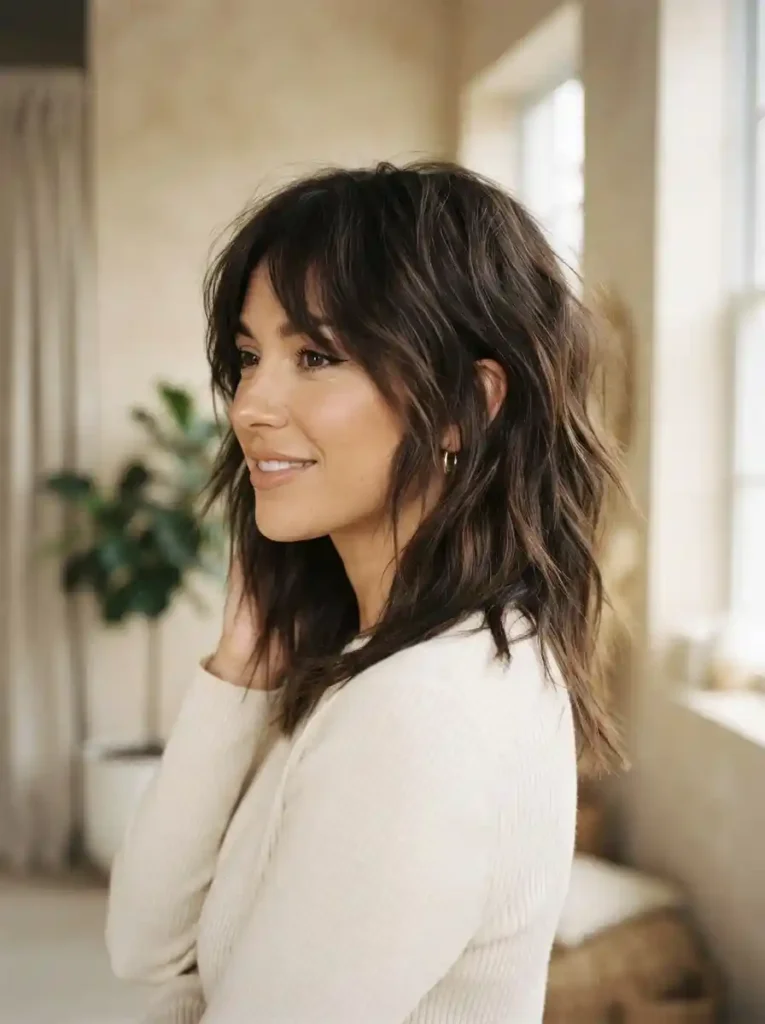
- Adds instant movement to hair that usually falls flat.
- Uneven layers create a relaxed, modern texture.
- Works especially well with naturally wavy or thick hair.
- A texturizing spray can enhance separation without heavy styling.
- Great for casual looks that still feel intentionally polished.
Want your medium hair to look fuller without adding complicated styling steps? Choppy layers create visual movement by breaking up a solid shape and giving the ends more personality. The uneven lengths work especially well for naturally wavy or slightly textured hair because they encourage strands to separate instead of lying together. Round and oval faces can benefit from softer pieces around the cheeks, while longer face shapes may suit fuller layers near the sides. For fine hair, the cut should remain controlled rather than overly thinned. A lightweight texturizing spray can bring out definition while keeping the finish flexible and touchable.
The real appeal of this cut is its intentionally imperfect finish, which makes everyday styling more forgiving. Thick hair can feel lighter when the stylist removes weight internally, while medium-density strands can keep enough fullness through the perimeter. Straight hair can also wear the style, especially when styled with loose bends or a quick tousled blow-dry. In my experience, choppy layers look best when the ends are customized to the hair’s natural movement rather than cut identically across every section. A trim around eight weeks helps maintain the shape without making the haircut feel overly high-maintenance.
5. Long Face-Framing Layers
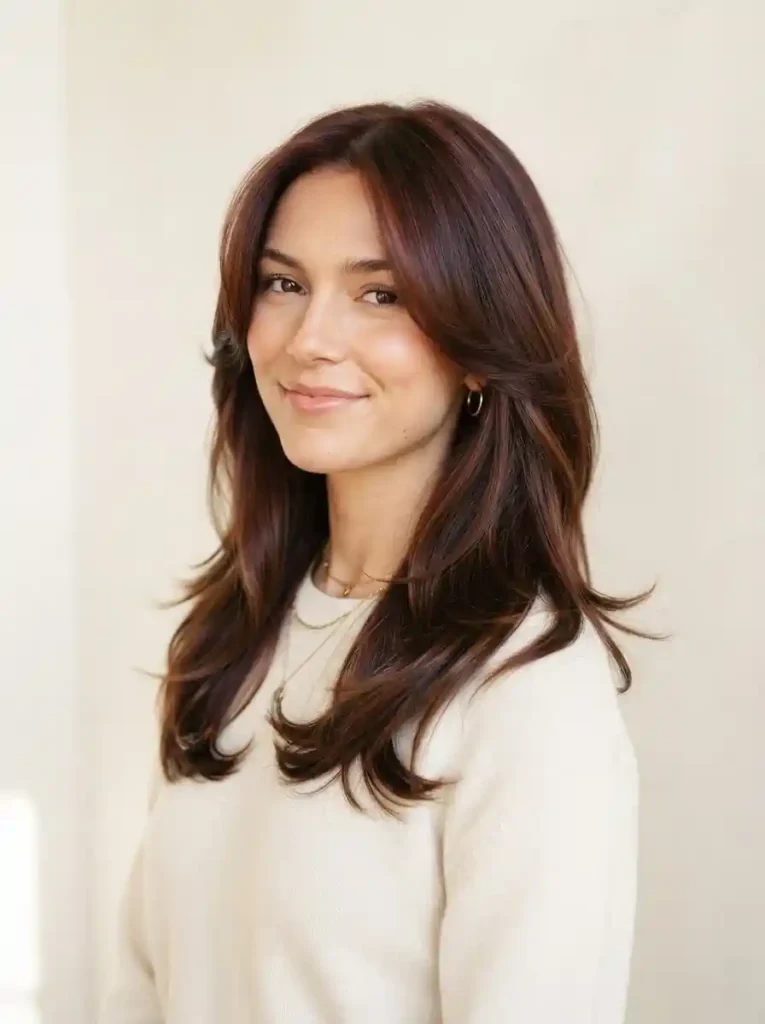
- Creates a softer frame around the face without losing length.
- Long layers are easier to grow out than short, dramatic pieces.
- Particularly flattering for longer, oval, and heart-shaped faces.
- Keeps the ends looking fluid rather than heavily chopped.
- Works well for both everyday styling and dressed-up waves.
A subtle change around the face can completely transform medium-length hair, and long framing layers do exactly that. Instead of beginning high near the forehead, these pieces start lower around the cheekbones or jaw, creating a smooth transition into the rest of the haircut. This placement can visually balance longer or oval faces while gently emphasizing the cheek area. Straight hair shows the clean graduation beautifully, whereas soft waves make the layers appear more blended. Because most of the length remains intact, the style is also practical for ponytails, braids, clips, and simple everyday hairstyles.
Long face-framing layers are also a smart choice when you want movement without committing to a heavily layered haircut. Fine hair can keep a fuller appearance when the longest sections remain substantial, while thick hair may benefit from carefully removing interior weight. That’s why many hairstylists recommend adjusting the starting point of the layers according to both face shape and natural hair density. If your hair tends to fall forward around the face, these pieces can also create a more intentional outline. Styling is simple: smooth the front with a round brush or add loose bends for extra dimension.
6. Voluminous Butterfly Layers
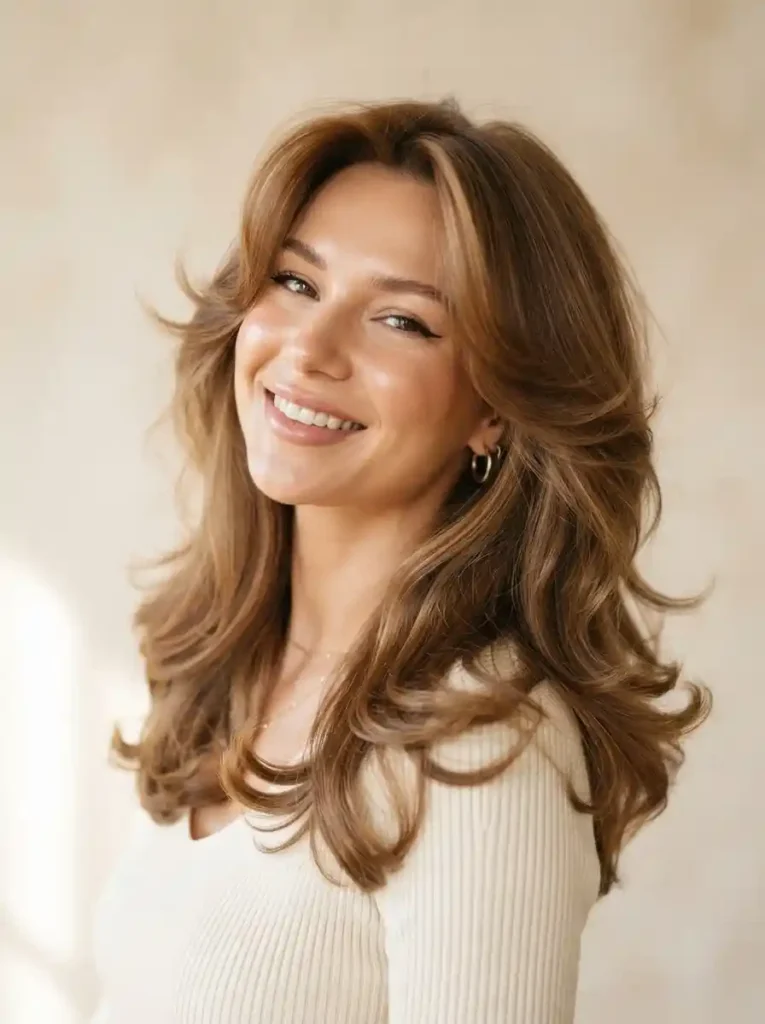
- Builds noticeable volume while preserving medium-length versatility.
- Shorter front layers create a lifted, open appearance.
- Longer layers maintain enough length for ponytails and updos.
- Especially effective for thick or medium-density hair.
- A round brush can bring out the signature bouncy finish.
Big movement does not always require losing lots of length, and butterfly layering proves it beautifully. Shorter face-framing pieces create lift around the cheekbones, while longer layers cascade toward the shoulders for a flowing, bouncy silhouette. This arrangement can flatter oval, heart, and longer faces by adding width around the upper sides of the face. Medium and thick hair usually showcase the shape especially well because there is enough density to support the layered structure. Straight hair can be blow-dried into curved ends, while naturally wavy hair creates a softer, more relaxed version.
The style feels glamorous when freshly styled but can remain surprisingly practical between appointments. Thick hair often benefits from internal weight removal so the layers move rather than sitting heavily against one another. Fine hair needs a lighter approach, with fewer internal layers to preserve density through the ends. I’ve noticed that the most wearable results come from blending each shorter section gradually into the longer lengths, avoiding obvious steps. For everyday styling, a large round brush and volumizing mousse can create the signature lift. For a softer finish, simply air-dry the hair and add loose bends only around the face.
7. Wispy Shag Layers

- Adds lightweight movement without making the haircut feel bulky.
- Wispy ends create a soft, undone finish.
- Great for naturally wavy or slightly textured hair.
- Crown layers can add lift to flatter roots.
- Minimal styling keeps the shape looking intentionally relaxed.
A little texture can make medium hair feel completely new, and wispy shag layers deliver that change without sacrificing everyday wearability. The cut uses feathered layers around the crown and softer pieces near the face, creating movement that feels airy rather than heavy. Naturally wavy hair can emphasize the shape beautifully, while straight strands can use a quick texturizing spray for added separation. This style can flatter oval, heart, and square faces because the uneven layers soften strong facial lines. For fine hair, keeping the wisps concentrated around the upper sections helps preserve fullness through the lower lengths.
The relaxed finish also makes this haircut forgiving when you do not have time for detailed styling. Medium and thick hair can benefit from removing some interior weight, allowing the layers to move independently instead of forming a dense shape. Fine hair should avoid excessive thinning, particularly near the ends, because too much removal can make the haircut appear sparse. I’ve noticed that air-drying often produces the most natural result on wavy strands, especially when paired with a lightweight curl cream. For a polished occasion, a diffuser or soft round-brush finish can add controlled volume without losing the haircut’s effortless character.
8. Rounded Layered Bob
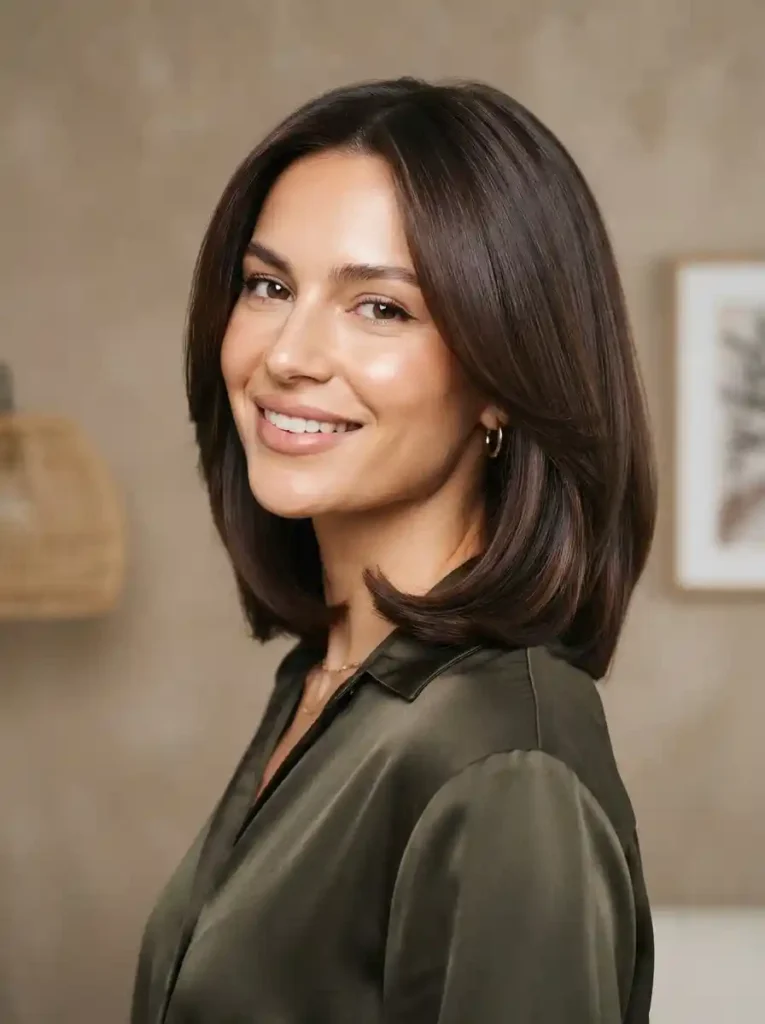
- Creates a fuller-looking silhouette through the ends.
- Rounded shaping adds softness to angular facial features.
- Particularly useful for fine to medium-density straight hair.
- The curved perimeter gives the haircut a polished finish.
- Easy to dress up with smooth styling or subtle waves.
A rounded silhouette can make medium hair look instantly fuller, especially when the ends tend to appear thin or flat. This layered bob uses gentle graduation through the back and subtle face-framing pieces to create a curved, balanced outline. Straight hair displays the shape most clearly, while slightly wavy hair gives the perimeter a softer finish. The style can complement square and heart-shaped faces by adding softness around the jawline, while oval faces can carry the rounded proportions easily. A smooth blow-dry with a medium round brush is usually enough to reveal the haircut’s polished structure.
Unlike heavily layered styles, this shape keeps enough weight through the lower sections to maintain a substantial appearance. Fine hair can benefit from that controlled structure because excessive layering may make the ends look thinner. Medium-density hair can support slightly more internal movement for a lighter finish. In my experience, the key is asking for subtle graduation rather than dramatic stacking, especially if you prefer a modern silhouette. Regular trims every six to eight weeks help preserve the rounded perimeter. For evenings or special events, adding soft bends through the ends creates dimension while keeping the haircut recognizable.
9. Side-Swept Layer Cut
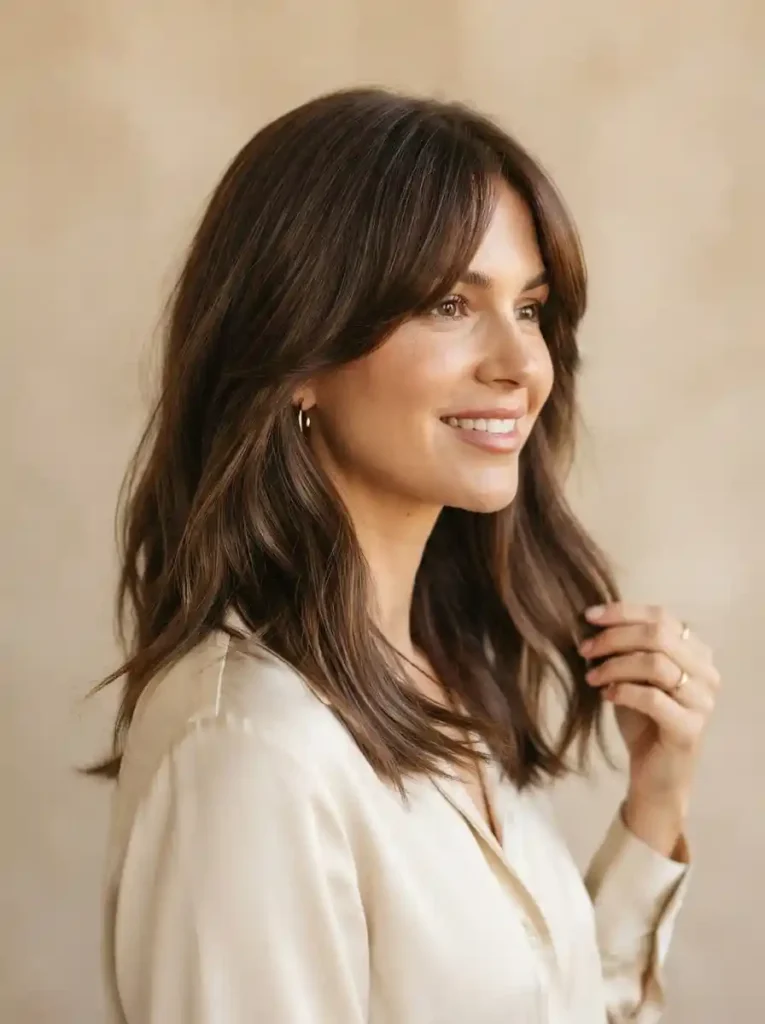
- Adds movement without requiring a dramatic change in length.
- Side-swept framing can soften the appearance of the forehead.
- Works well for straight, wavy, and medium-density hair.
- Creates an elegant shape for both casual and formal styling.
- A side part helps emphasize the layered movement naturally.
A simple change in parting can make layered medium hair feel fresh, and a side-swept shape adds instant softness. The haircut combines longer face-framing pieces with layers that flow away from the part, creating diagonal movement through the front. This can visually soften wider foreheads and add balance to round, square, or heart-shaped faces. Straight hair gives the style a sleek appearance, while natural waves make the swept sections feel more relaxed. The shoulder-skimming length remains practical for ponytails and clips, while a quick blow-dry can bring enough volume to keep the front from falling flat.
This cut is especially useful if you enjoy changing your hairstyle without committing to a major length adjustment. Fine hair can benefit from preserving weight along the bottom while adding only a few strategic layers around the face. Thicker hair may need more internal shaping so the side-swept sections sit comfortably instead of feeling dense. That’s why many hairstylists recommend testing your natural part before cutting the front pieces. For daily wear, a lightweight mousse can provide lift at the roots, while a flat iron or large barrel can create smooth bends when you want a more polished, evening-ready finish.
10. Face-Framing Wolf Cut

- Adds volume around the crown without losing medium-length versatility.
- Face-framing pieces create a softer outline around the cheeks.
- Naturally wavy hair makes the layered texture look effortless.
- Great for anyone wanting movement with a slightly edgy finish.
- Lightweight styling cream can enhance separation without stiffness.
If you want noticeable texture without going extremely short, a soft wolf cut offers a striking middle ground. Shorter crown layers create lift, while longer pieces maintain enough length around the shoulders for flexible styling. The face-framing sections can be customized to suit oval, round, and heart-shaped faces, particularly when the shortest pieces begin near the cheekbones. Naturally wavy hair gives the haircut effortless separation, while straight hair can use a texturizing product to recreate the airy finish. The result feels youthful, dimensional, and expressive without demanding a complicated morning routine.
The haircut becomes especially practical when the layers are customized to your natural density instead of copied from a reference photo. Thick hair may need internal weight removal to prevent the crown from becoming too heavy, while fine hair benefits from fewer, carefully placed layers. I’ve noticed this shape looks most balanced when the ends retain enough weight to connect the shorter sections smoothly. Air-drying works well for waves, while a diffuser can add extra lift at the crown. For straighter hair, loose bends with a curling wand can emphasize the layers. A trim every eight weeks helps preserve its proportions.
11. Blended Midi Layers
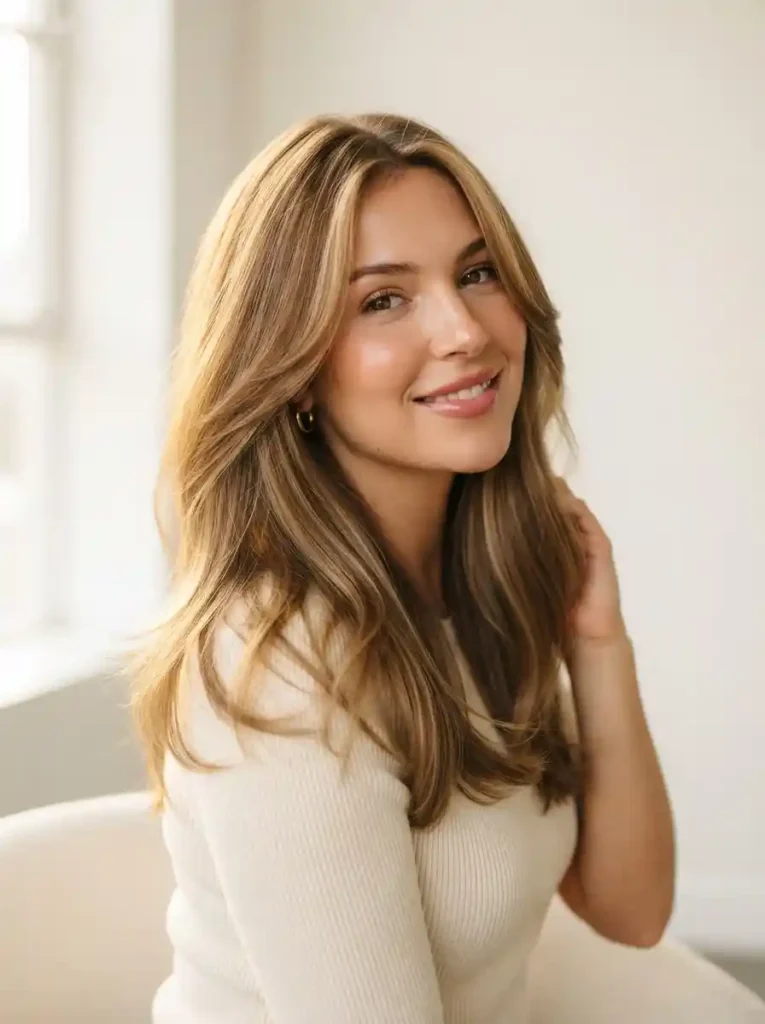
- Keeps the haircut polished while adding natural movement.
- Blended layers are ideal for people who dislike choppy ends.
- Works across straight, wavy, and moderately thick textures.
- Preserves enough length for easy everyday hairstyles.
- A smooth blow-dry reveals the seamless transitions beautifully.
Sometimes the best layered haircut is the one where you barely notice where one layer ends and another begins. Blended midi layers create exactly that effect, giving medium-length hair movement while maintaining a smooth, cohesive outline. The gradual shaping can complement oval, heart, and square faces without creating harsh angles. Straight hair highlights the seamless transitions, while loose waves add natural dimension throughout the lengths. This approach works particularly well for people who want their haircut to look polished at work but still have enough movement for casual styling, date nights, or weekend plans.
The technique is also forgiving for different hair densities because the layers can be adjusted without changing the overall length dramatically. Fine hair should keep the lower sections relatively full, with gentle layers placed higher for movement. Thick hair can handle additional internal shaping to reduce heaviness while preserving a smooth exterior. In my experience, blended layers are especially useful when someone wants more movement but dislikes the obviously layered look. Styling can stay simple with a round brush and lightweight serum, while natural air-drying works nicely when the hair already has a soft wave pattern.
12. Curved Ends Layers
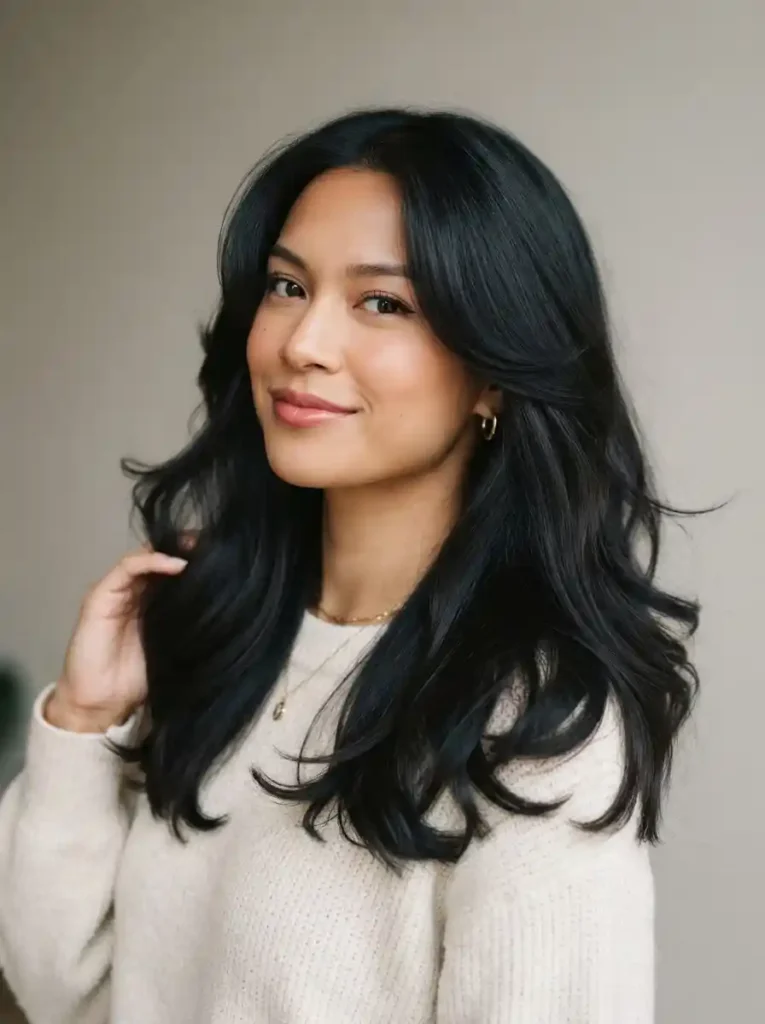
- Gives medium hair a smooth, flowing silhouette.
- Curved ends can make the perimeter appear fuller.
- Soft face framing adds shape without dramatic shortening.
- Especially flattering for fine to medium-density hair.
- Works beautifully with both sleek and softly waved styling.
Curved ends give layered hair a softer finish while keeping the overall shape visually substantial. Instead of creating sharply separated lengths, this haircut uses long, rounded layers that flow toward the perimeter, creating a gentle U-shaped effect. The result can make fine or medium-density hair appear fuller because the ends maintain more visual weight. It suits oval, heart, and longer face shapes especially well, while subtle front pieces can be customized around the jaw. Straight hair shows the clean curve beautifully, and loose waves add a relaxed version of the same flowing silhouette.
This style is a strong option when you want movement but still prefer a neat, grown-up haircut. Thick hair can benefit from carefully removing bulk underneath so the curved perimeter does not feel too heavy. Fine hair should keep the layering restrained to prevent the ends from looking wispy. That’s why many hairstylists recommend preserving a strong baseline when creating rounded layers. Styling is straightforward: use a round brush to curve the ends inward or outward, depending on your preference. For casual days, air-dried texture can soften the shape. Regular trims help maintain the smooth curve and prevent uneven ends.
13. Tousled Shoulder Layers
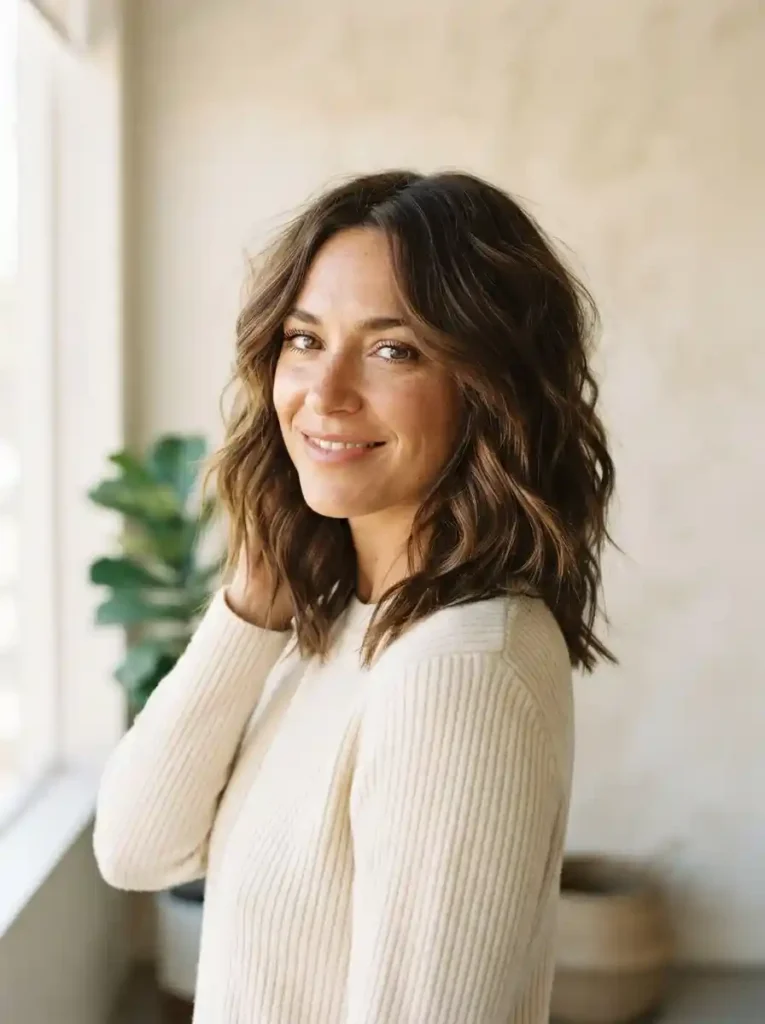
- Creates effortless movement without making the haircut look overly styled.
- Shoulder length keeps ponytails and clips practical.
- Soft layers can add volume to flatter roots.
- Naturally wavy hair makes the tousled texture easy to maintain.
- A lightweight sea-salt spray can enhance separation without stiffness.
Shoulder-length hair comes alive when soft layers are allowed to move freely, and this tousled shape does exactly that. The cut combines gentle crown layers with longer sections that rest around the shoulders, creating texture without sacrificing useful length. It works especially well for naturally wavy hair because the different lengths encourage effortless separation. Straight hair can achieve a similar effect with loose bends or a texturizing spray. The face-framing pieces can be adjusted for round, oval, or heart-shaped faces, helping create a balanced outline while keeping the overall haircut relaxed and easygoing.
The practical appeal is how forgiving this style can be between wash days and appointments. Medium-density hair usually carries the layers naturally, while thicker strands may need internal weight removed to keep the shoulders from feeling bulky. Fine hair should retain enough length through the bottom so the shape still looks substantial. I’ve noticed that slightly imperfect texture often makes this haircut look better than overly polished styling, especially when the layers are cut to follow natural movement. Air-drying with lightweight mousse can be enough for everyday wear, while loose waves create a more finished look for dinners or events.
14. Swooping Fringe Layers
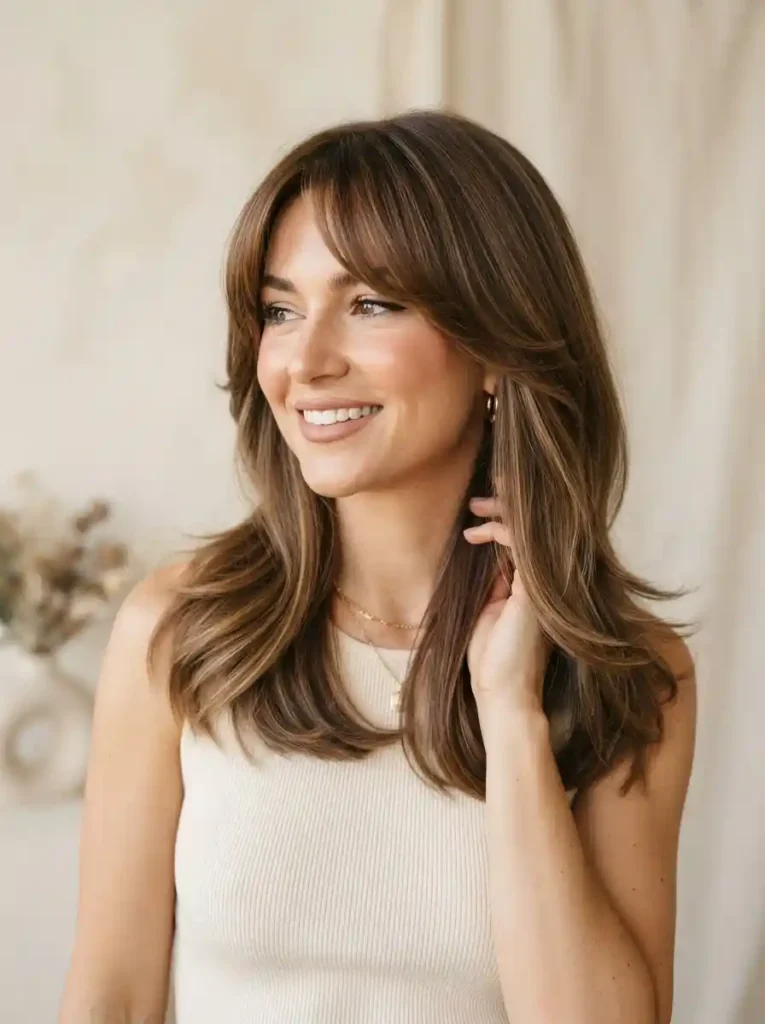
- Creates graceful movement around the forehead and cheekbones.
- The long fringe can be swept aside or parted softly.
- Works well for straight and lightly wavy textures.
- Keeps the haircut versatile without removing much overall length.
- A round brush helps the front sections curve naturally.
A sweeping fringe can change the entire mood of medium-length hair without requiring a dramatic haircut. This version blends a longer front section into soft layers, creating a continuous curve from the forehead toward the cheekbones and shoulders. The diagonal movement can visually soften a wider forehead while adding definition around the eyes. It works well for oval, heart, and square face shapes, and the fringe can be worn deeply swept or parted more casually. Straight hair makes the curve look polished, while naturally wavy strands give it a softer, more relaxed finish with less styling.
The versatility becomes especially helpful when you are unsure about committing to traditional bangs. Because the front pieces remain longer, they can be tucked behind the ear, clipped back, or blended into the rest of the haircut as they grow. Fine hair should avoid excessive layering around the fringe, while thicker hair may need subtle weight removal for smoother movement. In my experience, a round brush makes the biggest difference when styling this area because it encourages the front to curve instead of falling flat. A lightweight heat protectant and flexible hairspray can hold the shape without making it rigid.
15. Textured Midi Shag
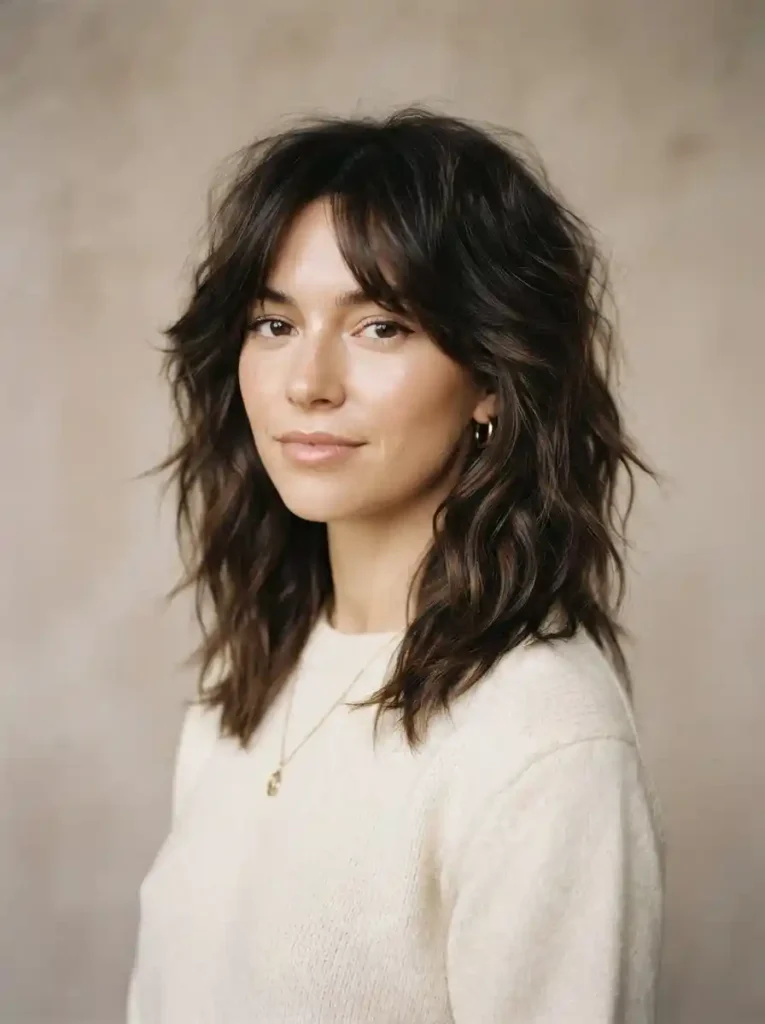
- Combines medium length with noticeably textured layering.
- Choppy sections create movement through the crown and sides.
- Soft curtain framing can balance strong facial features.
- Especially effective for wavy or naturally textured hair.
- Minimal product can create the signature undone finish.
The midi shag brings together medium length and expressive texture, making it ideal when a traditional layered cut feels too predictable. Choppy crown sections create lift, while feathered lengths keep the shape moving toward the shoulders. Curtain-style framing adds softness around the forehead and cheekbones, helping balance oval, square, and heart-shaped faces. Naturally wavy hair enhances the haircut with little effort, while straight hair can use a texturizing spray and loose bends to recreate the same separation. The finished look feels artistic and relaxed, yet the preserved length keeps everyday styling surprisingly flexible.
Hair density plays an important role in getting this shape right. Thick hair can support stronger layering, but strategic internal removal prevents the crown from becoming too dense. Fine hair usually looks better with fewer, slightly longer layers that maintain fullness through the ends. I’ve seen this haircut work beautifully for many people when the stylist adapts the texture to the client’s natural movement instead of aggressively thinning every section. Air-drying can produce a naturally tousled finish, while diffusing adds more lift. For maintenance, trimming every eight weeks keeps the crown texture defined and the shoulder-length perimeter balanced.
16. Polished Layered Midi
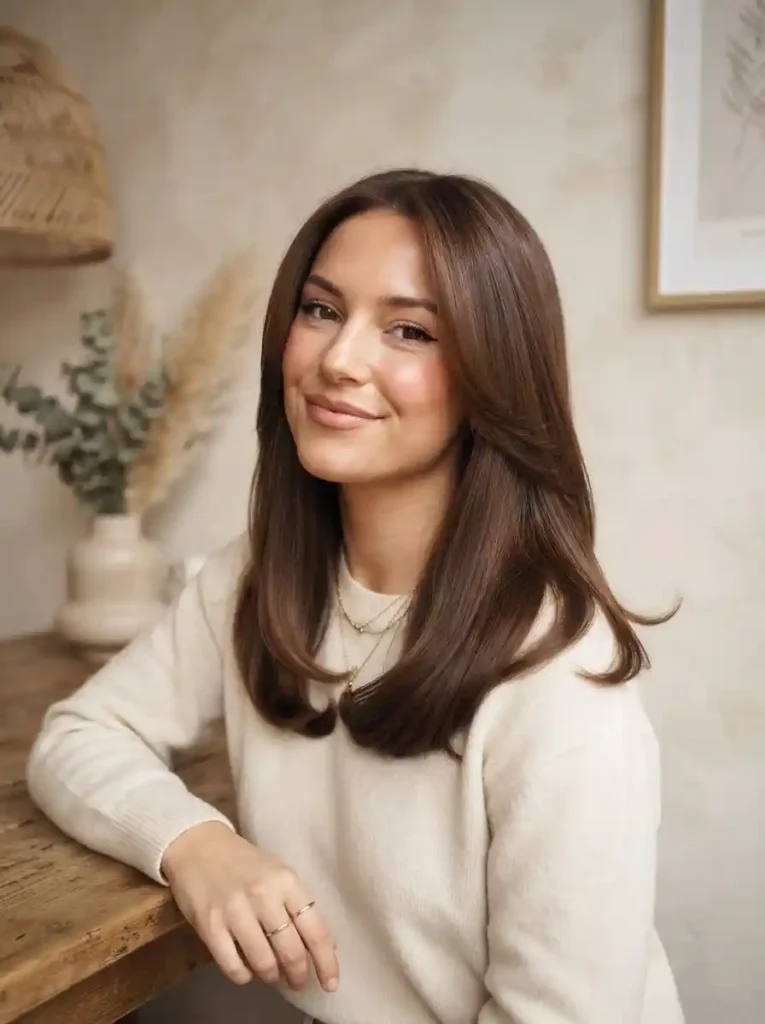
- Keeps layered hair sleek instead of overly textured.
- Soft framing adds definition around the face.
- Works particularly well for straight or smooth hair.
- Curved ends create movement without sacrificing fullness.
- Ideal for work, events, and polished everyday styling.
A polished layered midi proves that movement does not have to mean messy texture. This haircut keeps the layers smooth and blended, with subtle face-framing pieces that begin around the cheekbones and flow toward the shoulders. The controlled shape suits oval, heart, and longer face shapes because it adds gentle width without creating excessive volume. Straight hair showcases the clean transitions beautifully, while slightly wavy hair can soften the finished look. The length remains practical for ponytails, low buns, and clips, making it a strong everyday option when you want sophistication without an overly complicated styling routine.
The key to maintaining this sleek shape is preserving enough weight through the ends. Fine hair often benefits from fewer layers and a strong perimeter, while thicker hair can handle additional internal shaping to reduce heaviness. That’s why many hairstylists recommend blending the layers carefully rather than creating abrupt changes in length. A heat protectant followed by a round-brush blow-dry can reveal the smooth curves, while a flat iron can create an extra-polished finish for special occasions. Regular trims every eight to ten weeks help maintain the clean outline and prevent the longer layers from becoming uneven or difficult to style.
17. Rounded Face Layers
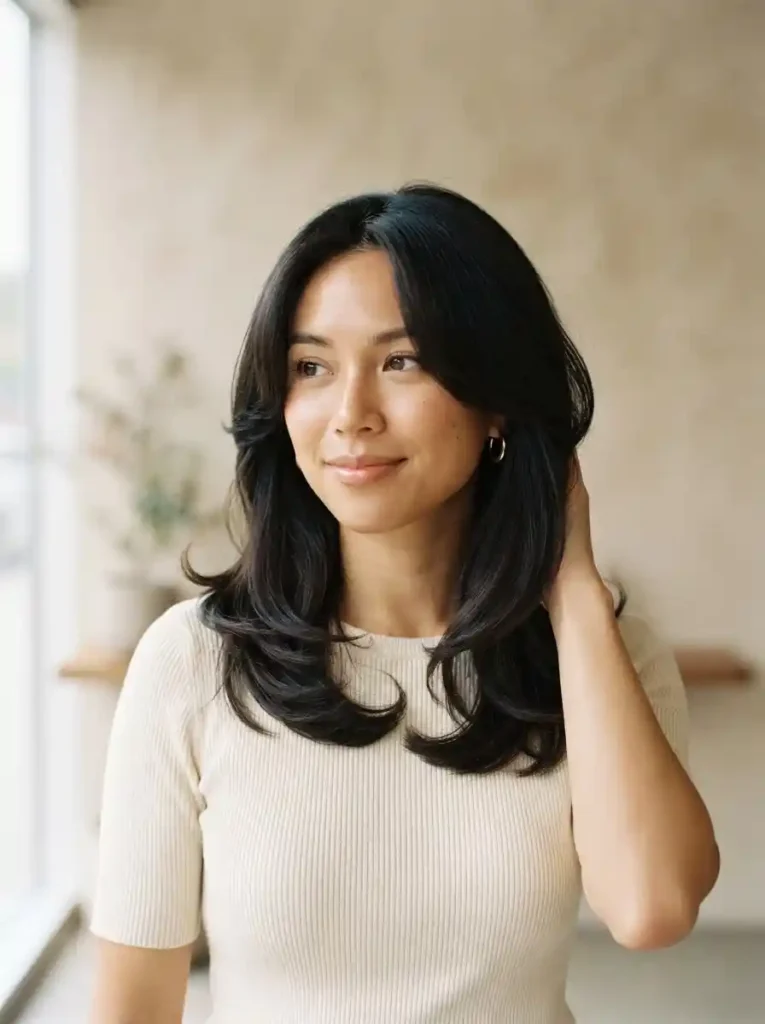
- Creates a softer outline around fuller or rounded facial features.
- Longer framing pieces visually elongate the face.
- Keeps the haircut versatile without excessive layering.
- Works especially well with straight and softly wavy textures.
- The curved ends maintain a smooth, feminine silhouette.
The right face-framing placement can make medium hair feel more balanced, especially when fuller cheeks are a concern. These rounded layers begin below the cheekbones and gradually blend into the longer lengths, creating a gentle vertical flow rather than adding width directly beside the face. The shape can complement round and oval faces particularly well, while heart-shaped faces can use slightly fuller ends for additional balance. Straight hair makes the graduation easy to see, whereas soft waves add natural movement. Because the layers remain relatively long, you can still pull the hair into a ponytail or secure it with clips.
This haircut also offers a useful balance between visual softness and practical fullness. Fine hair should keep the lower perimeter strong so the ends do not become too thin, while thicker hair can use subtle internal shaping to reduce weight. I’ve noticed that starting the shortest face-framing section below the fullest part of the cheek often creates a more flattering result for rounder faces. Styling does not need to be complicated. A large round brush can direct the layers inward, while loose waves can create additional dimension. Trimming every eight to ten weeks keeps the framing pieces smooth and connected.
18. Layered Side Part
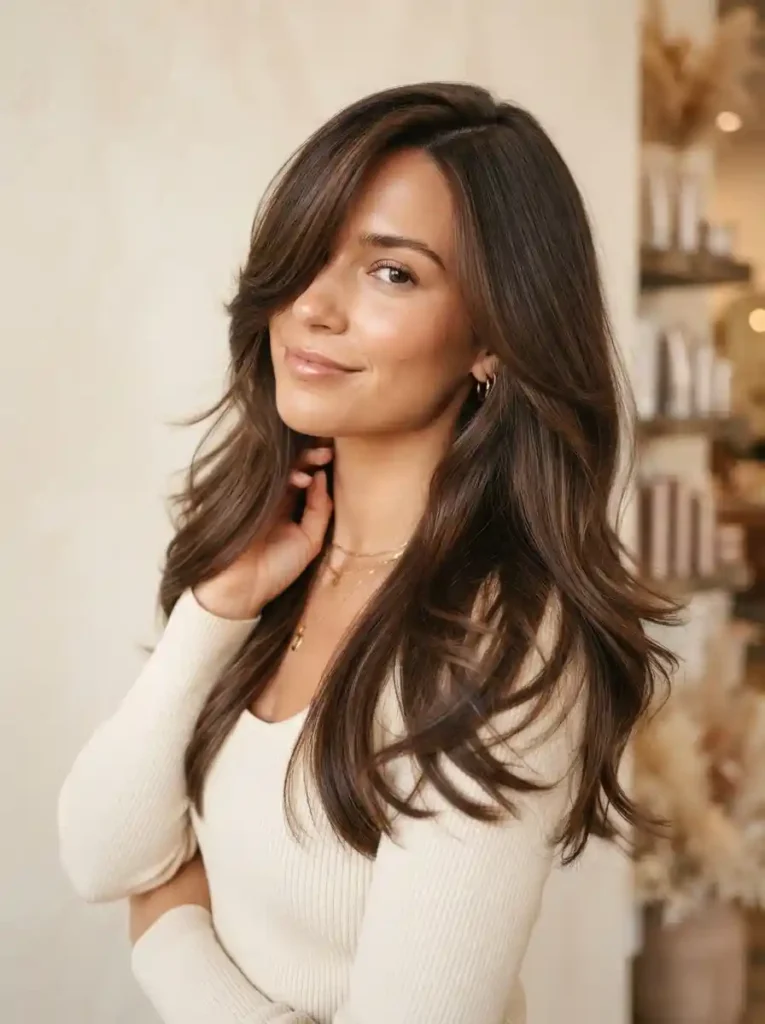
- Adds asymmetrical movement without changing the overall length dramatically.
- A deep side part can create natural-looking root lift.
- Long front layers soften the forehead and cheek area.
- Suitable for straight, wavy, and medium-density hair.
- Easy to switch between polished and relaxed styling.
A defined side part instantly changes the way layered medium hair frames the face, giving the style a graceful asymmetrical quality. The deeper part creates lift at the roots, while longer front layers sweep across the forehead and blend into the sides. This arrangement can flatter oval, heart, and square face shapes by softening strong lines and directing attention toward the eyes. Straight hair gives the layers a sleek appearance, while soft waves create fuller movement through the lengths. The shoulder-skimming shape remains practical for daily routines, making it easy to wear loose, clipped, braided, or gathered.
The haircut is particularly useful for people who want volume without adding shorter layers throughout the entire head. Fine hair can benefit from the lift created by the side part, while medium or thick hair may need gentle internal shaping so the layers do not feel heavy on one side. In my experience, keeping the longest front pieces slightly below the chin helps the style fall naturally instead of creating an abrupt angle. A volumizing mousse at the roots and round-brush styling can enhance the sweep. For casual days, simply changing the part and letting the natural texture settle can create a fresh look.
19. Airy Curtain Layers
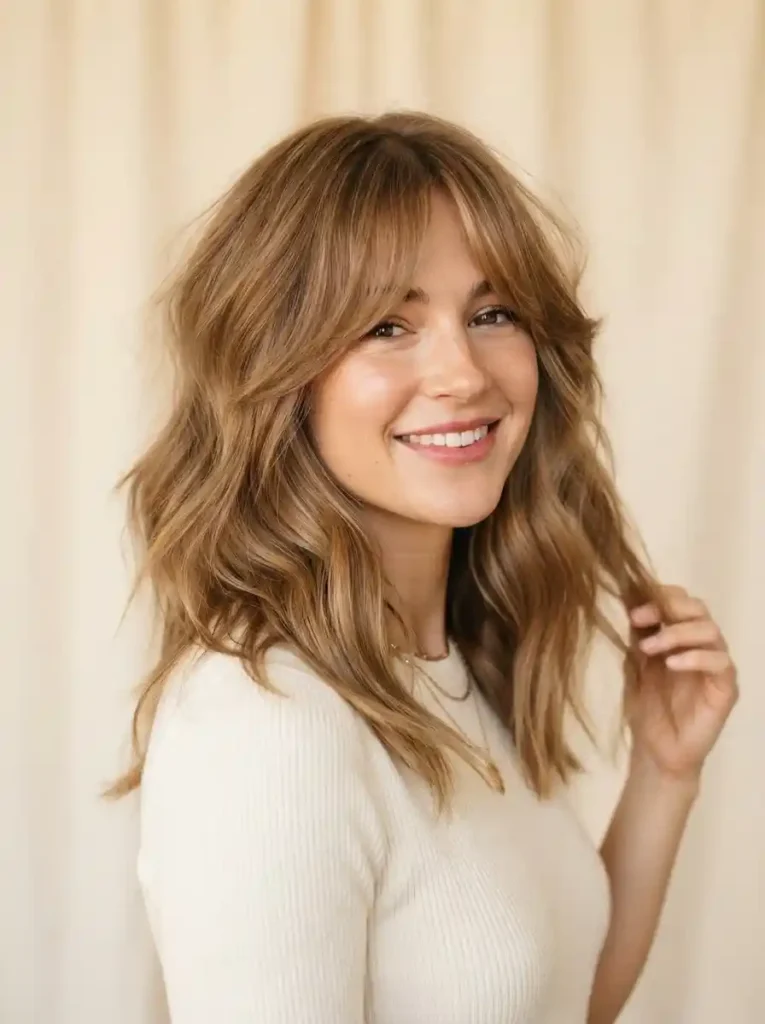
- Creates soft volume around the face without heavy layering.
- Curtain pieces can be parted or swept aside easily.
- Works beautifully with straight, wavy, and fine-to-medium hair.
- Feathered ends add movement while keeping useful length.
- A light blow-dry can make the front layers fall smoothly.
Soft framing and airy movement make this cut an easy favorite when you want medium hair to feel lighter. The curtain pieces open gently around the forehead before blending into cheekbone-length layers and feathered ends. This placement can soften round, oval, and heart-shaped faces while drawing attention toward the eyes. Fine hair benefits from the lightweight shape without losing too much density, while naturally wavy strands can create effortless separation. Straight hair can achieve the same movement with a round brush. The shoulder-grazing length remains practical for ponytails, clips, half-up styles, and simple everyday routines.
The beauty of curtain layers is their flexibility as your styling habits change. Wear the fringe parted neatly for work, sweep it farther to one side for extra volume, or let it fall naturally for a softer weekend look. Medium-density hair usually supports the shape easily, while thick hair may need subtle internal removal around the sides. I’ve noticed that keeping the shortest pieces long enough to blend into the cheekbones makes growing them out much easier. For maintenance, trims every eight weeks can keep the framing balanced, while a lightweight mousse helps maintain lift without making the hair stiff.
20. Textured Collarbone Cut
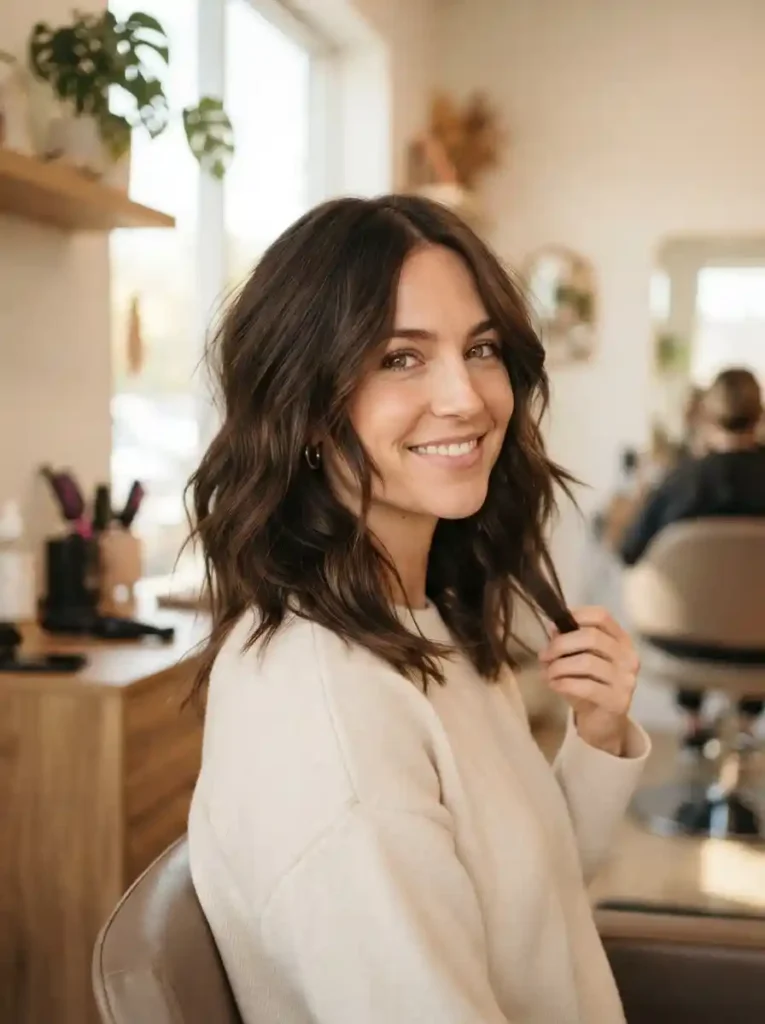
- Adds texture while keeping the flattering collarbone length.
- Choppy ends prevent the shape from looking too heavy.
- Works especially well with naturally wavy or medium-density hair.
- Face-framing pieces add definition without dramatic shortening.
- A small amount of texture cream can emphasize the layers.
A collarbone cut becomes much more dynamic when textured layers break up the ends without taking away its useful length. The shape sits around the collarbone, creating a flattering transition between shorter and longer styles. Soft face-framing pieces can emphasize the cheekbones while helping balance oval, heart, and longer face shapes. Naturally wavy hair gives the textured ends effortless movement, while straight hair can reveal the layers through loose bends or a quick tousled blow-dry. Medium-density hair often carries this shape particularly well because it provides enough fullness for the perimeter while allowing the layers to move naturally.
The practical advantage is that this haircut can look polished or relaxed depending on how you finish it. Thick hair may need internal weight removal so the collarbone area does not become bulky, while fine hair should keep the lower edge relatively strong for a fuller appearance. In my experience, the best results come from customizing the amount of texture rather than automatically thinning every section. Air-drying with lightweight styling cream can bring out natural waves, while a round brush creates a smoother finish. Regular trims every eight to ten weeks help maintain the collarbone shape and prevent uneven growth.
21. Soft Graduated Layers
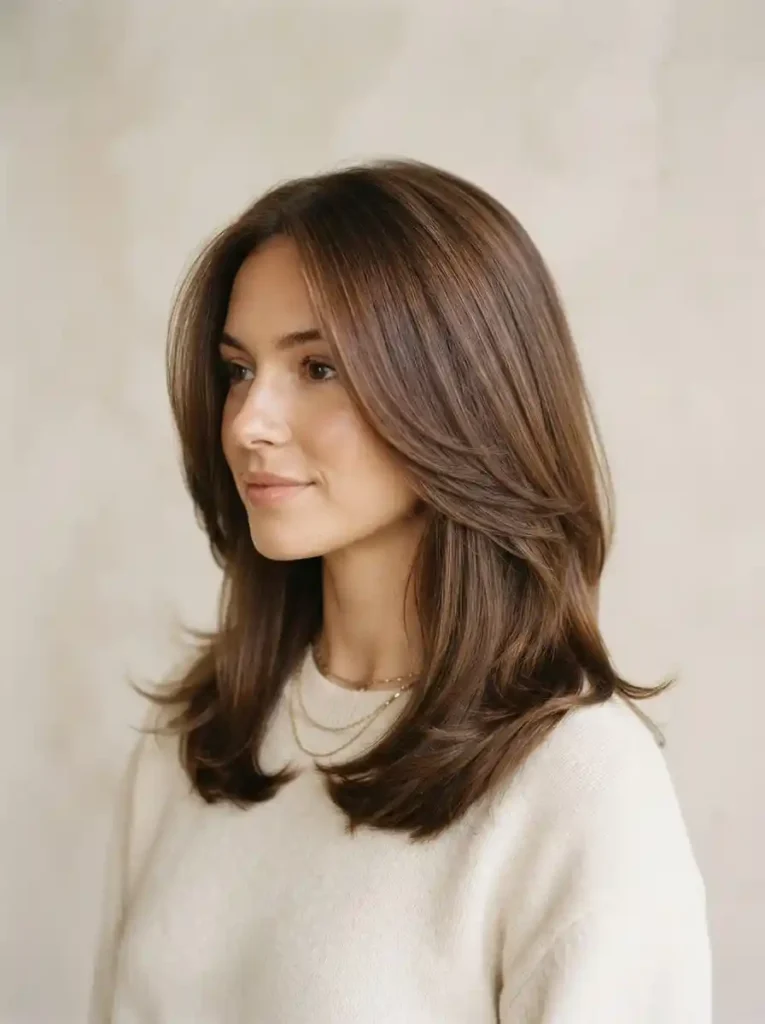
- Creates a gradual shape instead of obvious layer separation.
- Graduation can add fullness and structure around the lower lengths.
- Works well for straight, slightly wavy, and medium-density hair.
- Jawline framing can highlight facial structure gently.
- Simple blow-drying brings out the smooth graduated effect.
A gradual change in length can give medium hair structure while keeping the overall appearance soft and wearable. These graduated layers begin subtly around the jawline and become longer toward the shoulders, creating a smooth transition rather than a visibly choppy effect. The shape can highlight the jaw and cheekbones while adding balance to oval, heart, and square faces. Straight hair displays the graduation clearly, while slight waves make the transition appear more relaxed. This technique can also help hair that feels heavy through the lower sections, giving it controlled movement without removing excessive length or creating a thin perimeter.
Graduated shaping works particularly well when your goal is a haircut that looks neat even with minimal styling. Fine hair can retain a fuller appearance when the graduation stays subtle, while thicker hair may benefit from carefully removing interior weight before establishing the outer shape. That’s why many hairstylists recommend adjusting the graduation according to hair density and natural fall. A round brush can smooth the layers and create a gentle curve through the ends, while air-drying produces a softer finish. For consistent structure, scheduling trims every eight weeks can help preserve the graduated outline as the layers grow.
Conclusion: Layered Medium Haircuts
The right layers can make medium-length hair feel lighter, fuller, softer, and far more versatile. These Layered Medium Haircuts offer inspiration for everything from subtle face framing to bold texture, helping you find a shape that matches your hair type, lifestyle, and personal style.
In my experience, the best haircut is one that looks beautiful with your natural texture and remains manageable between salon visits. Save this collection on Pinterest, choose one or two styles that catch your eye, and show your favorites to your hairstylist. Share this article with someone searching for fresh haircut inspiration, and let your next look begin.